
Transport policy in the spotlight
By Dom Kalasih, CE
Great to see Labour’s first policy is transport-related
This week the Labour Party kicked off its election campaign policies with one proposing to cap weekly public transport fares at $20 in Auckland, Wellington and Christchurch, and at $10 everywhere else in the country.
It’s good to get something on the table, and I think even better that it was transport-related, because it shows how important transport is.
I’m always mindful we stay politically agnostic, and it is not our role to tell people what decision they should make. But it is our role to help people be understand all the information so they can make their decisions wisely.
As a cost-of-living measure, this will be helpful to commuters, particularly in the big cities. As transporters we know the fuel price crisis is hitting business and consumers. I have two colleagues that routinely take the train. One spends $75 and the other $55 a week on public transport, so I can see the attraction of a cap for them.
However, at a time when there is real pressure on the National Land Transport Fund, we want to ensure public transport spending is getting a good return. That’s part of Transporting New Zealand’s strategic focus on productivity and infrastructure.
The Ministry of Transport’s most recent Domestic Transport Costs and Charges Study in 2023 showed that urban public transport charges recover only 28 per cent of the cost to provide the system, with the rest subsidised by taxpayers. Of all the categories, heavy trucks recover the highest proportion of their cost to the public sector – 76 per cent.
Ultimately then, the proposed $20 fare cap would in essence be a further subsidy to a mode that is already by far the most heavily subsidised.
Most of our members will be familiar with measure of net-tonne kilometres (ntkm) for freight activity. The equivalent measure for personal travel is person-kilometres.
In terms of the impact the proposed Labour policy would make on personal travel activity, urban rail provides less than 1 per cent of person-km travelled. Urban bus travel makes up 1.5 per cent of the task.
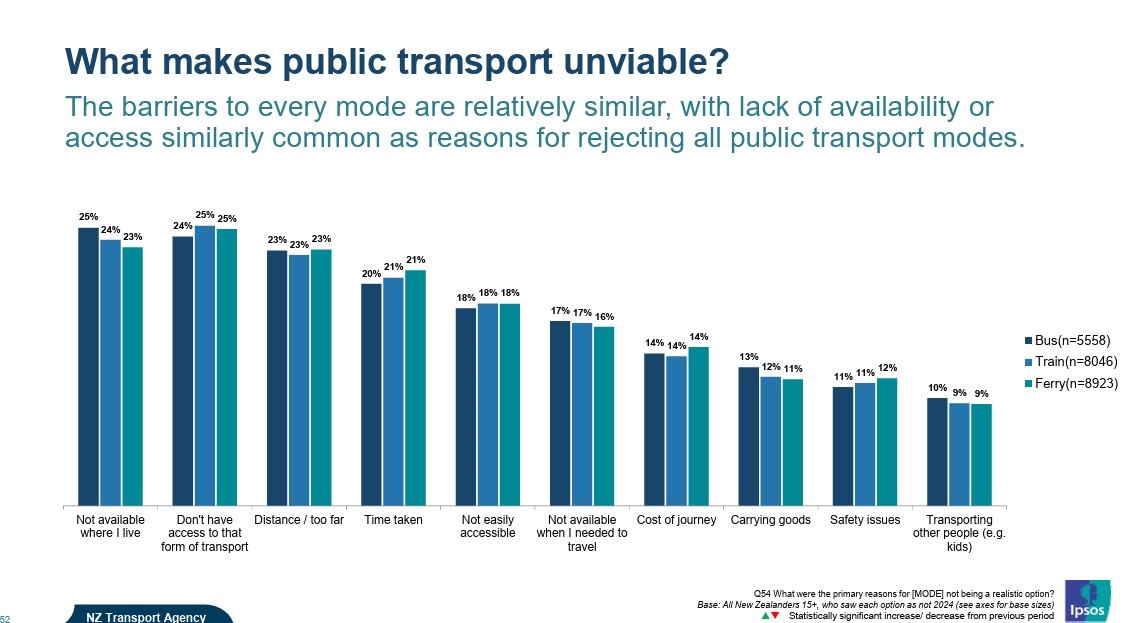
It’s unlikely the cap will get more people using public transport. An NZTA study released early last year showed that the cost of the journey is only the 7th biggest obstacle to people using public transport.
There are tough decisions to be made on the use of road funding particularly when maintenance and potholes are still big issues. We’ll be taking a good look at the policies and any analysis the Labour Party is able to provide.
Temporary Traffic Management improvements some time away
Transporting New Zealand represents the perspectives of the road freight sector on the Temporary Traffic Management Industry Steering Group (TTMISG). I was intrigued but pleased to see in its June newsletter that, as part of the transition from the Code of Practice for Temporary Traffic Management (COPTTM) to the New Zealand Guide to Temporary Traffic Management (NZTTM), which came into force in October last year, risk assessments should be used or are mandatory, depending on the road controlling authority.
This is new, so contractors are being taught how to write risk statements and why developing risk statements and subsequently establishing risk controls is important.
I am pleased to see this change because working on the road is a risky activity.
Most transport operators I know have developed risk registers and associated controls, and they’ve had that practice in place for decades. I’m most intrigued that this hasn’t been the normal practice with roadworks. Risk identification has also been a fundamental element of our Health and Safety at Work Act which has been in place for over a decade.
At some stage, in a non-judgemental or critical way, I would love to see this used as a case study so we could learn from how that situation evolved.
Another industry leader passes
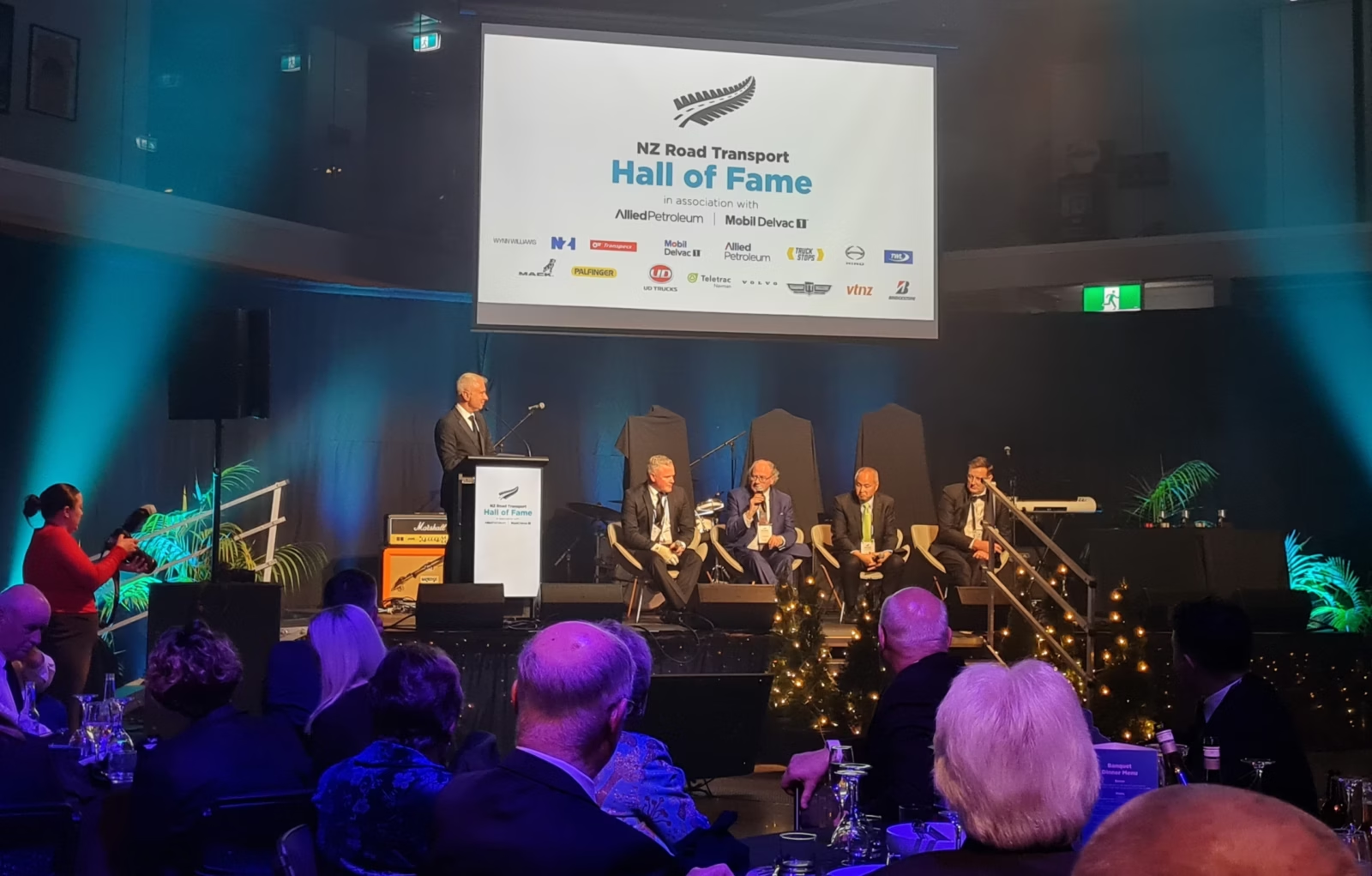
I was saddened and sorry to hear that Morris McFall, of McFall Fuel, passed away this week.
The fuel industry has undergone massive changes, particularly over the last couple decades, and I have no doubt that Morris’ leadership and vision contributed significantly to these positive changes.
Morris also had a genuine love and passion for the industry and machinery, which I think was best well demonstrated by the fabulous vehicle collection at the McFall headquarters in Mount Maunganui. Morris was honoured in 2020 with a Queen’s Service Medal.
To the team at McFall Fuel and the family of Morris I extend my most sincere sympathies and condolences.

Didn’t get this by email?
Stay in the loop on the latest road transport news with our weekly Dispatch newsletter, delivered to your inbox every Friday morning.