
Common ground and sharp divides in election transport debate
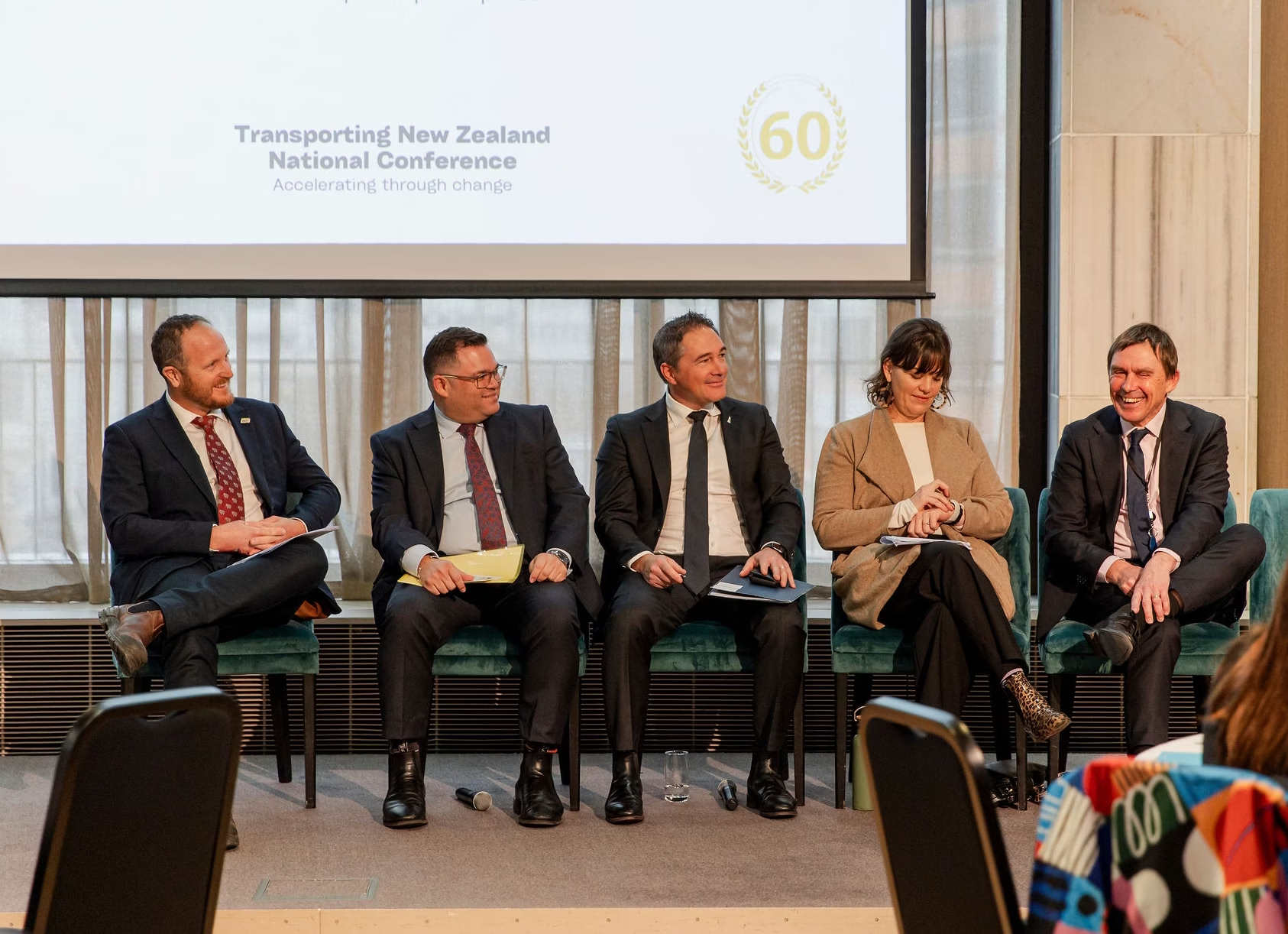
Spokespeople from across the political spectrum sat down at Transporting New Zealand’s conference in June to hash out transport priorities and commitments they could make ahead of the 2026 election. Amid the battle of ideas were also some surprising areas of common ground.
Just weeks before the conference, a heartwarming consensus on infrastructure was reached with the Government, Labour, and the Green Party confirming their commitment to better asset management and to not cancelling their predecessors’ plans where they’re already underway.
Apart from National’s Ryan Hamilton, all the panel members have served on the Transport and Infrastructure select committee. Andy Foster continues to serve as its chairperson.
As a result, despite having widely diverging views on many topics, more than one of the politicians spoke of having a friendly relationship with one another.
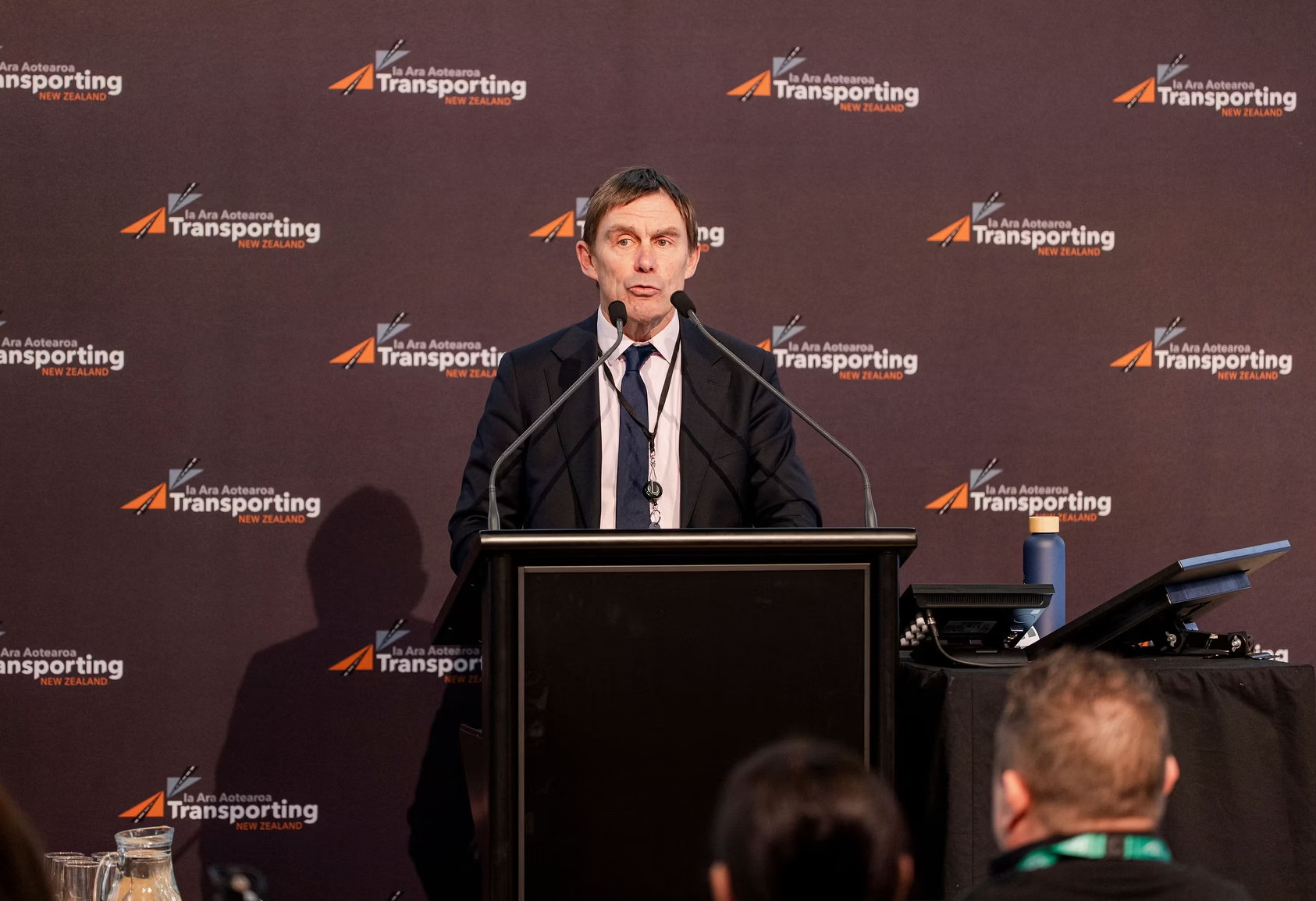
NZ First’s Foster began by welcoming attendees to “sunny Wellington,” where it was, of course, windy and raining torrentially. He talked about how his fellow panel participants have worked collaboratively in their assessment of submissions to the Select Committee and have made legislative changes based on feedback from the trucking industry.
Moving on to discuss infrastructure, Foster didn’t mince words. “We want a Rolls-Royce system… but at the moment we have a Corolla budget.” He reinforced his party’s firm support for regional development, “because that’s where the bulk of our export revenue comes from.”
He also affirmed the need for New Zealand to consider how transport is funded – with universal RUC and tolling playing big roles, to avoid “raiding the Crown’s budget” for money that could be spent on health and education.
He said that NZ First was first and foremost focussing on better management of existing assets, rather than building “bright new shiny stuff”.
“There’s undoubtedly not enough money,” he said, particularly about the Roads of National Significance programme. “We cannot do them all at once, so we’ve gotta be honest about which ones are the priorities – which ones are gonna give the best economic value for buck?”
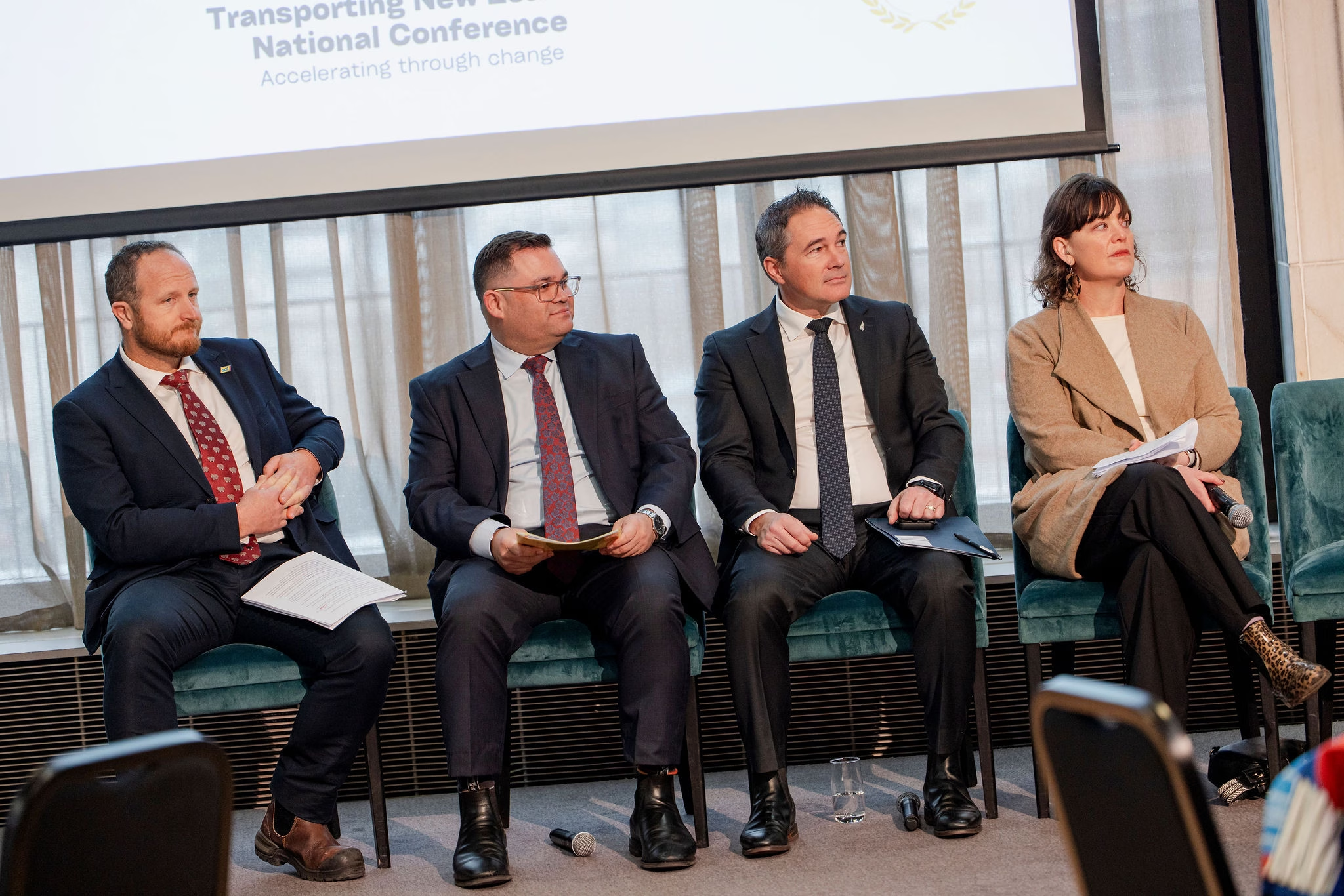
“I know that one party in particular promised a lot in that space last year, didn’t they, Ryan?” he said, imparting the first subtle dig of the session at his fellow panellist.
He then moved on to the importance of workforce planning, praising the Budget’s redirection of funds from the Fees Free programme for university students to more practical workplace skills training.
Next, ACT’s transport spokesperson Cameron Luxton opened by reminiscing about a childhood spent driving around in his builder father’s concrete truck and his uncle’s milk tanker in Papamoa.
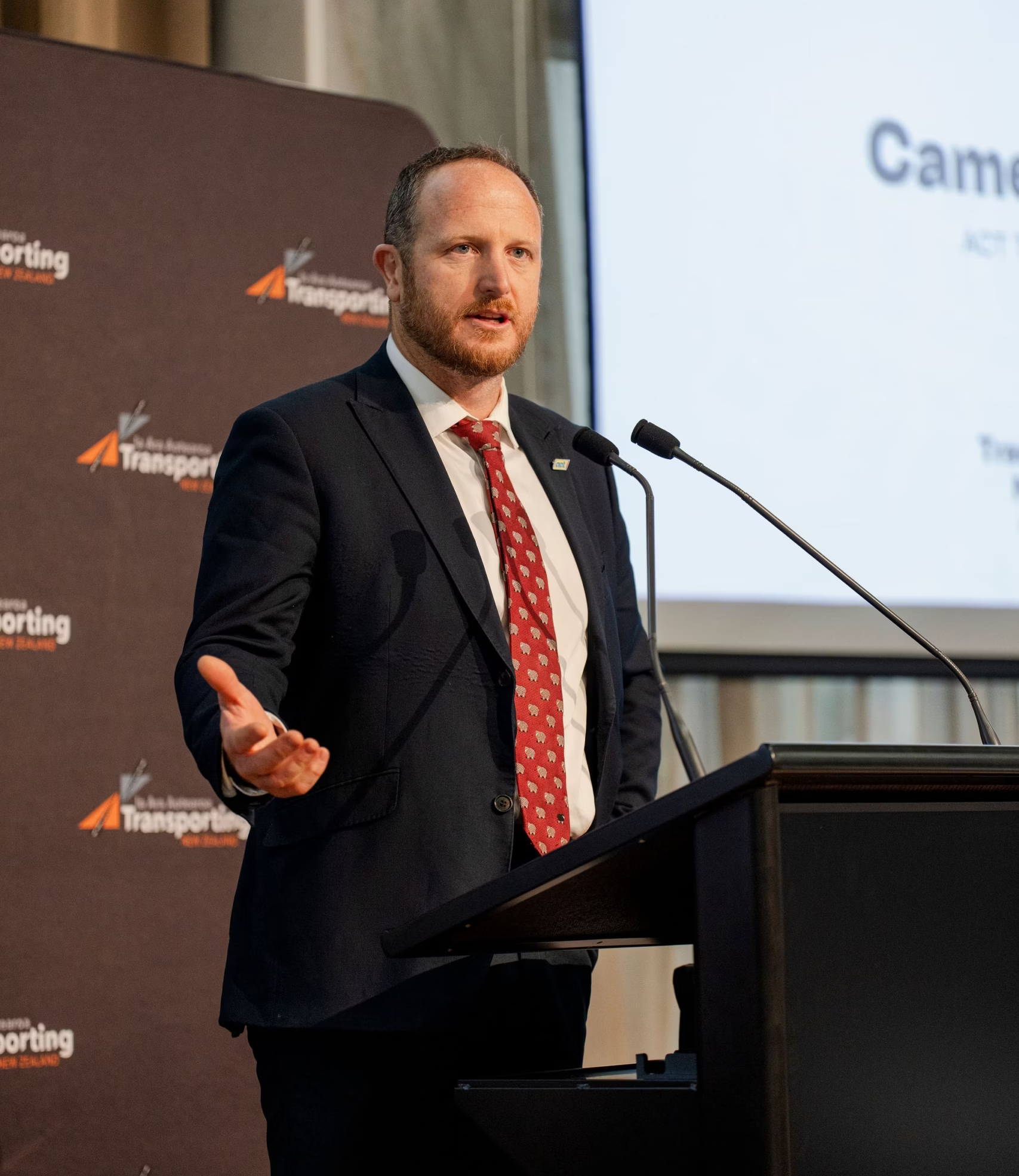
“Coming from the Bay of Plenty, and coming from a construction and farming background, I know how incredibly important it is that we need gear and people to arrive on time, and at a cost that’s predictable and fair.”
Luxton said when freight corridors choke up, everyone pays more. “Exporters, importers, communities, workers, and people with their lives.”
“The ACT Party view is simple: roads are productive infrastructure. Freight is a productive activity. And people who move goods around New Zealand should be treated as partners in growth, not as a problem to be taxed, delayed, and managed into a corner.”
Like Foster, Luxton also said that New Zealand struggles to deliver or maintain infrastructure, and supported long-term agreements between central Government and councils to give investors confidence that projects will not be “casually abandoned.”
And on funding the infrastructure we need, he said New Zealand needs “to be more open to private sector skills and capital… Public-private partnerships are not perfect for every project, but they have a place.” He also voiced support for tolling and congestion charging.
“But funding is only one side of the problem; consenting is another. New Zealand has made it too hard to build everything,” he added.
“Years can be spent arguing before anyone turns a sod, and that adds cost, kills momentum, makes projects more uncertain and vulnerable to cancellation. And actually, just destroys the mojo of our entire society and culture.”
The Greens’ Julie Anne Genter and former Associate Minister for Transport talked about her career history before she entered Parliament, in transportation planning.
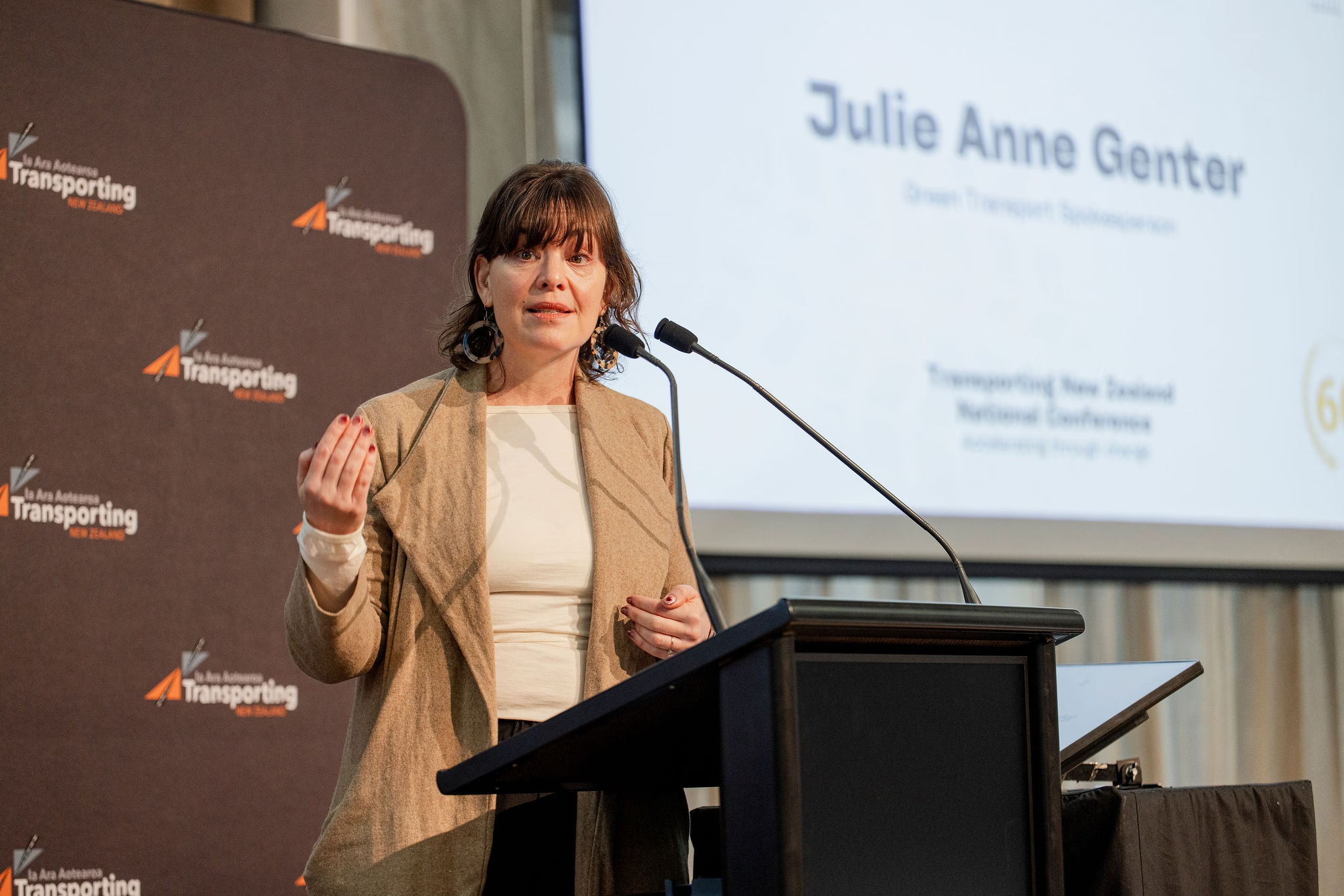
Transport is an area where “we could make fantastic improvements,” to people’s lives by doing things differently, she said, particularly in the context of its contribution to, and vulnerability to the effects of, climate change.
“What I’ve noticed is extreme weather events becoming more common, and that’s disrupting life here in New Zealand.”
She said Wellington’s flooding in April “was a one-in-100-year event, except, those are starting to happen multiple times a year now.”
She reaffirmed that the Green Party fully supports all 16 points of the National Infrastructure Plan. “Indeed, that’s what we have been campaigning on for like, two decades now.
“It’s using our infrastructure better. It’s electrifying our transport system. Because that means we spend less money importing fossil fuels.”
Genter said the Government couldn’t make oil cheaper and should be looking to electrify the network faster instead. Higher EV uptake should be incentivised as it benefits more people than just EV owners, by leaving fewer competitors for the same amount of petrol and diesel, she said.
She was supportive of congestion charging alongside higher investment into public transport and walking and cycling paths. That investment into different modes would mean less traffic overall, leaving more space for critical vehicles, she said.
Genter didn’t hesitate to name names as to who the Greens blame for transport’s current woes. “All of that is common sense. But it’s been turned into a ‘culture war’ over the last decade, particularly by the previous Transport Minister, Simeon Brown.”
“[Brown] promised this absolutely undeliverable list of highways, that our New Zealand First chair of the Transport Committee just said we cannot afford.”
She said that any divisive rhetoric put forward by politicians in the coming months would be a distraction from the real problems and solutions – one of which was tax reform.
But bringing it back to transport, Genter said, “It’s not about pitting cyclists against motorists, or EV drivers versus petrolheads – that’s not it, we’re all together.”
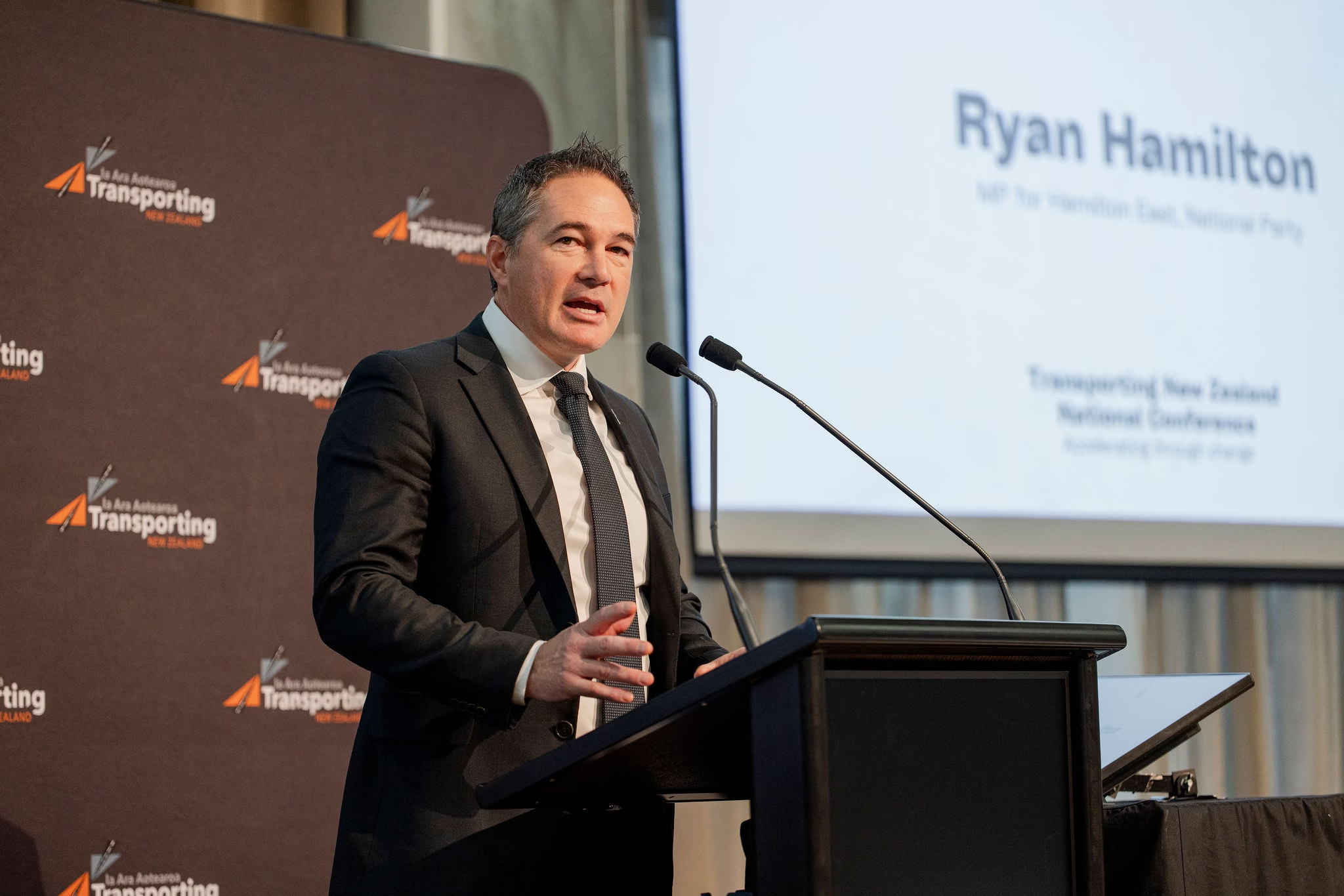
Next, National MP Ryan Hamilton came out swinging in defence of his party’s priorities.
“That last speech was a little bit boring, I thought.” Genter looked unperturbed.
Hamilton kept it short, saying he didn’t have as much experience on the topics of transport as his fellow panellists, but that he could confidently say National was committed to investing in infrastructure.
“In fact, [in] the last Budget we’ve just approved Cambridge to Piarere, a $1.7 billion infrastructure fund,” which will have numerous positive impacts, including job creation, he said.
He talked about the issue of red tape, saying $1.3 billion was spent just on consenting for Transmission Gully.
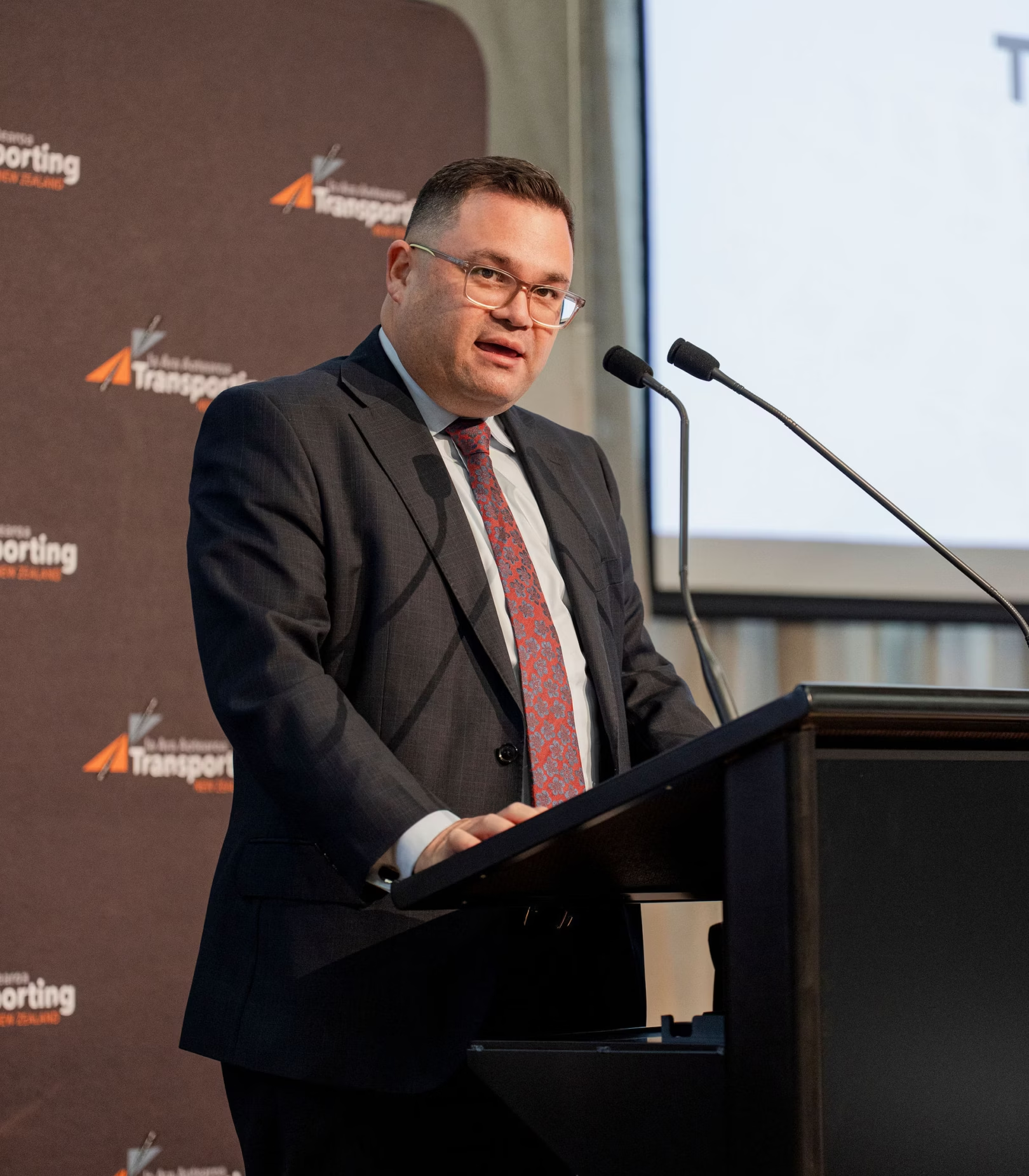
Labour’s transport spokesperson Tangi Utikere closed out the round of solo addresses before we really got into the nitty gritty.
“I have to say, that the Transport and Infrastructure select committee is a really collegial one,” he began, before adding; “Ryan’s not on it – perhaps that’s why he made the comments that he did,” regarding Labour’s former coalition partner.
Utikere said that collegiality is important because when it comes to long-term decision-making on transport and infrastructure, politics should be set aside as much as possible.
He said transport network inefficiency is felt by everyone, linking this to cost of living and productivity problems.
“We know that pressures upon you are increasing – all the while, demand continues to grow,” he said to the trucking operators in the room.
He spoke about the importance of an integrated transport network of multiple modes, and the need to move beyond short-term decisions for the benefit of all road users. “No single mode is going to deliver what our communities need.”
He said there had been a disjointed approach to the planning and delivery of important projects over many successive governments, and that has created uncertainty.
RUC, rail and speed
So it was safe to say that all the politicians agreed New Zealand needs a long-term pipeline of infrastructure projects that are broadly accepted to be in service of the common good. Phew!
But enough of the monologues – it was time to debate.
Should road user charges and fuel tax go up?
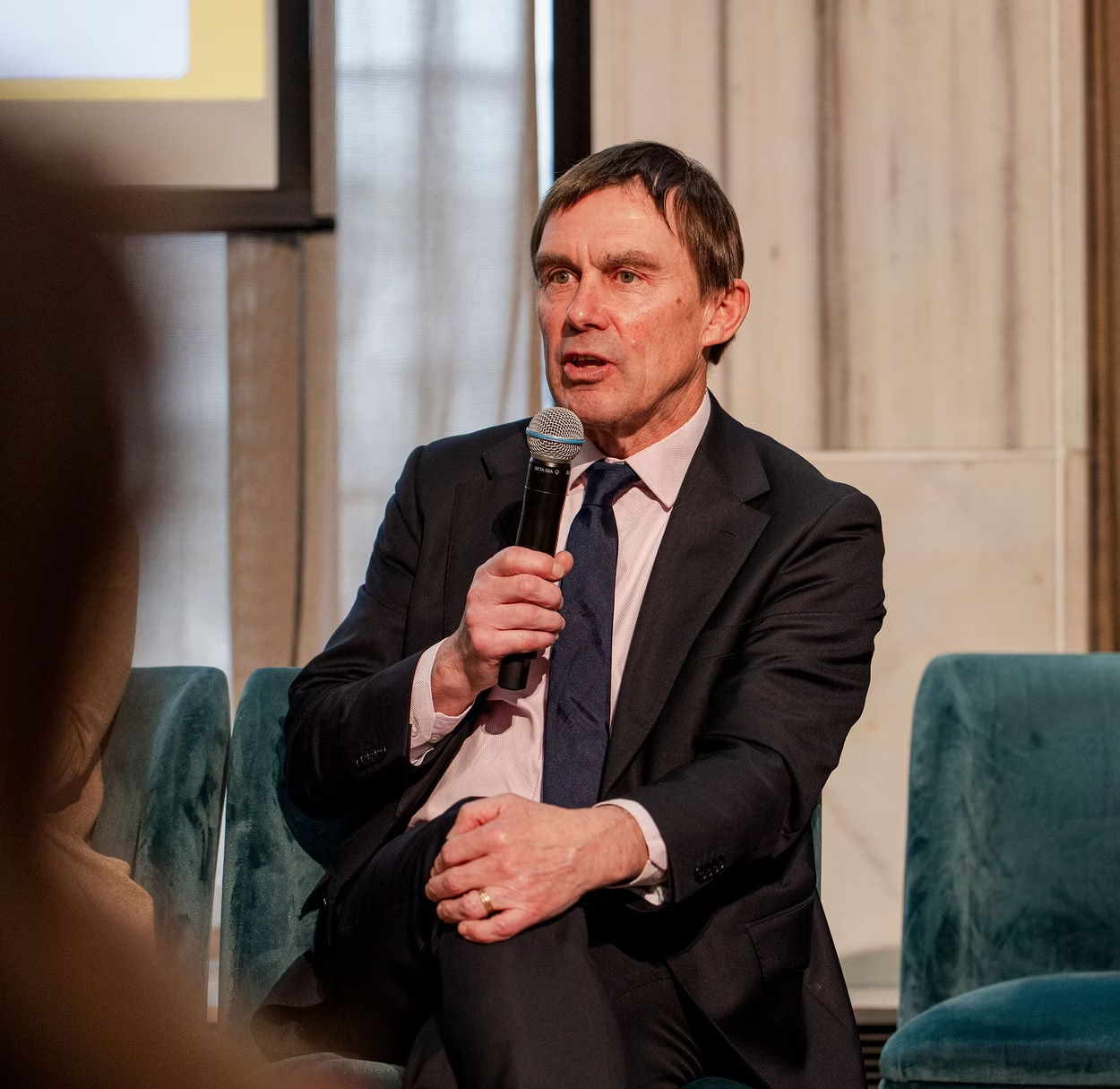
Foster started off by acknowledging that revenue from RUC and FED has dipped markedly in real terms since the last increase. But he said that with the current fuel prices, now’s not the right time, from NZ First’s perspective. Maybe next year.
A slow, steady increase in RUC and FED would be better for everyone, rather than using general taxation and ratepayers to fill the gaps, said Genter. She didn’t support suspending FED or RUC in light of the fuel price shock, saying the Government should be using other measures to support people through the cost-of-living crisis, again alluding to the Greens’ tax policy.
Hamilton talked about how National’s work on digitising RUC would make the system fairer, but did not confirm anything about upping the rates. Utikere was similarly tight-lipped on Labour’s plans.
Luxton again voiced ACT’s support for alternative funding mechanisms like tolls and PPPs to bridge the road funding deficit. He said the user-pays RUC and FED revenue shortfall was due to a discrepancy between how vehicles are treated, and standardising the system would help – but didn’t say whether his party would increase the charges.
Rail investment
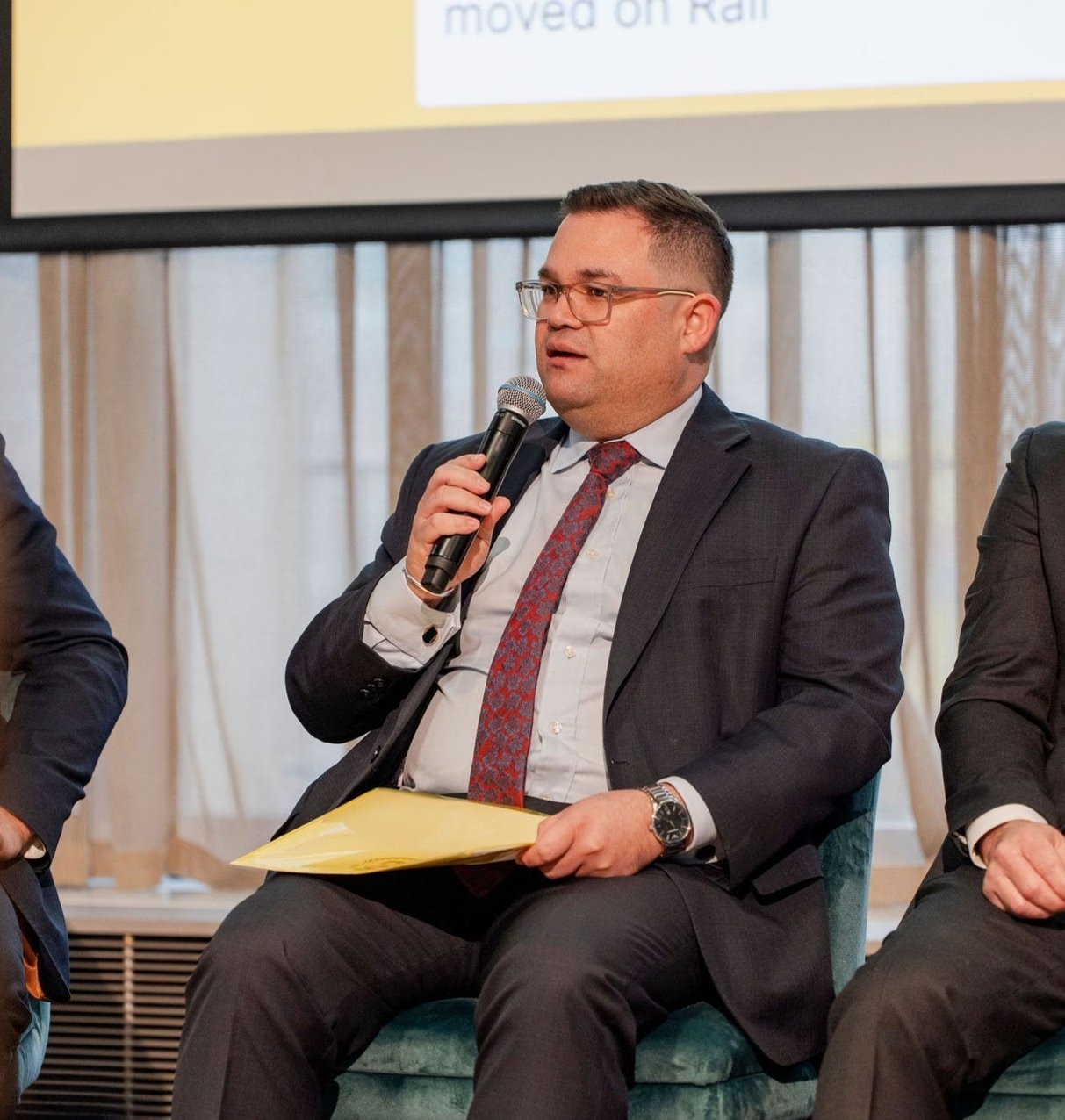
The panel then received a question about the viability of rail freight. Utikere started off, essentially saying that with better investment will come better returns.
Foster had a similar view, and disagreed with the premise of the question, saying KiwiRail’s performance and revenue has increased this year. Genter said that the rail network was asset-stripped during its period of privatisation, “so there’s a lot of catch-up maintenance and investment that needs to happen,” for it to reach its potential. Foster nodded along.
Luxton supported fair competition and suggested that support for rail subsidisation where the public aren’t getting their dividends was ideological.
Genter pushed back, saying it’s the opposition to rail that is ideological. “The economics of it absolutely stack up,” she argued.
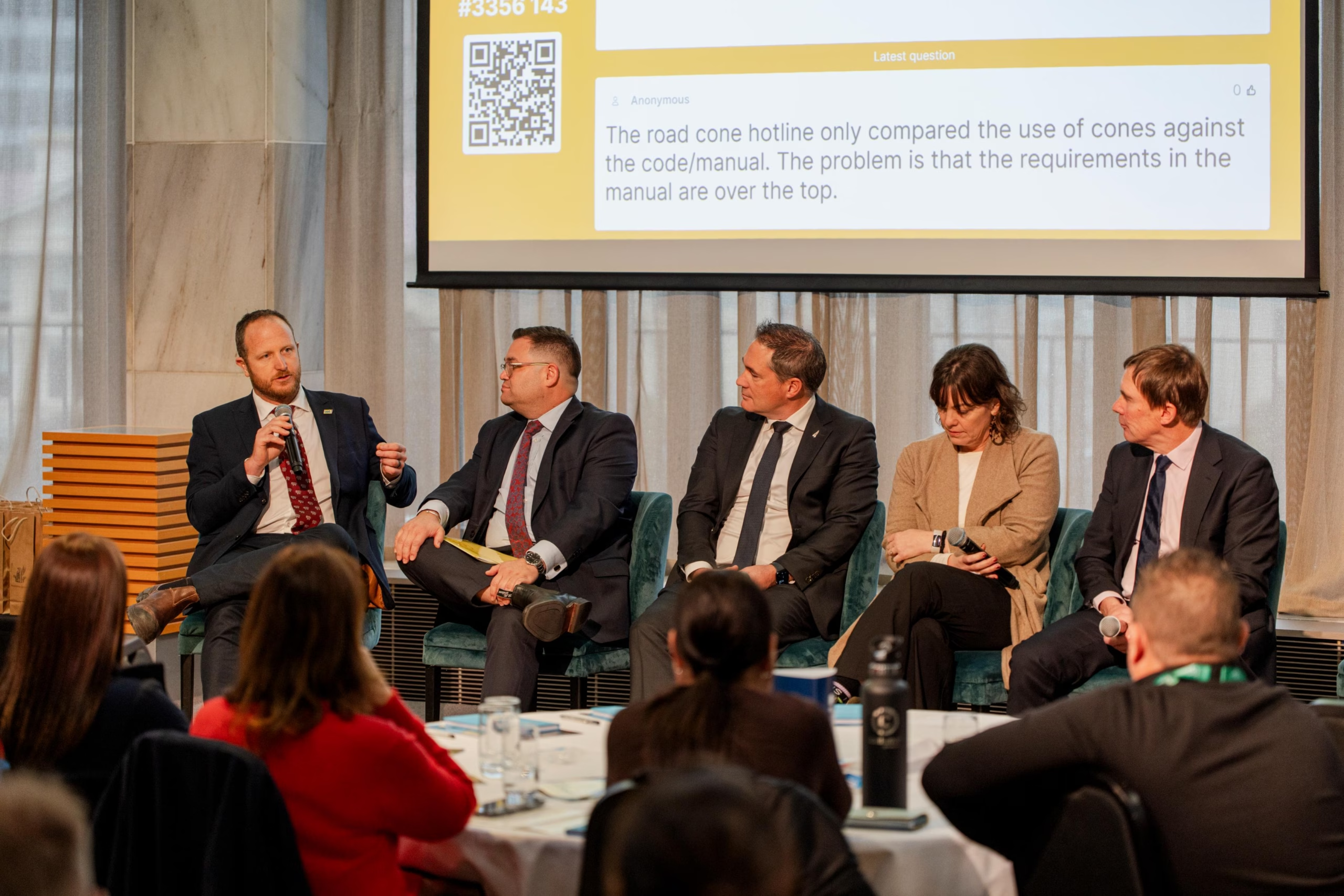
Speed limits
Next, the panel were asked about their party’s policy on open road speed limits.
Luxton said “Go faster!” before qualifying that with, “if it’s safe to do so, go faster.”
“When I’m sitting at 110 on a beautiful day on the Waikato Expressway with AC/DC blasting – I mean, why is it only 110?”
However, he pointed to the training of New Zealand drivers and the licensing regime as being key issues. “We do have a problem with the attitude of drivers on the road.” He said a tougher look at road users, rather than speed limits, should be considered.
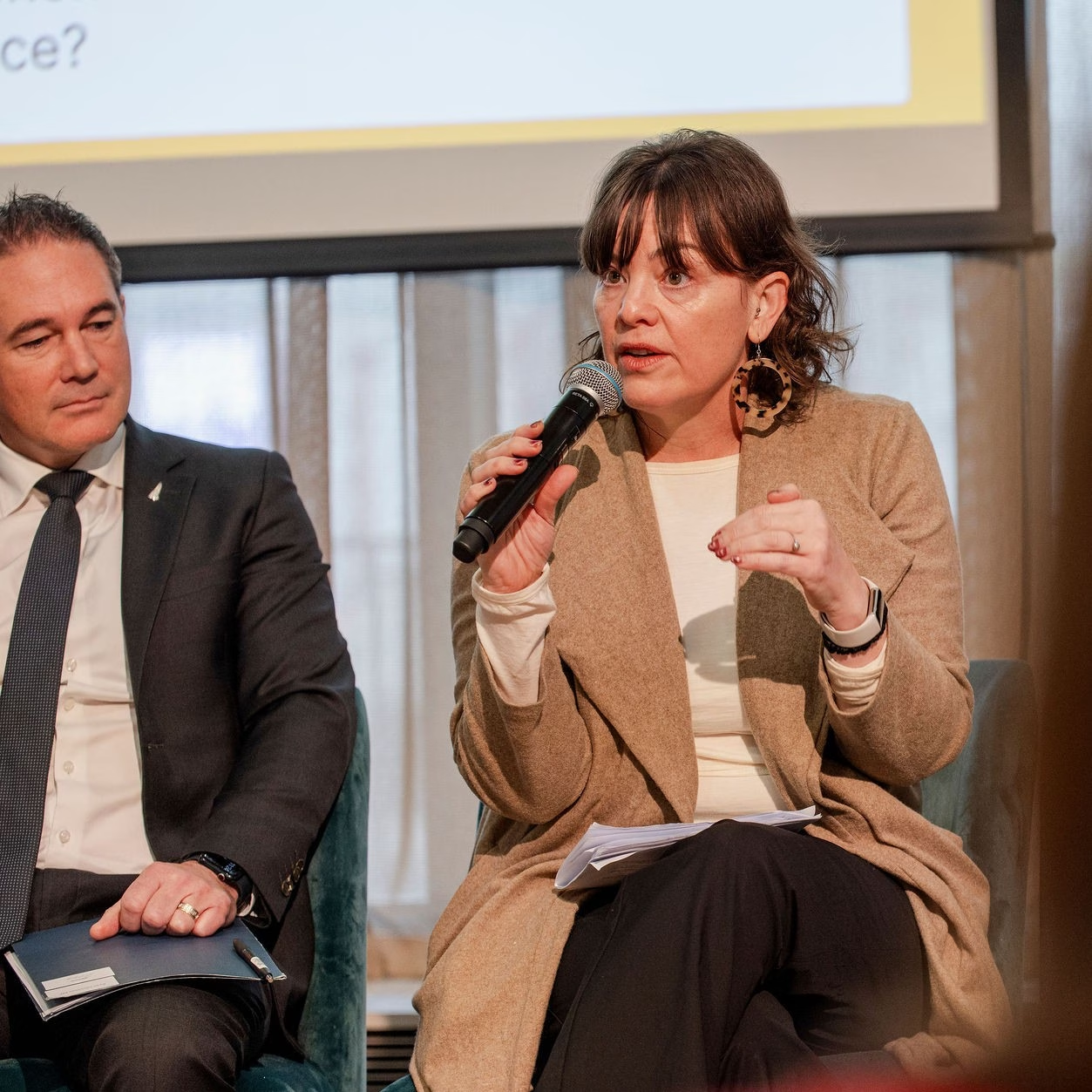
Genter began, “Can we talk about the cost? I know it feels good to drive fast, but it doesn’t really get you anywhere any faster most of the time.”
“Most of our roading network isn’t designed to take higher speeds. All of our two lane, undivided highways – the reality is the safe speed on a road like that is 70 or 80 kilometres an hour,” which she said would be the standard in countries like Japan, Ireland or Norway.
“If something goes wrong at a higher speed, it’s much more likely to result in a fatal or a serious injury crash.” She also added that faster driving consumes more fuel.
“Sensible speed limits just make sense from a productivity point of view, but also from a valuing life point of view.”
She opposed the idea that higher speed limits correlate to better productivity. “When a road gets closed for hours and hours because you’ve had a major fatal crash, that’s not good for productivity.”
“If you really want to drive fast, go to a racecourse!”
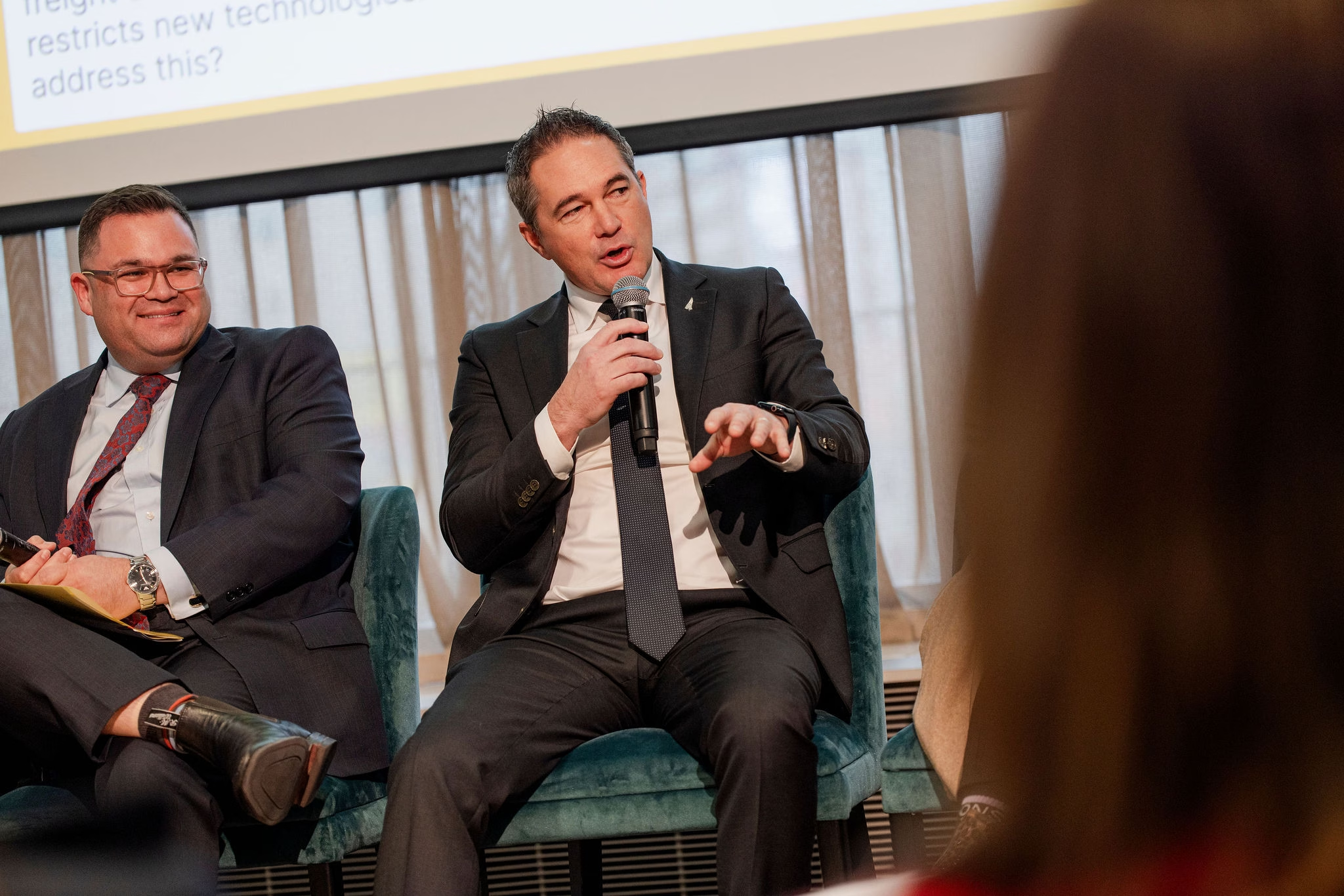
Hamilton vehemently disagreed with all her points. The two of them verbally sparred over whether or not the previous Government had imposed blanket speed reductions, and tension was high.
“We all agree, we want safe roads, no one wants to die, but we saw no material impact on road toll deaths under the last Government… you can’t just impose blanket speed rules,” said Hamilton. “Some of these roads are designed for speed… They’ve gotta be fit for purpose.”
Genter replied, “It’s easy to appeal to the base desire to race around everywhere, but it will cost us.” She said that rather than imposing blanket speed reductions, “we enabled councils and communities to decide what the appropriate speed limit was.”
Hamilton came back, saying his administration also had a consultation process. Foster was eager to jump in too, but unfortunately, time was up.
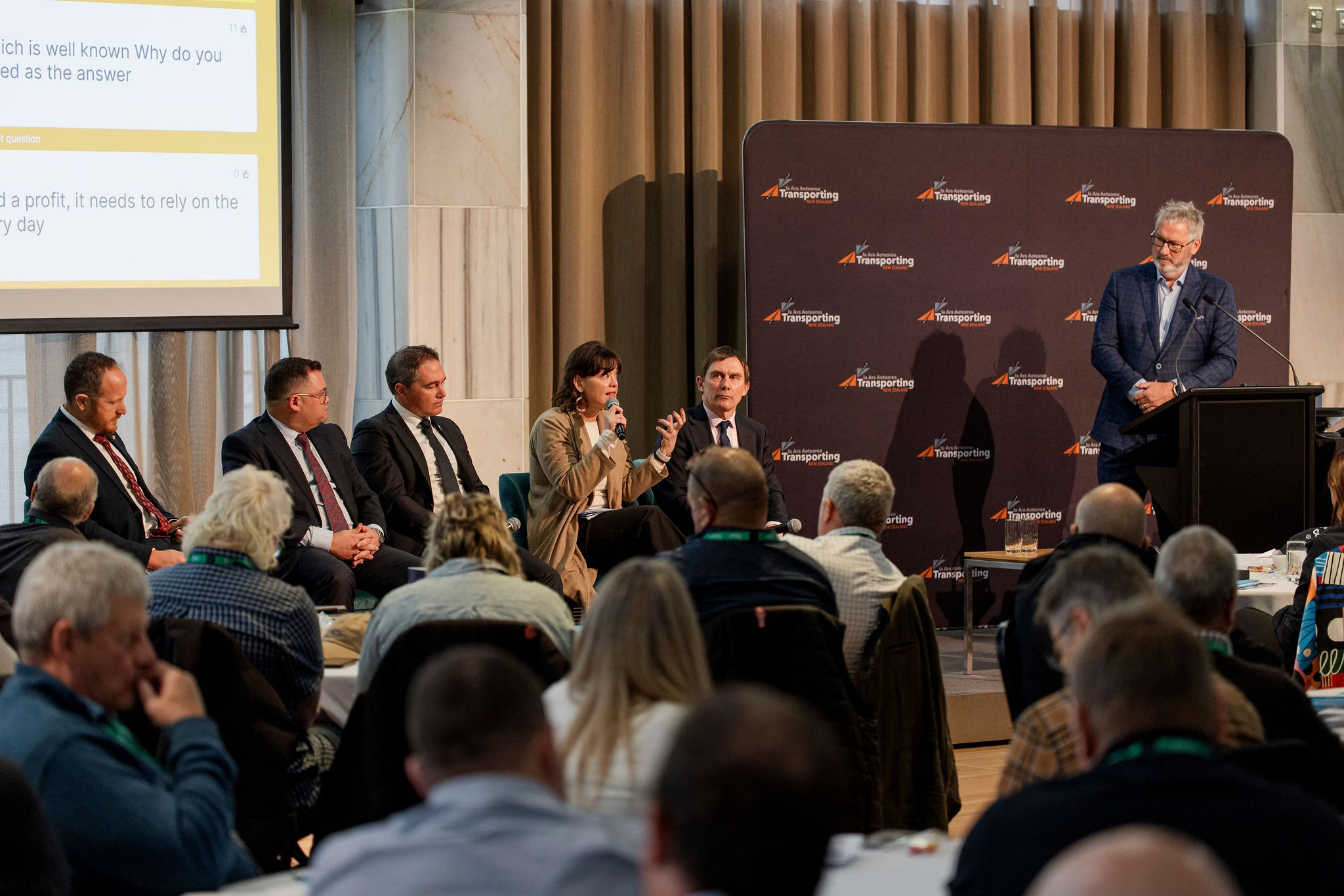
The MC, comedian Jeremy Corbett joked, “Alright, they’re both lying,” as he closed the panel. “Amazingly, we’ve wrapped up all those topics and found a solution!”
Perhaps not, but we hope to see those unfinished threads of conversation re-examined in the coming months as election campaigning ramps up. The polls show it’ll likely be a very close race, so Transporting New Zealand will continue to make sure every party is aware of the road freight sector’s cruciality to our economy, and the conditions in which it thrives.
In case you missed it, read about Transport Minister Chris Bishop’s address at our June 2026 conference here.

Didn’t get this by email?
Stay in the loop on the latest road transport news with our weekly Dispatch newsletter, delivered to your inbox every Friday morning.