
Transport minister in the hot seat
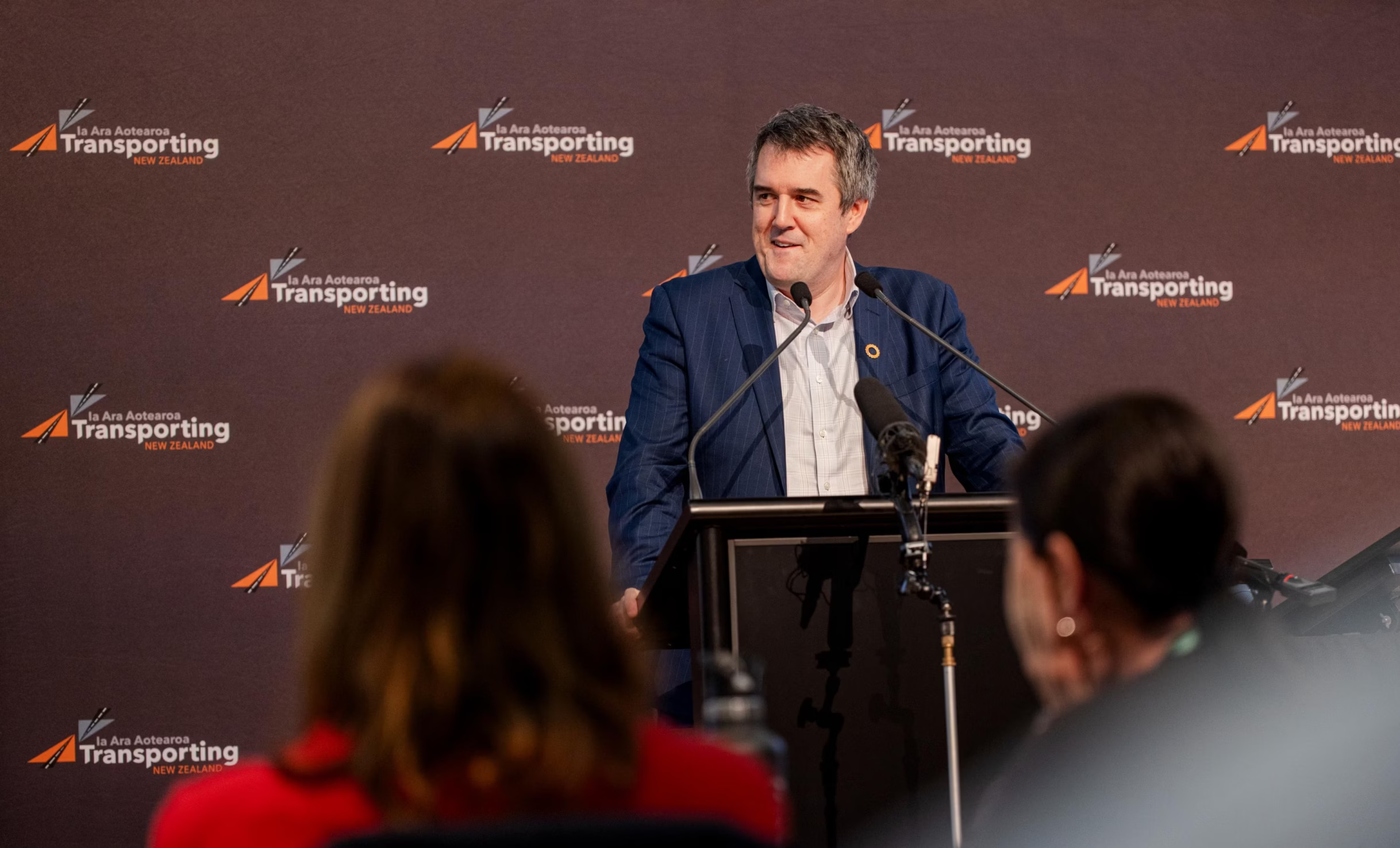
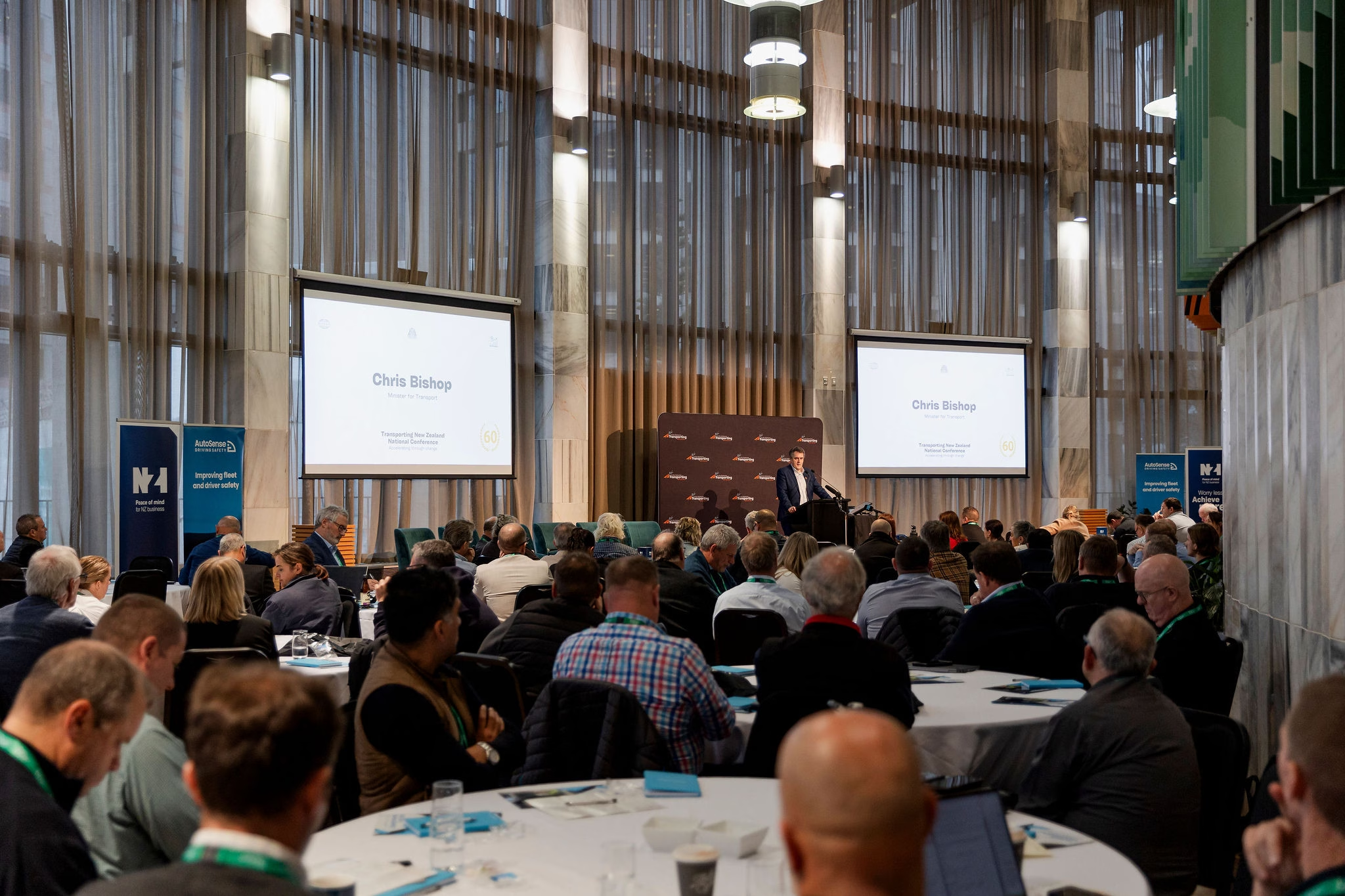
A scheduling conflict meant Transport Minister Chris Bishop couldn’t debate his parliamentary peers directly at June’s conference, but the 200 or so delegates in the room were happy to step in and ask some tough questions following his standalone address.
Firstly, though, he began by talking about how critical road freight is. “When your sector is working well, the rest of the economy works well. When it’s not, everything slows down.” The audience agreed.
The Minister acknowledged the often-unseen, but vital work the transport industry undertakes. “I think probably people don’t say it enough, but when you pick up a product in an overseas supermarket and you see the silver fern on the front, that doesn’t happen by chance. It’s made possible by a freight sector that moves our products efficiently from the farm to the factory, from factories to ports, and ultimately to shelves around the globe.”
Bishop said the Government was committed to listening to the sector, evidenced by investment in network reliability and resilience, and the reinstatement of the National Freight Demand study – “because good decisions rely on good data.”
Red tape
Next, the minister addressed the bureaucratic hurdles transport operators are jumping over every day.
“These are not big, headline-grabbing issues, but they’re the accumulation of small, technical rules, permits and restrictions… and I gotta be honest with you, the reality is, many of these issues, traditionally, have never made it anywhere near a Minister’s desk.”
Too small, too technical, not urgent enough – the variety of reasons he gave for why they “end up in the too-hard basket.” Bishop said he was committed to removing the meaningless rules holding transporters back through the Land Transport Rules Reform Programme. Some changes are expected to come into effect before the end of the year, including removing the requirement for HPMVs to display H plates.
Answering a question on when the need for 50MAX permits would be removed, Bishop confessed that he hoped things would be further along by now. “I’ll be honest with you, we’ve not made as much progress on land transport rules reform as I would like… [but] we’ve accelerated things a bit in the last year or so. I want to crack into it.”
Drawing a hard line on weight restrictions
On the fuel crisis, the Minister said his guess was as good as anyone’s on how the situation would be resolved. “Like everyone, I wake up and turn on Twitter and the news and wonder what’s going on in the Middle East. We can’t control what happens there, obviously, but what we can control is the way we respond.”
He said that after considering a range of options, including payload increases, the benefits apparently didn’t stack up against the costs.
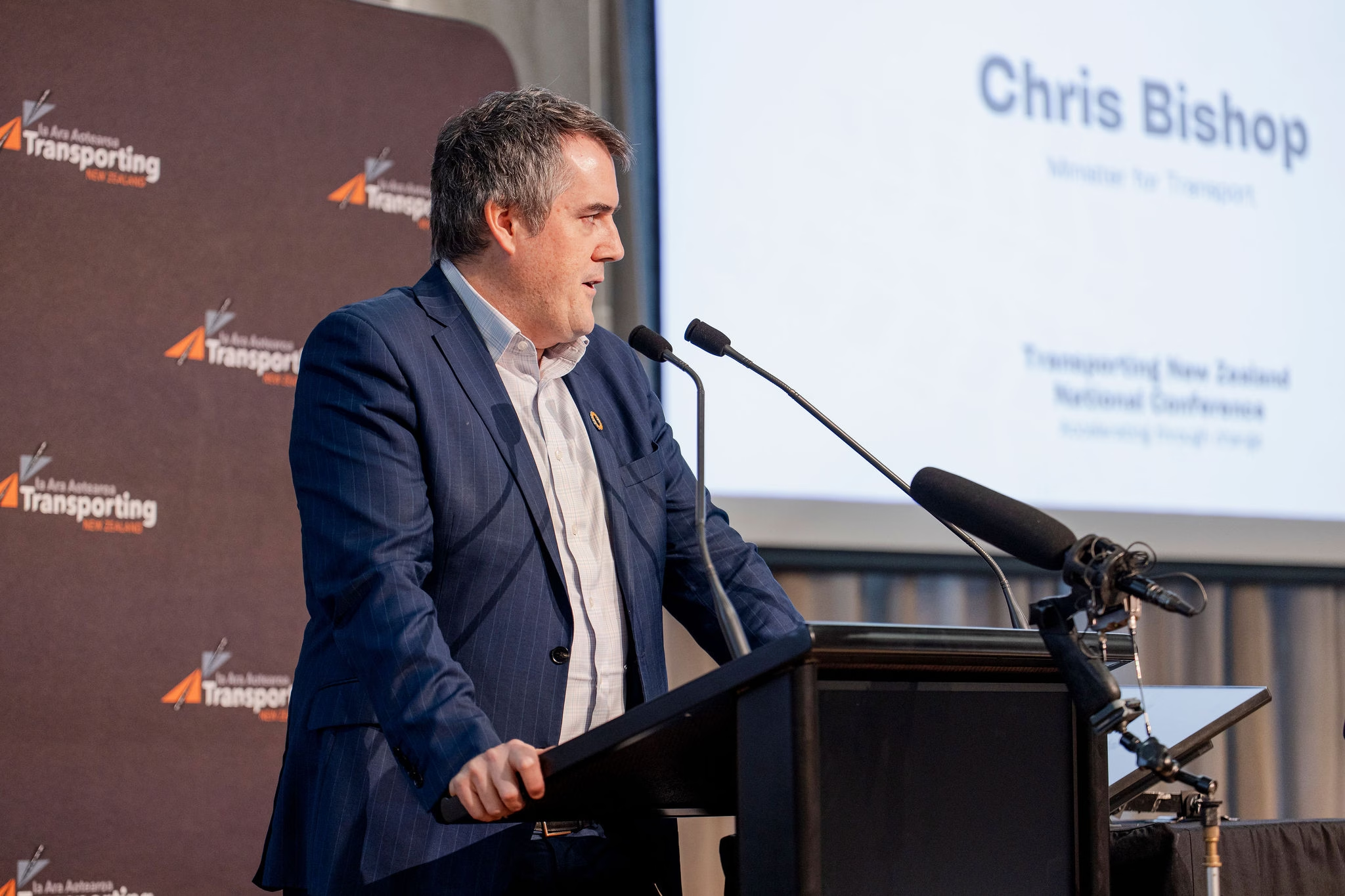
His official speech as published on the Beehive’s website reads; “I want to be very clear about the Government’s position: we are not in the business of subsidising the freight sector. Any changes we make will need to ensure the effects on infrastructure are properly accounted for and managed through the system.”
It was interesting wording, and these words were not used in the room – as you may have seen if you were reading RNZ’s reporting that day.
Instead, Bishop landed on something we’ve heard before; that the government’s position is just “to get the policy right.” Analysis from his officials said allowing some trucks to carry more weight would cost millions in infrastructure damage while only saving one and a half days’ worth of diesel. This analysis hasn’t, at the time of writing, been shared with Transporting New Zealand, but it begs the question as to whether the fact heavier trucks pay higher road user charges has been adequately factored in.
On a positive note, the Minister confirmed that work is underway on vehicle dimension and mass reform over the longer term, and that the fuel crisis was a catalyst for this.
Question time
The “minister of many things,” as he put it, Bishop answered a query from the audience on the objective behind creating MCERT (the Ministry of Cities, Environment, Regions, and Transport). He explained that though there is much interrelation between the ministries soon to be merged – including Transport, Housing & Urban Development, and Environment – they aren’t working together efficiently.
“The way I’ve envisaged MCERT is to bring all of those linkages together, so we have the finest minds in the public service working on those issues together.”
In that system, policy advisors will be “looking not just at issues in isolation, but looking at things in a way that’s connected to every other issue.” He claimed it wouldn’t be a “mega-ministry” like that of Business, Innovation and Employment, and that “when it’s done,” it would only be staffed by about 800-900 people. When MCERT commenced operation from 1 July, that number was closer to 1,300, which is about the same number of employees across the three former ministries MCERT is comprised of. Does Bishop’s comment confirm there’s more cuts to come?
Transporting New Zealand generally agrees that a unified approach makes sense, and has therefore welcomed the establishment of the new Ministry. The caveat is that it must be adequately resourced. The Ministry of Transport already had comparatively few staff compared to other government departments, considering the scale of work it had been undertaking – for example, big-ticket reforms like universal RUC and congestion charging.
Supporting the electric transition
On electrification, the Minister said he’d only recently learned about the Low Emissions Heavy Vehicle Fund, because it is administered by the Energy Efficiency and Conservation Authority, and is therefore in MBIE’s jurisdiction, rather than MoT’s (or now, MCERT’s). It didn’t sound like he was a fan of the $27 million fund.
“I have a bit more of a purist approach… If you just take a step back, what’s the role of government in all of this stuff? Is it just to dole out some subsidies? Well, maybe up to a point, but actually, the market’s gonna drive the change over time,” he said.
His view on the Government’s role in enabling heavy vehicle fleet electrification is firstly through the provision of infrastructure “in a commercially viable, sensible way.” He spoke of how the expansion of the light vehicle charging network is being funded through commercial partnerships with electricity providers, and foresees a similar model being applied for heavy vehicles.
Network resilience
The last question aimed at the Minister concerned the lack of alternative routes to the notoriously slip-prone Awakino Gorge, and it seemed much of the audience agreed that this should be urgently acted upon.
Bishop acknowledged the important role routes through the Awakino and Waioweka gorges play in delivering freight and connecting communities. He also confirmed that the freight task was taken into account when allocating $400 million in the budget to improving state highway resilience around the country.
What was harder to reconcile is the number of upgrades New Zealand needs with the limited pool of funds available.
“Transport funding, we’ve got a real challenge. And I think you all know that,” Bishop said to the room. “No one likes hearing this, but, everything costs money, right? You’ve got to pay for it. Fuel tax hasn’t gone up for seven years. In real terms fuel tax has gone down 20 per cent, after you account for inflation.
“It’s a bloody tough ask to say to people, we’re putting up fuel tax by 12 cents a litre, because petrol prices are high enough as they are, and it’s a time of great challenge for many people. We’re still bearing the effects of the cost-of-living crisis, and we’re not out of the woods by any stretch of the imagination,” he continued.
“But if we keep not dealing with the problem, it just gets harder to deal with.”
Indeed, we’re only seeing bills get higher, so it stands to reason that investment sooner rather than later would save money in the long run.
The Minister said that we should expect to see a renewed focus on resilience from the Government, so we’re not repairing the same road over and over again.
“You do it once and do it right.” We sure hope so.
This story first appeared in the Winter 2026 edition of Transporting News.



Didn’t get this by email?
Stay in the loop on the latest road transport news with our weekly Dispatch newsletter, delivered to your inbox every Friday morning.