
Supply chain collaboration is needed to meet our challenges
Changes in how commercial regulation is managed
Over the last week or so we’ve provided feedback to NZTA about the regulatory compliance framework via three different channels from the Director down. Those elements include NZTA’s Compliance Response Framework, an article that’s sets out to establish a base level of understanding of how NZTA intends to interact with the people and organisations it regulates, and a session with its new Commercial Transport Regulation team on the entry requirements for Transport Service Licences.
We take these opportunities very seriously which means spending time preparing for them and then exchanging our views. Why we have put in so much effort is that I sense NZTA is starting to get a real sense that things are not as good as they could be, and more importantly, it’s starting to do something about it.
We’ve been advocating for several years now that if we’re paying hundreds of millions of dollars to have a regulatory licensing regime then it needs to be fit for purpose, and finally it looks like we are seeing some substantive efforts to address that, which is a good win for our members and the industry.
We’ll need to wait and see if NZTA can move from the research and problem analysis into the fixing phase, but fingers crossed what’s happening so far looks very promising.
We only exist to serve a market demand
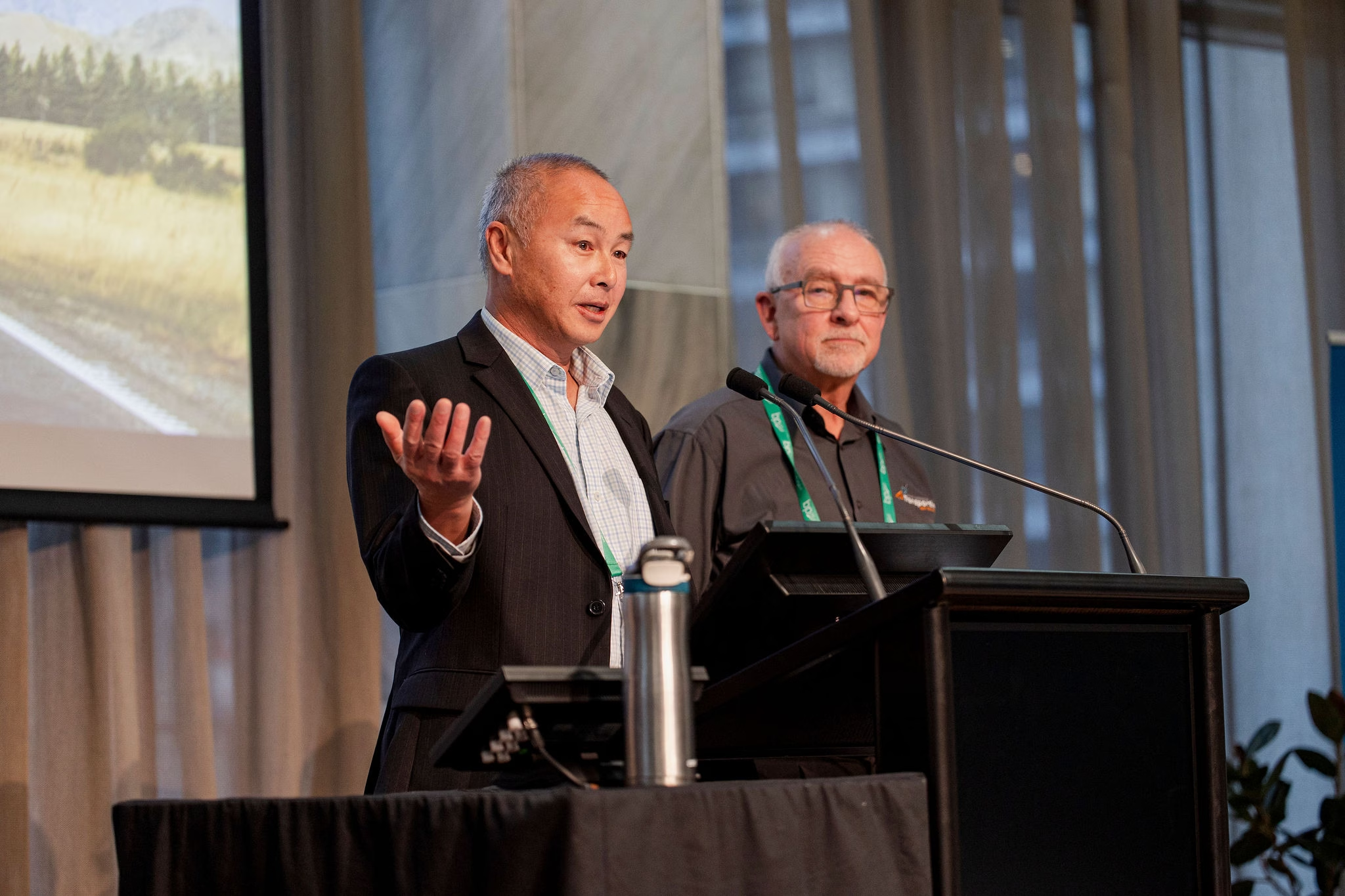
Another highlight of the week was being a panellist at Aka Raupapa – the National Freight and Supply Chain Superhui held at the University of Waikato last week. That was a highlight because the panel included representation across the supply chain. There was a retailer, a freight forwarder, a Port, and a transport advocacy group.
As I mentioned at our conference, the more we collaborate as a supply chain the better chance we’ve got of addressing our challenges. Too often we internalise our issues, but the reality is that our members businesses only exist because there is market demand for those services. No one knows better about future demand that the clients of transport services, and particularly those that export primary produce. These customers are abreast of international trends, such as ISO container weights increasing, so it’s vital that we work together more and ensure that the transport component of those exports meets international expectations.
Free trade agreements won’t mean much if we can’t get our goods to market in a competitive fashion.
And to anyone that thinks I might exaggerate, while he didn’t verbalise it, this risk was demonstrated in Minister Bishop’s speech at our conference. Rather than seeing our request for productivity reform as something to meet customer demand, the government has linked lifting productivity with “subsidising the freight sector”.
And similarly, while we are yet to see the advice the Minister received, I was also concerned to see the claim that our recommendation on improving productivity would lead to a cost of around $150m in additional infrastructure damage. Bear in mind that typically annual RUC income is circa $2b, the $150m cost the Minister refers to seems grossly disproportionate to our recommendation. Not to mention, the international evidence that shows higher productivity vehicles cause less not more road wear.
Conference
To those that had their travel plans to our conference impacted by Wellington’s weather, as a proud and patriotic Wellingtonian I apologise.
I’m very aware that many people went to considerable lengths to get here and despite best efforts they couldn’t and I’m extremely appreciative of all the efforts made.
The conference was a huge success, and certainly again lived up to being one of the highlights on the transport industry’s calendar. I am also grateful to all our sponsors, delegates, speakers and supporters that made it happen.
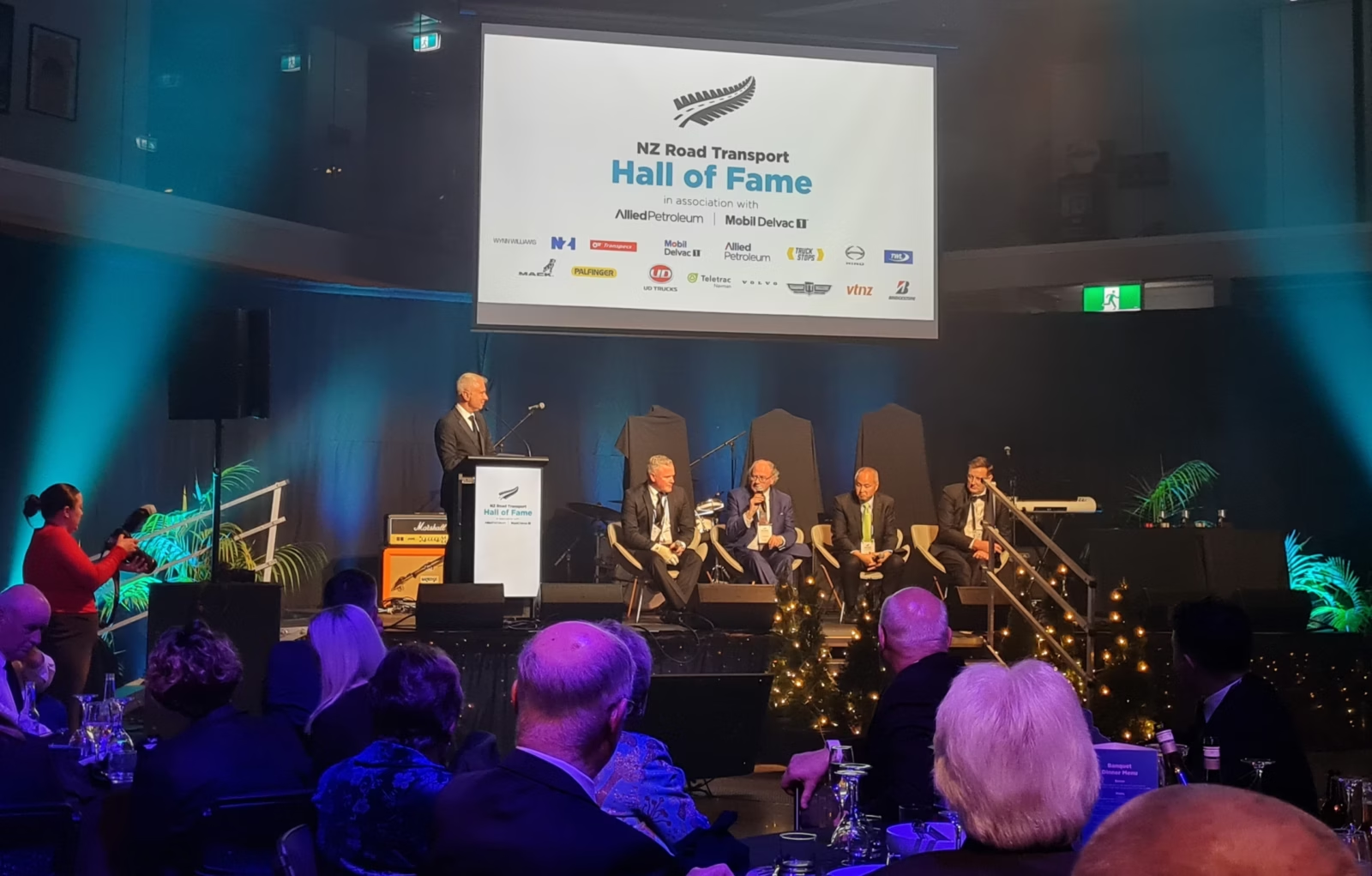
To all those that were nominated for awards, and to the award winners, congratulations. The quality of the nominations was extremely high and the competition was extremely close. I was privileged to be one of the judging panel and I was impressed by the huge range of diversity across businesses, large and small, people, young and old, and the great examples of leadership.
Sure, we’re got some uncertainly ahead of us but what I am certain about is our industry has lots of great people in it, and therefore I’m very confident we will get through whatever challenges arise.
Happy Matariki, have a great break and for anyone travelling, keep safe.

Didn’t get this by email?
Stay in the loop on the latest road transport news with our weekly Dispatch newsletter, delivered to your inbox every Friday morning.