
Smart compliance and unfair regulation
Smart compliance
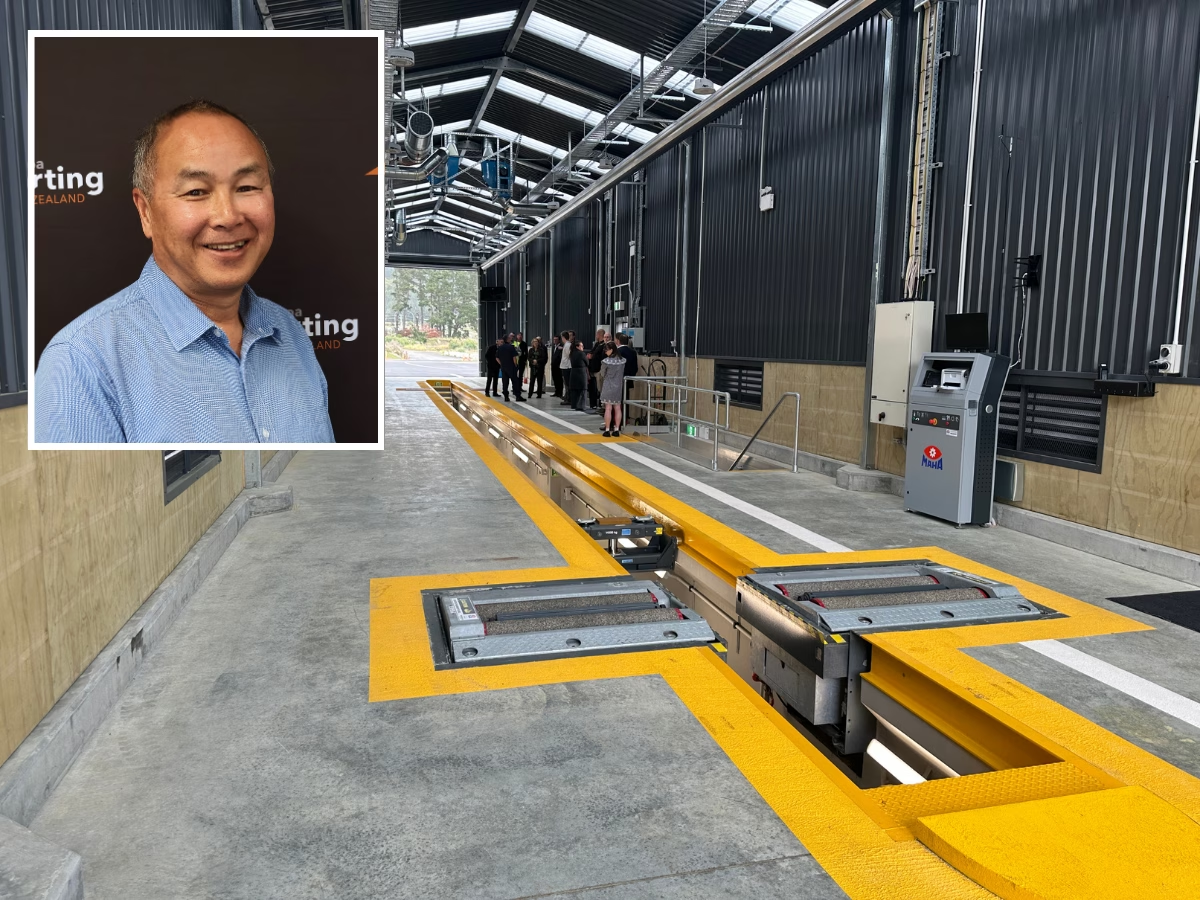
A highlight of this week was visiting the new Wellington CVSC site located just north of Paekakariki. It’s been strategically located to monitor trucks with high-speed weigh-in -motion (HSWIM) and automatic number plate recognition (ANPR) sites on SH1 and SH59 as they travel past the northern end of Transmission Gully.
The facility is impressive, with lots of truck parking and a vehicle inspection bay that has equipment to enable laden/tie down brake testing, and shaker plates for steering and suspension checks.
The CVSC monitoring system should result in far fewer stops for compliant operators, and more effective use of the CVSC’s personnel. Based on the findings from similar sites, the weight non-compliance rate is about 1.5 per cent. Presuming that rate is similar in Wellington, based on NZTA traffic count data we anticipate between 25 – 30 trucks could be stopped on a typical day.
Unnecessary stopping of trucks creates productivity loss, and while I’m mindful there will also be some random stopping of trucks, we expect compliant operators to see a big reduction in their vehicles being pulled in. Any expectation that all operators should build in an extra 15 to 30 minutes for possible compliance checks is simply unrealistic and would be a massive economic burden.
This week I also met with a company that has camera technology that can detect mobile phone use. While this technology could be here in a relatively short time, the introduction of HSWIM has taken an age. I recall visiting Police sites in Johannesburg, South Africa in 2004 where HSWIM was being routinely used to screen vehicles. Hopefully the rollout of other technologies that have multiple clear benefits won’t suffer the same lag.
Unfair and inconsistent regulation
The Ministry for Regulation aims for New Zealand to have sound regulatory settings to support a modern, open market economy.
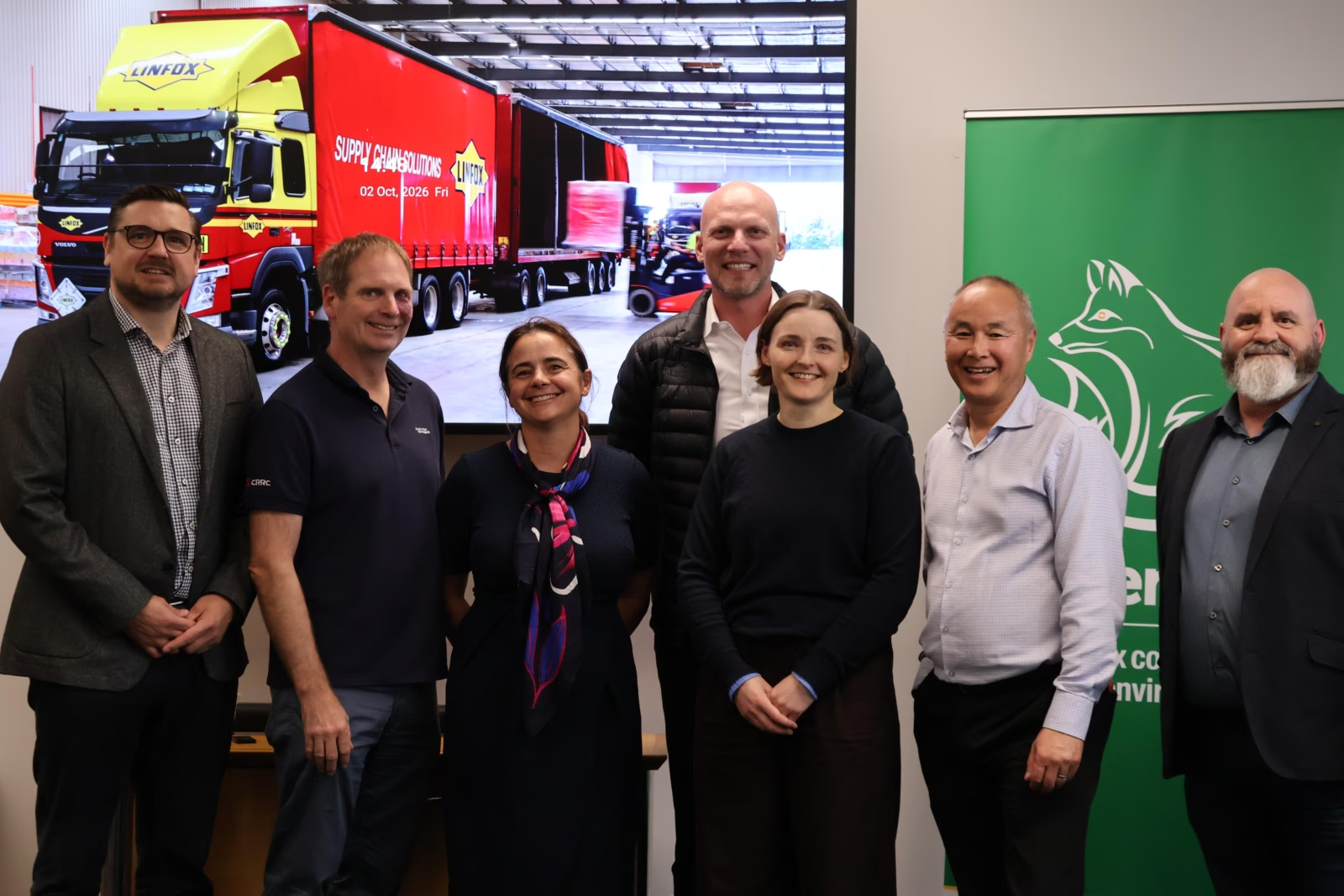
Our new Head of Policy & Advocacy, James McDevitt and I met with the Ministry’s Deputy Chief Executive, Policy and some of his team to discuss where we see issues with the existing regulatory framework.
In prepping for that meeting, I was mindful of the old adage; “A bad workman always blames his tools,” and this underpinned much of our discussion. Are the problems actually with the regulations, or is it more a case of how they are being applied?
Land transport rules were introduced in the mid 1990s to make regulatory change faster, easier to understand and to ensure consultation was undertaken on changes. But somehow, we’ve ended up with rules that seem to take forever to change. I contend that’s not the framework’s fault.
However, one specific example of inconsistent regulation that we have called the Ministry’s attention to is how livestock operators are being unfairly penalised when stock effluent spills from trucks.
No livestock transport operator wants stock effluent to spill from their vehicle. But managing the risk of spill requires all parties across the supply chain to play their part.
Over the last couple decades, all stock crates have been constructed with effluent holding tanks of a minimum capacity determined during across-supply chain consultation. However, other parties have not played their role to the appropriate level. Animals are not reliably stood on farm, and the network of stock effluent disposal sites is inadequate. These shortcomings are out of the direct control of transport operators.
This issue is evidenced in the Land Transport Act 1998. Section 42 imposes a responsibility on transport operators to secure their loads, however, waste discharged from animals being carried on a vehicle at the time is exempt from that load security requirement. This is clear evidence that the Government appreciates the shortcomings in the current system, and that transport operators should not be held responsible for loss of stock effluent during transport.
Despite transport legislation making this concession, other legislation available to regional councils allows them to penalise transport operators if effluent is split from the vehicle. Regional councils can, and do, issue infringement fees and abatement notices if stock effluent is lost from a truck.
Also in the livestock space, we’re looking into how booking fees are applied.
As usual, some fascinating issues on the go – so watch this space.


Didn’t get this by email?
Stay in the loop on the latest road transport news with our weekly Dispatch newsletter, delivered to your inbox every Friday morning.