
Road to net zero: the latest Green Compact update
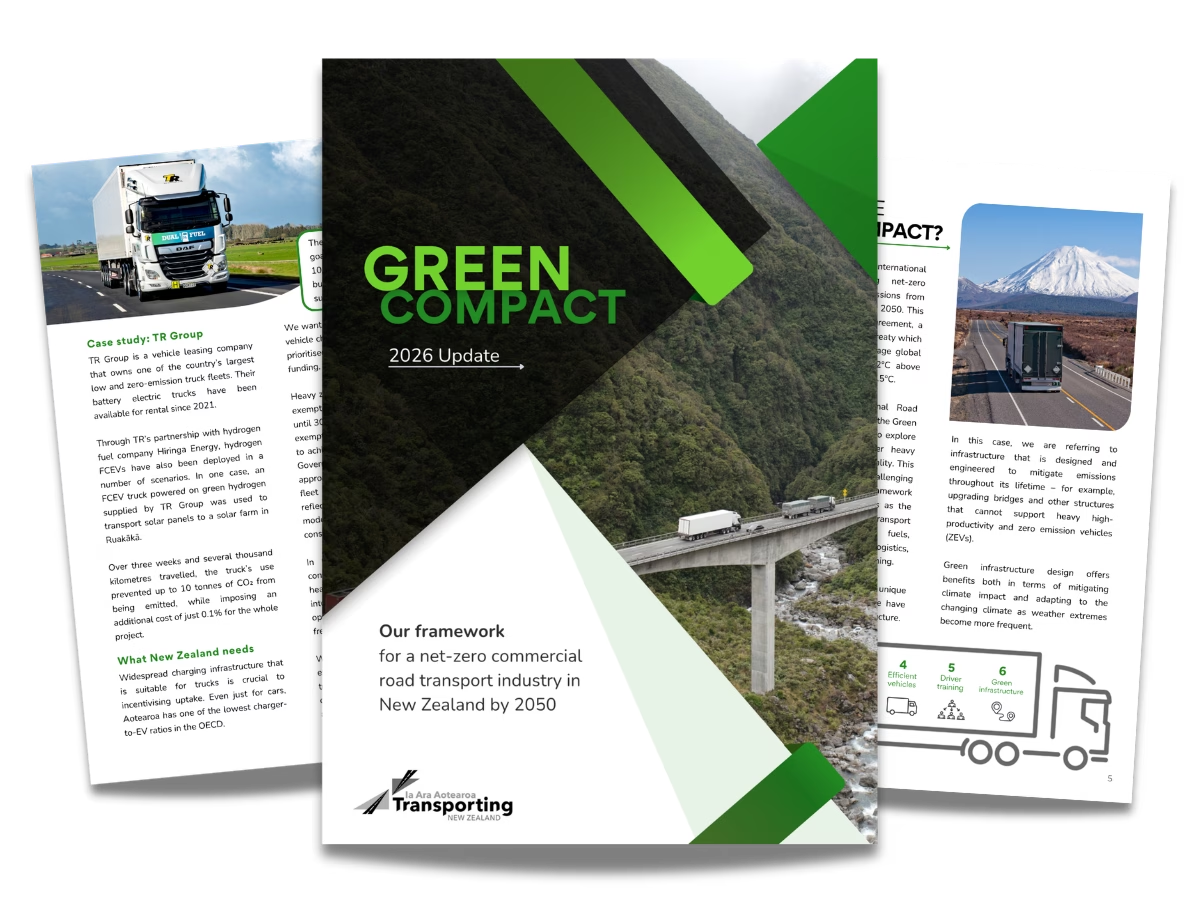
Freight is a big source of greenhouse gas emissions, but there’s a growing list of good ways to cut them.
Heavy vehicles only make up about 4% of vehicles in New Zealand but contribute about 25-30% of all transport emissions. Naturally, some of that disparity has to do with the fact trucks and buses travel much more than the average car, and they carry a lot of cargo or passengers, respectively.
Nonetheless, reducing trucking’s carbon footprint and overall environmental impact is something we all have the responsibility to do. Decarbonising road freight is still rife with challenges pertaining to the availability of charging infrastructure, range capability, cargo capacity limitations, upfront costs and overall technological readiness.
While these issues persist, we’ve seen great strides internationally and in Aotearoa. Market forces are playing a larger role than ever as zero-emission vehicles become closer to reaching total-cost-of-ownership parity with traditional powertrains, particularly as diesel prices skyrocketed in 2026.
And fortunately, there’s a great deal of clever people in our industry with a genuine interest in lessening its environmental impact. It was our pleasure to profile some of them in our latest edition of the Green Compact, which is available to read now.
What is the Green Compact?
The Green Compact is an international commitment to achieving net-zero greenhouse gas emissions from commercial road transport by 2050.
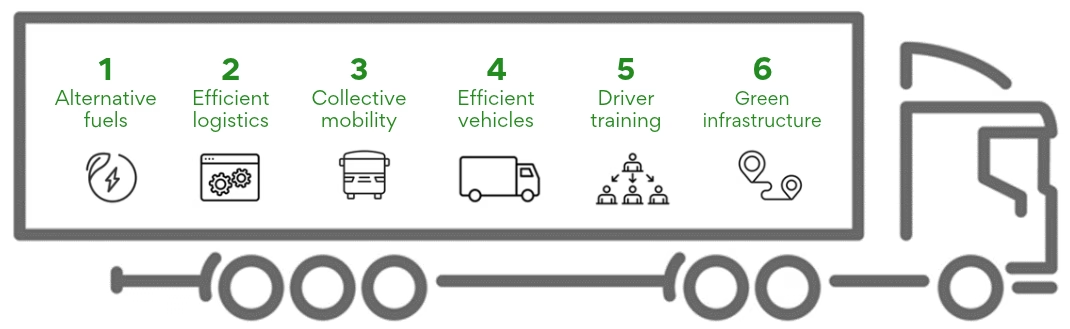
Launched by the International Road Transport Union in 2021, the Green Compact framework establishes five strategic pillars as the foundation for road transport decarbonisation: alternative fuels, efficient vehicles, efficient logistics, collective mobility, and driver training.
Reflecting New Zealand’s unique geography and road network, we added a sixth pillar: green infrastructure. This is quite a broad term, we know. In this case we’re primarily referring to road infrastructure that has the capability to mitigate or avoid emissions from being produced over its lifetime.
Transporting New Zealand initially adopted this framework in 2022, so this year it was due for a refresh. This new edition provides an update on what’s been working well over the last three years, alongside the barriers to change for our industry what should be done to overcome those barriers.
The purpose of this document is to help inform our members and the wider industry of the options available to them. It also helps guide our engagement with government stakeholders on climate, including the Ministry of Cities, Environment, Regions and Transport, NZTA, and the Climate Change Commission.
What’s changed?
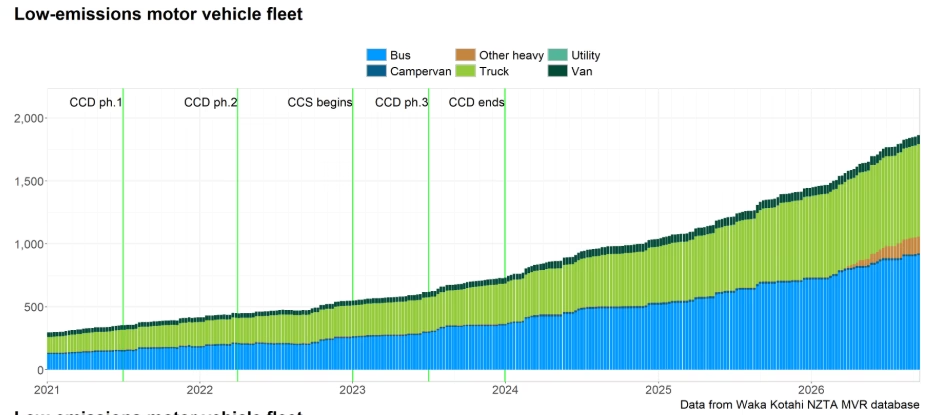
Firstly, in the last three years there’s been some exponential growth in the low and zero emission heavy fleet, particularly buses, with trucks following closely behind.
Secondly, a record amount of funding towards stronger bridges and roads to accommodate high productivity motor vehicles and heavier electric vehicles was allocated through the 2024-2027 National Land Transport Programme. HPMVs can now operate on 79% of New Zealand’s state highway network, but only 14% of local roads, and there’s a lot of work left to do upgrading our many bridges.
Congestion charging legislation has passed, and though freight vehicles will not be exempt as we had advocated for, we’re hopeful that such schemes will have a positive impact on productivity with fewer vehicles, including trucks, idling in traffic and producing unnecessary CO₂ emissions. Auckland Council are planning to consult on a scheme in November 2026.
The Government’s Investment Boost, which allows businesses to claim an immediate 20% first-year tax deduction on qualifying new or fresh-import trucks, saw modest uptake, suggesting the industry needs additional incentives to replace older, more polluting vehicles.
And this year regulatory changes enabled Class 1 licence holders to drive zero-emissions vehicles up to 7,500kg, while Class 2 licence holders can now operate heavier electric buses. These are important steps in removing barriers to adoption.
And one silver lining of the fuel price crisis this year has been a greater interest in fuel-efficient driving techniques, logistics and technologies.
Policy recommendations
These are our key messages to decisionmakers.
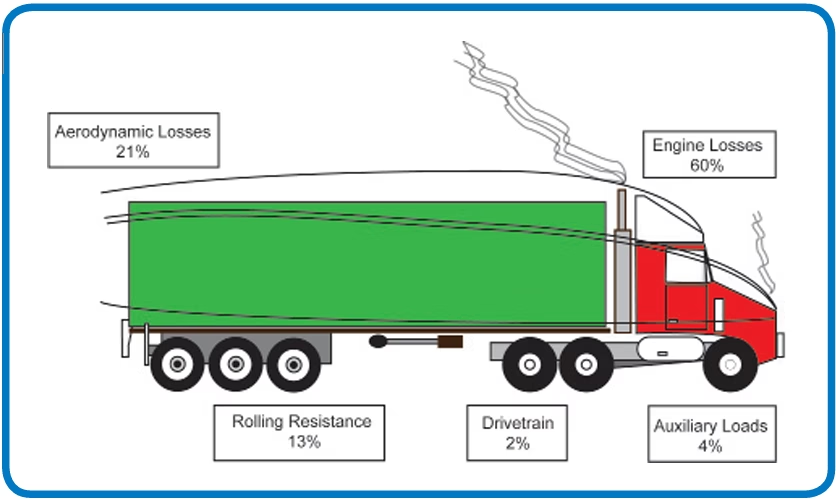
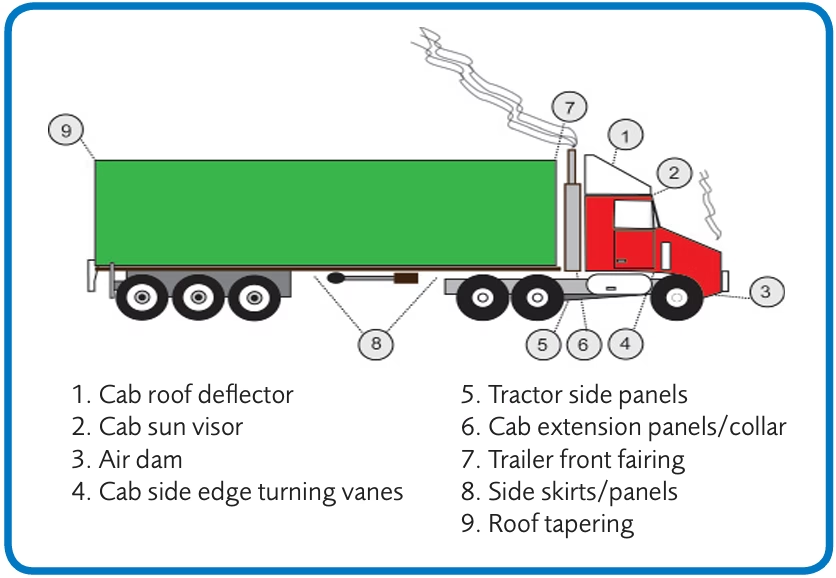
Firstly, we believe there are opportunities to expand the reach of EECA’s Low Emissions Heavy Vehicle Fund. For example, aerodynamic upgrades can be retrofitted onto existing vehicles to significantly reduce drag and fuel use at a relatively low cost, but these improvements aren’t eligible for funding under the scheme as it stands today.
Secondly, full capital expensing for newer, lower emission trucks will help to accelerate fleet renewal. This is really important as the average age of a truck is over 17 years old in New Zealand, meaning a large proportion of our heavy vehicles don’t meet internationally recognised standards for tailpipe particulate matter, let alone CO₂ emissions. Incentives that don’t cost the taxpayer anything are a win-win and also work well with Ministers.
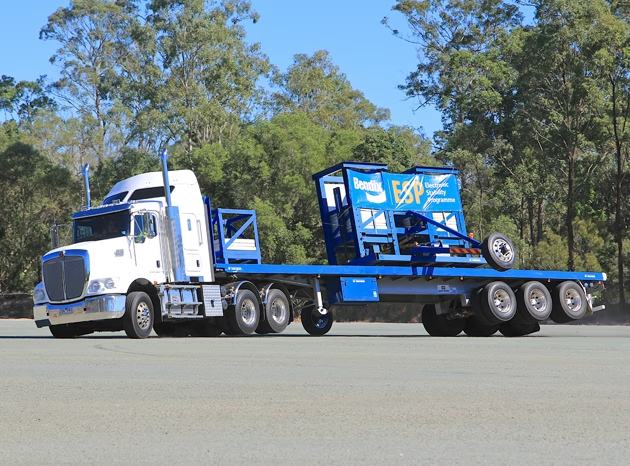
Our third recommendation is that our vehicle dimensions and mass regime needs reform so we can move more cargo with fewer vehicles. It’s the same reasoning for why we use double decker buses to carry more people where they need to go without increasing congestion. 50MAX trucks increase freight capacity by approximately 20%, with their additional axle ensuring no extra wear on roads per tonne.
We estimate that a 2-tonne payload increase for HPMVs would save up to 6 million litres of diesel per year and avoid 9.5 million kilometres of heavy vehicle travel. Plus, it’s just good economic sense to consolidate loads.
We do recognise that a lot of our road network is not yet fit for purpose, and we can start with strengthening parts of the network to ensure they can withstand heavier weights.
This is going to be increasingly important in the future as the fleet electrifies, with battery electric vehicles weighing about two tonnes more than diesel equivalents on average. If we want to get transport operators transitioning to these heavier vehicles, the reality is it cannot jeopardise their payload.
Lastly, heavy EVs are exempt from paying RUC until 30 June 2027. While cars and buses have developed their own momentum, uptake in the truck fleet is progressing more slowly, reflecting higher upfront costs, limited model availability, and operational constraints. With this being the case, we believe the Government should consider reviewing and potentially extending this exemption to keep incentivising operators to make the switch if they can.
To these ends, Transporting New Zealand continues to provide submissions and recommendations on emission reduction plans, on VDAM, and openly lobbies for a fit-for-purpose battery and hydrogen refuelling network.
Read or download the full Green Compact update below.

Didn’t get this by email?
Stay in the loop on the latest road transport news with our weekly Dispatch newsletter, delivered to your inbox every Friday morning.