
National Infrastructure Plan Gains Cross-Party Backing
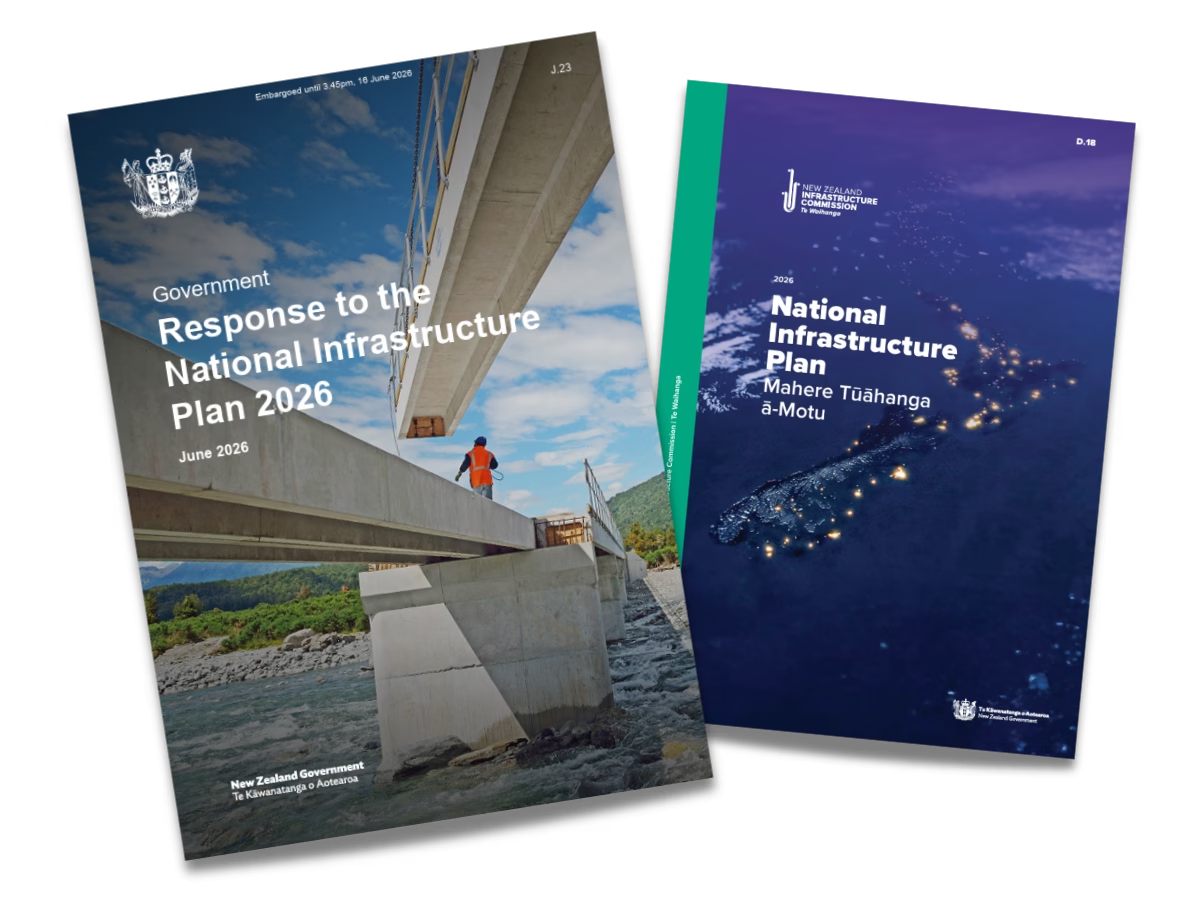
Transporting New Zealand is welcoming the bipartisan political response to the Infrastructure Commission’s National Infrastructure Plan, released this week.
The Government has responded to the National Infrastructure Plan by announcing that it supports all sixteen recommendations in the report, and noting the Government response is also broadly supported by the Labour and Green parties.
The National Infrastructure Plan, published by the NZ Infrastructure Commission in February, sets out a pathway for delivering infrastructure needs over the next 30 years, covering things like roads, hospitals, and water networks.
The Plan and Government Response has three big implications for Transport.
Looking after what we’ve got
Prioritising adequate maintenance and renewals will be an infrastructure priority for future governments, left or right. The Infrastructure Commission wants to see 60 cents in every future dollar of spending directed to renewals and maintenance rather than new projects.
In reality, that means that our existing local roads and highways will see potholes and other road surfacing issues fixed more quickly, but road users will be waiting longer before seeing big new roading improvements delivered.
Government departments and entities will also be expected to improve their long-term investment planning and asset management performance. This will hopefully produce better quality road maintenance and stop road repairs turning into a political football during election season.
While maintaining existing roads must remain a priority, New Zealand also needs to ensure that nationally significant transport projects continue to progress where they deliver strong productivity, resilience and safety benefits.
Lots of projects, not enough revenue
The land transport funding system will be reviewed to ensure its financial sustainability, with the Commission and the Government’s response acknowledging that transport spending has expanded beyond the National Land Transport Fund’s revenues.
The Plan estimates it would cost $56 billion to deliver just the major roads programme in full over the next 20 years. If this were funded entirely from petrol tax and road user charges, it would require a 49 cent per litre increase in petrol tax and equivalent hike in road user charges.
If New Zealand wants to see safer, modern transport infrastructure, there will need to be difficult decisions about funding it. This will include the introduction of measures like time-of-use charging in our congested cities, more toll roads, and a pioneering move to universal road user charges – replacing fuel excise duty.
This isn’t just a challenge for road transport. The Infrastructure Commission’s Plan also suggests that ongoing rail subsidies – estimated at $500m a year over the next decade – require reassessment, saying that “while there may be a case for subsidising rail, doing so requires a demonstration that the benefits of investing in rail exceed those offered by other public infrastructure investment opportunities.”
A no-cancellation commitment
The support from Labour and the Greens, who both wrote forewords in the Government’s response document, bodes well for ensuring that projects in the infrastructure pipeline won’t be cancelled under a change of government.
Kieran McAnulty, Labour’s infrastructure spokesperson, said “Aside from the LNG terminal, for which we share the Commission’s reservations, our commitment is that we will honour what is contracted, underway and already funded.”
This no-cancellation commitment will be a huge reassurance to the communities, businesses and road users who will benefit from projects like the Cambridge to Piarere expressway and Ōtaki to north of Levin highway project.
Walking the talk
Cross-party support for infrastructure themes and priorities is one thing – getting agreement on shovels in the ground is another. With the Labour Party already committed to cancelling scheduled increases to fuel excise duties and road user charges next year, and the National Party still bullish on the Roads of National Significance Programme, there will still be plenty of transport debate coming up on the campaign trail.


Didn’t get this by email?
Stay in the loop on the latest road transport news with our weekly Dispatch newsletter, delivered to your inbox every Friday morning.