
Business as usual budget for transport
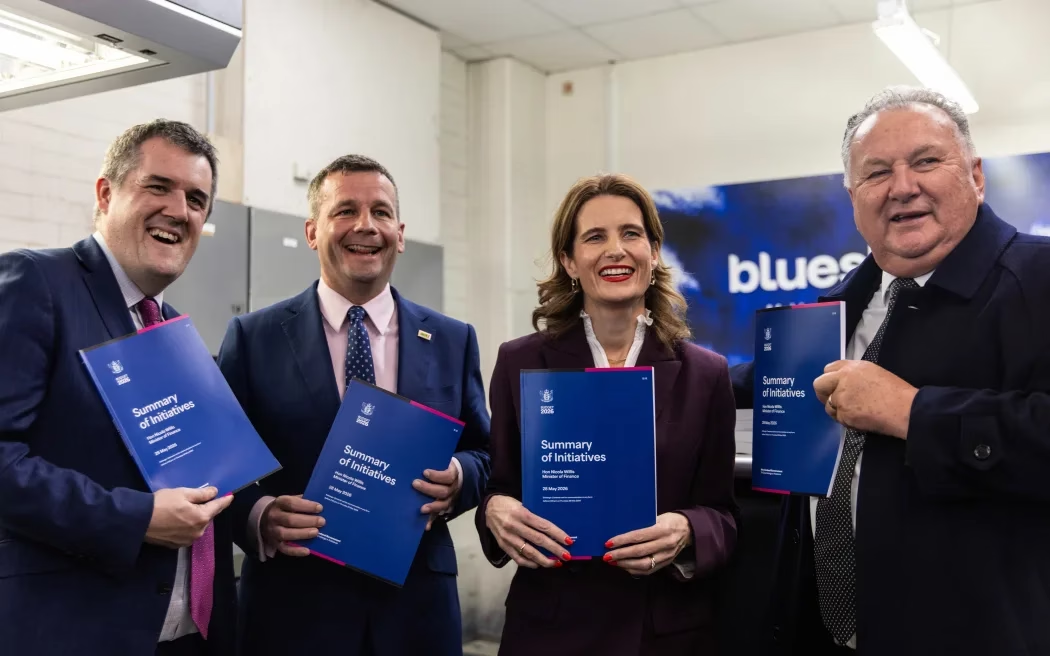
Described by Minister of Finance Hon Nicola Willis as a “bread and butter budget”, there were no big announcements in the 2026 budget on 28 May for the transport sector – well, unless you’re KiwiRail.
Perhaps the biggest piece of news was the injection of $1.44 billion for rail, $609m of which is for the Rail Network Investment Programme, $593m for capital expenditure on the freight network, and $199m for passenger rail, most of which is for the Auckland City Rail Link, along with network improvements for the lower North Island.
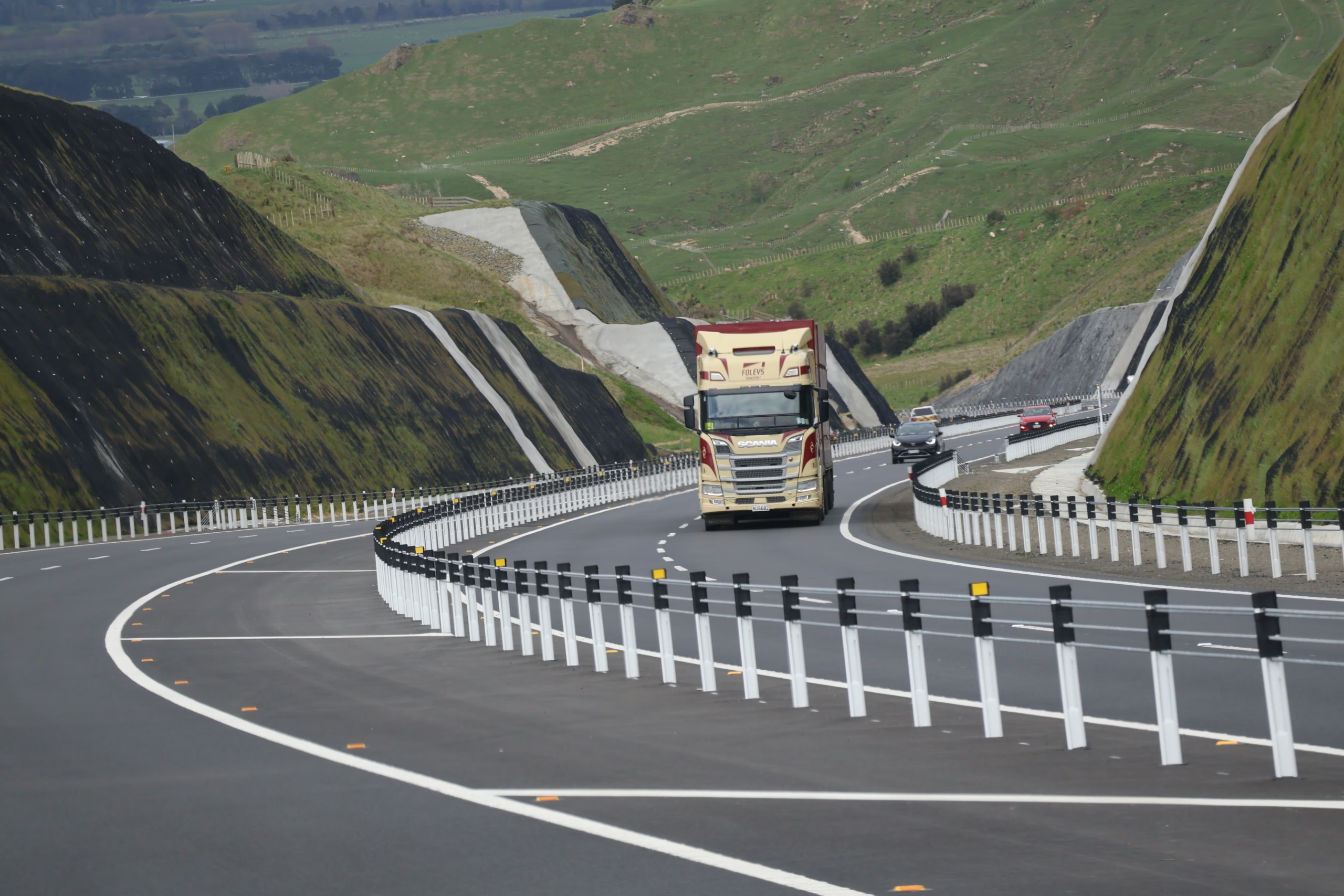
However, roads don’t totally miss out, with the government also confirming funding for one of its Roads of National Significance (RONS), allocating $1.77 billion to extend the Waikato Expressway from Cambridge to Piarere.
The 16km route, which had already been consented, is the next major RONS to receive funding, following commencement of construction on the Ōtaki to north of Levin and Hawke’s Bay Expressway RONS projects.
Announcing the funding boost for rail, Rail Minister Winston Peters said “this is the first time a government has fully funded a three-year programme up front to put rail on the same sure footing as many other infrastructure categories.”
The Rail Network Investment Programme is a statutory three-year investment programme that sets out how rail infrastructure will be funded, maintained, renewed, and managed, much like the 3-yearly National Land Transport Programme (NLTP) which the NZ Transport Agency oversees for roading investment.
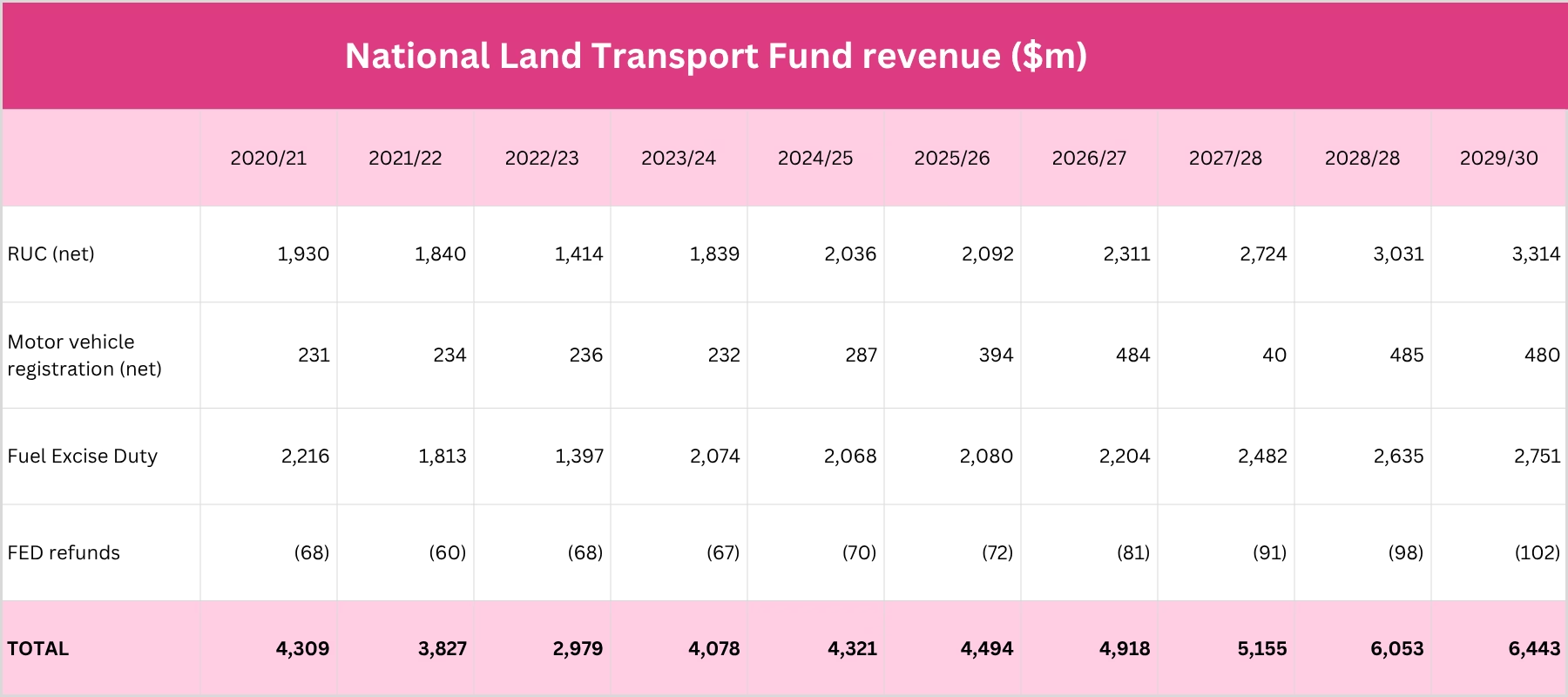
Speaking of the NLTP, the programme that is wholly funded by the National Land Transport Fund is forecast to collect nearly $4.92 billion in tax revenue for the 2026/27 financial year, which makes up just under half the total allocation of some $11 billion in all transport modes in the 2026 budget.
For the first time, revenue from Road User Charges will exceed that of fuel excise (petrol tax) in the 2026/27 NLTF, which combined make up the bulk of the fund. RUC revenue is estimated at $2.09 billion to fuel excises $2.08 billion, illustrating the decline in fuel tax resulting from more fuel-efficient petrol vehicles and the increase in electric vehicles which now pay RUC, and reinforcing why the government is working on introducing universal RUC. That said, fuel excise is still predicted to increase over time, but RUC revenue will continue to exceed it.
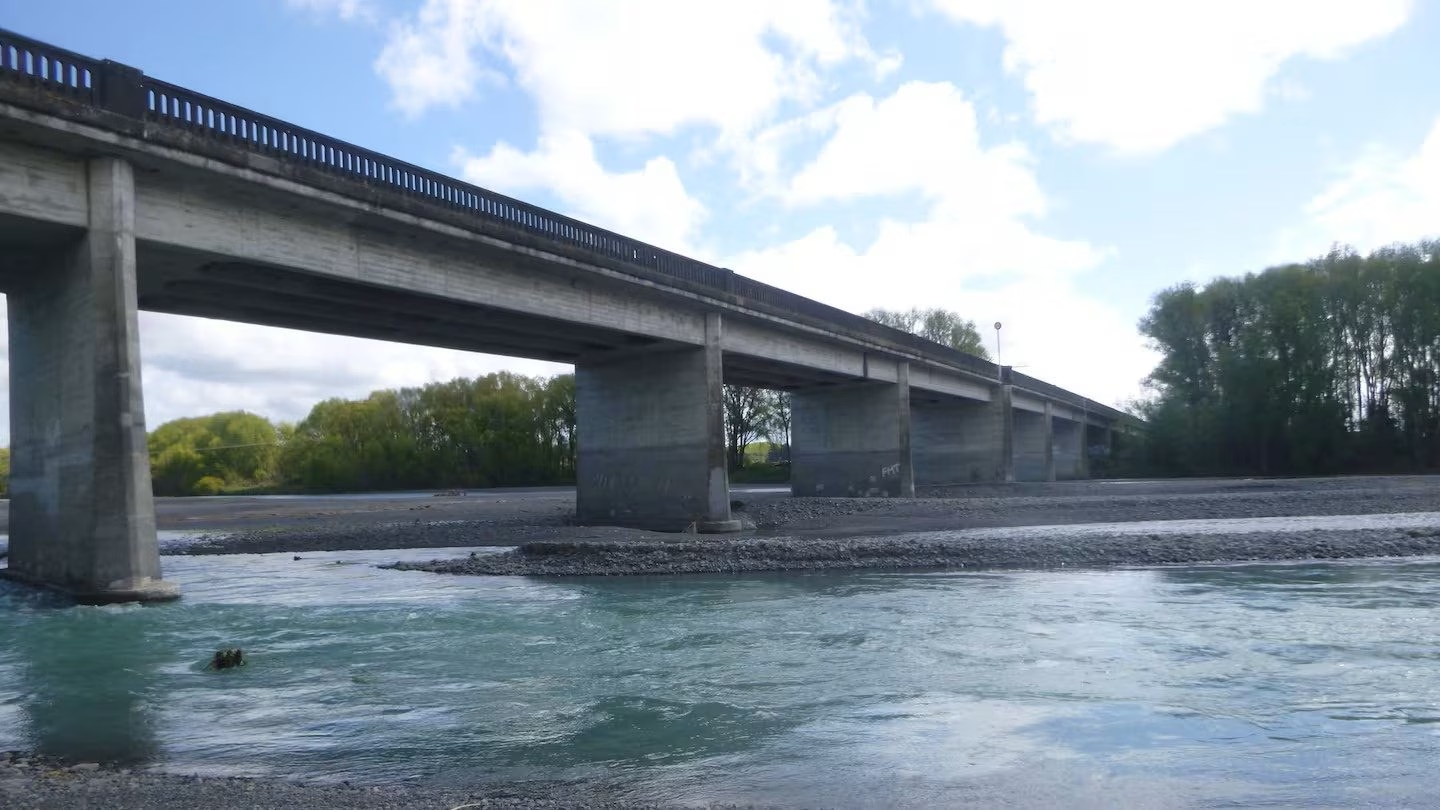
The 2026 Budget also announced a new $400m fund set aside for State Highway resilience projects to help keep critical routes open during and after severe weather events.
Minister of Transport Hon Chris Bishop said: “We know where many of the weak points on the network are. This investment allows us to strengthen them before roads fail, rather than repeatedly paying to rebuild them afterwards.”
Resilience projects funded through the package include improvements on SH2 through the Waioweka Gorge, SH3 through the Awakino Gorge, SH25 around the Coromandel, SH60 over Tākaka Hill, SH6 between Cromwell and Kingston and between Haast and Hāwea, and SH94 between Milford and Te Anau.
Outside of transport, the 2026 Budget also allocated $150m in funding for additional strategic fuel reserves – some of which has already been allocated to increased diesel storage at Marsden Point – and a reserve fund of $450m for temporary fuel-related measures if the global fuel crisis gets worse.
[PHOTO: RNZ/Samuel Rillstone]



Didn’t get this by email?
Stay in the loop on the latest road transport news with our weekly Dispatch newsletter, delivered to your inbox every Friday morning.