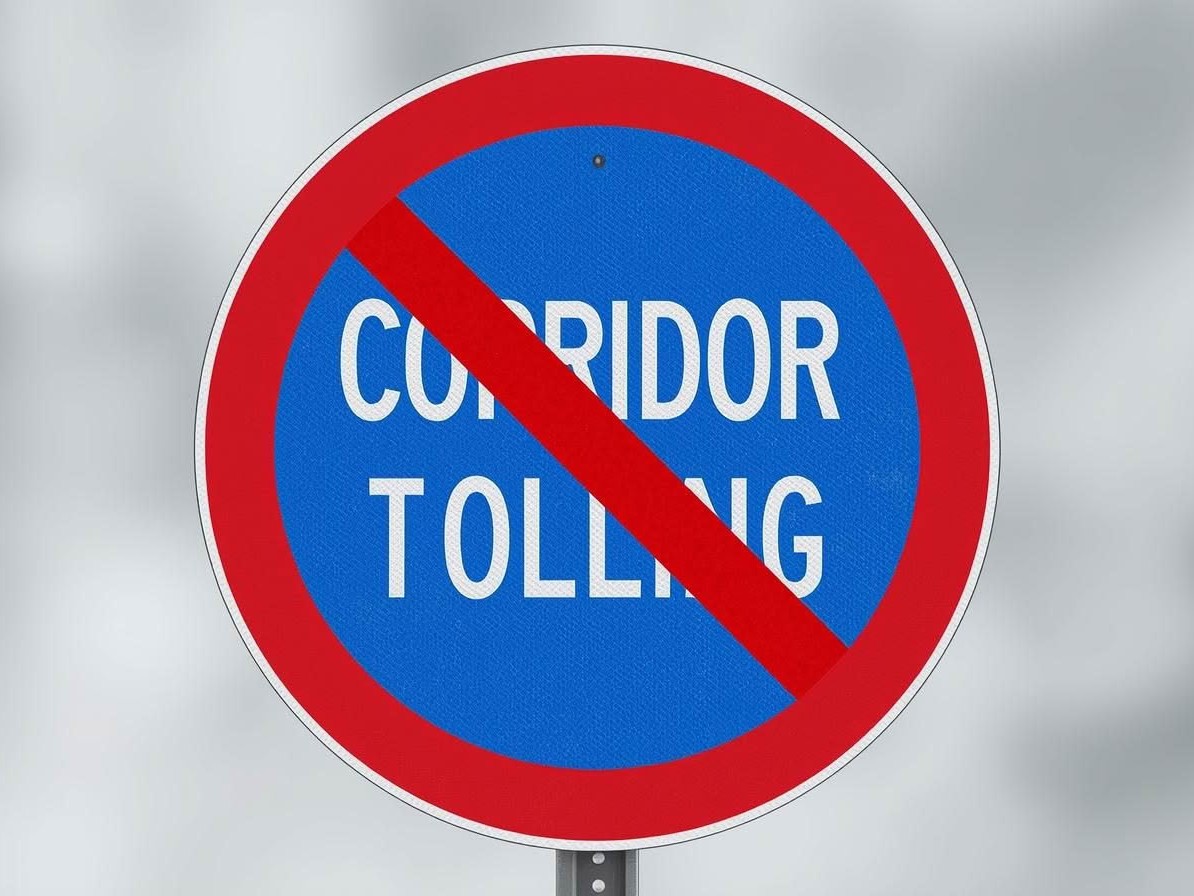
A slew of transport associations have submitted to Parliament’s Transport and Infrastructure select committee, all echoing the same key message: support for tolling of new roads as a means of bringing construction forward, but universal opposition to tolling existing roads along the same corridor which amounts to “double-dipping”.
Oral submissions on the Land Transport (Revenue) Amendment Bill were held online in early February, with Transporting New Zealand presenting along with National Road Carriers, AA, Infrastructure NZ, and EROAD, amongst others.
The Bill has two key purposes: to modernise the Road User Charges (RUC) system to lay the ground for universal RUC; and to amend tolling legislation to facilitate the introduction of corridor tolling, as well as to enable prohibiting heavy vehicles from using certain untolled roads.
The RUC amendments were technical in nature and while Transporting New Zealand was clear in our support for these, we were unequivocal in opposing the tolling amendments, and recommended that these be dropped from the Bill. We pointed out that Transporting New Zealand is a supporter of road tolling, with 63% of industry respondents agreeing with increased use of tolling to fund the Roads of National Significance in our 2025 Road Freight Industry Survey.
The government has said it will consider charging tolls for all new “roads of national significance” (RoNS), but many are quite short and the law change would let it levy tolls on existing roads that connected to them i.e. in the same corridor, in order to make tolling more practical.
Transporting New Zealand has supported tolling the Belfast to Pegasus Motorway and Woodend Bypass; the Otaki to North of Levin State Highway Project; and Takitimu North Link and we want to see tolling schemes succeed, but said introducing tolls on existing roads and mandating heavy vehicles use tolled roads would undermine industry support for tolling schemes, and will increase freight costs for businesses and consumers.
We said that tolling existing roads will be seen by our membership and the wider public as double-dipping. Public support for tolling is more likely where users can see a clear benefit in paying a toll, which is unlikely to apply to existing (old) roads which have not been upgraded.
The NZ Taxpayers Union meanwhile has launched a petition against corridor tolling, saying that motorists could end up paying tolls for roads they don’t even use. “Worse still, the Bill allows toll revenue to be spent on maintaining existing roads, toads you have already paid for through fuel excise duty and Road User Charges, effectively double-charging motorists.”
Our submission also said that prohibiting heavy vehicles from using certain alternative (untolled) routes would deny transport operators and drivers freedom of choice. Freight companies are the best judge of what route is best for a particular job. As it is, the majority of heavy freight traffic uses toll roads without any need for a mandate. The prohibition would also “be a nightmare for regulators to enforce”, with the Bill providing an exemption for heavy vehicles to use the free an alternative route if goods or passengers are being delivered along that route, or if the operator’s place of business is on that particular route. That would likely mean heavy vehicle operators would need to furnish proof in order to have an infringement waived.
Similarly, the NRC noted that there may be situations where drivers might need to avoid a toll road by using an alternative route, for example if they needed to change driver, take a rest break or have their vehicle serviced. “You don’t want to have to be applying for ministerial exemptions every time you need to change a tyre.”
Hedging our bets a little, we said that if mandated use of tool roads were to proceed, then the heavy vehicle toll should be capped at a maximum of three times the light vehicle rate, to avoid NZTA ratcheting up toll rates that heavy vehicle operators and their customers will be unable to avoid, a point endorsed by the NRC. We also recommended the corridor tolling provision be limited to specific scenarios where lanes are added to an existing corridor road, or an extension is made to an expressway.
The AA also voiced concern about the tolling proposals, noting that a recent AA Member survey showed that just 25 percent of respondents felt it is fair to toll an existing road, even if motorists using it benefit from a new road. The AA suggested “The Bill needs to be amended to only allow tolling on an existing road where its users gain a travel-time benefit from the construction of a new road on the same corridor.”
ACT MP and committee member Simon Court made the interesting suggestion that as roads are typically fully re-surfaced after some 25 years or so, that this counts as new infrastructure and thus could be tolled. However, such repairs come under the maintenance portion of the National Land Transport Fund, meaning they are paid for from petrol, tax and RUC, so would still be considered double-dipping.