It’s been a busy couple of weeks since my last blog post. In that time there’s been a range of good things to celebrate – with a side of bad, and even ugly uncertainty about the future, from the Cook Strait ferries to fuel supply given the global conflicts that continue to rage on.
Napier tour
Last week I joined our Membership Manager for the Lower & Central North Island, Lindsay Calvi-Freeman for some of his visits to members in Napier. I was reminded how lucky New Zealand is to have such a great industry serving it. We met a diverse range of operators, each very successful in their own right, with some common strengths. They all displayed resilience, smart strategic thinking in terms of recognizing new opportunities and/or diversifying, and all were excellent relationship managers.
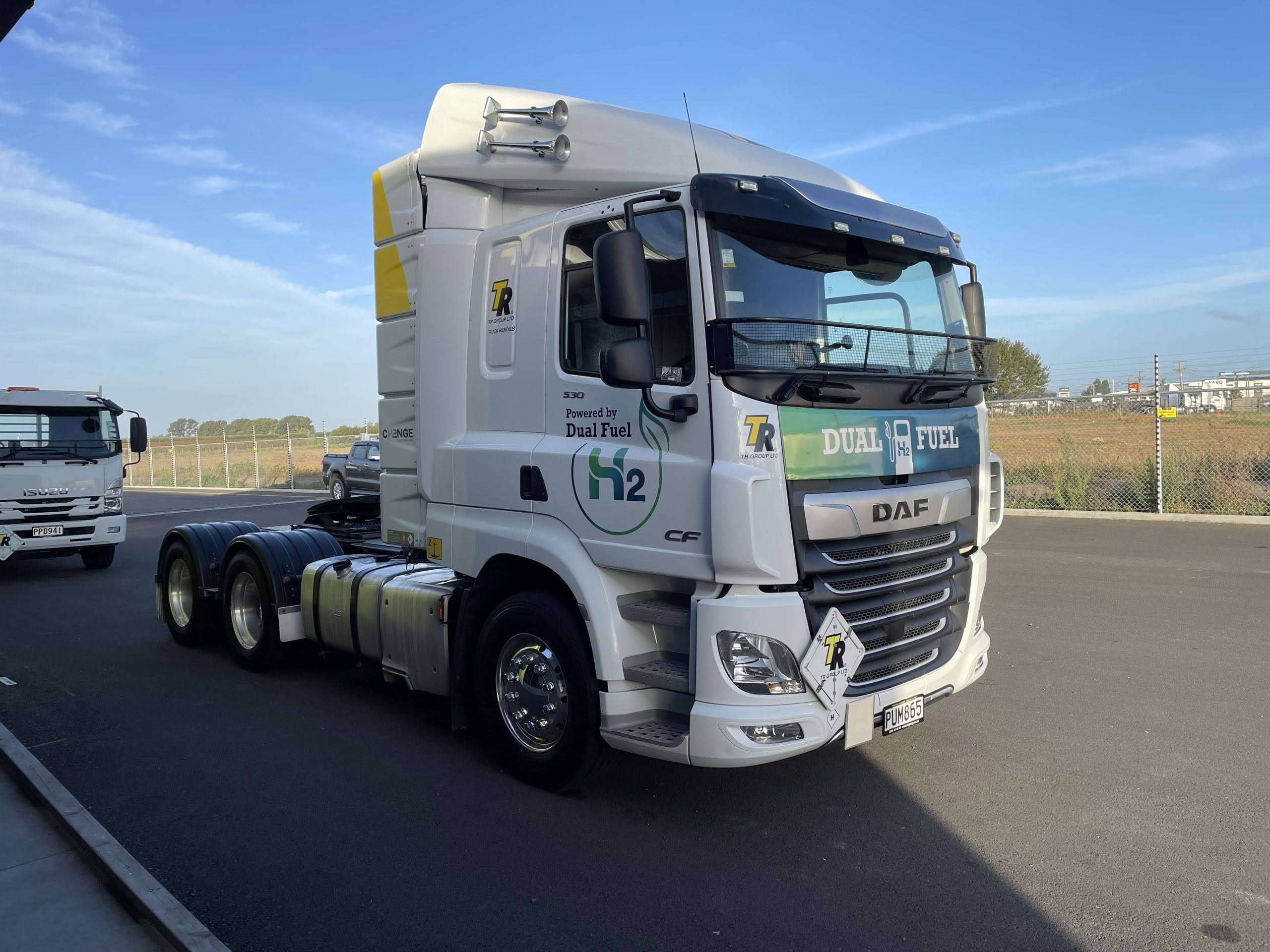
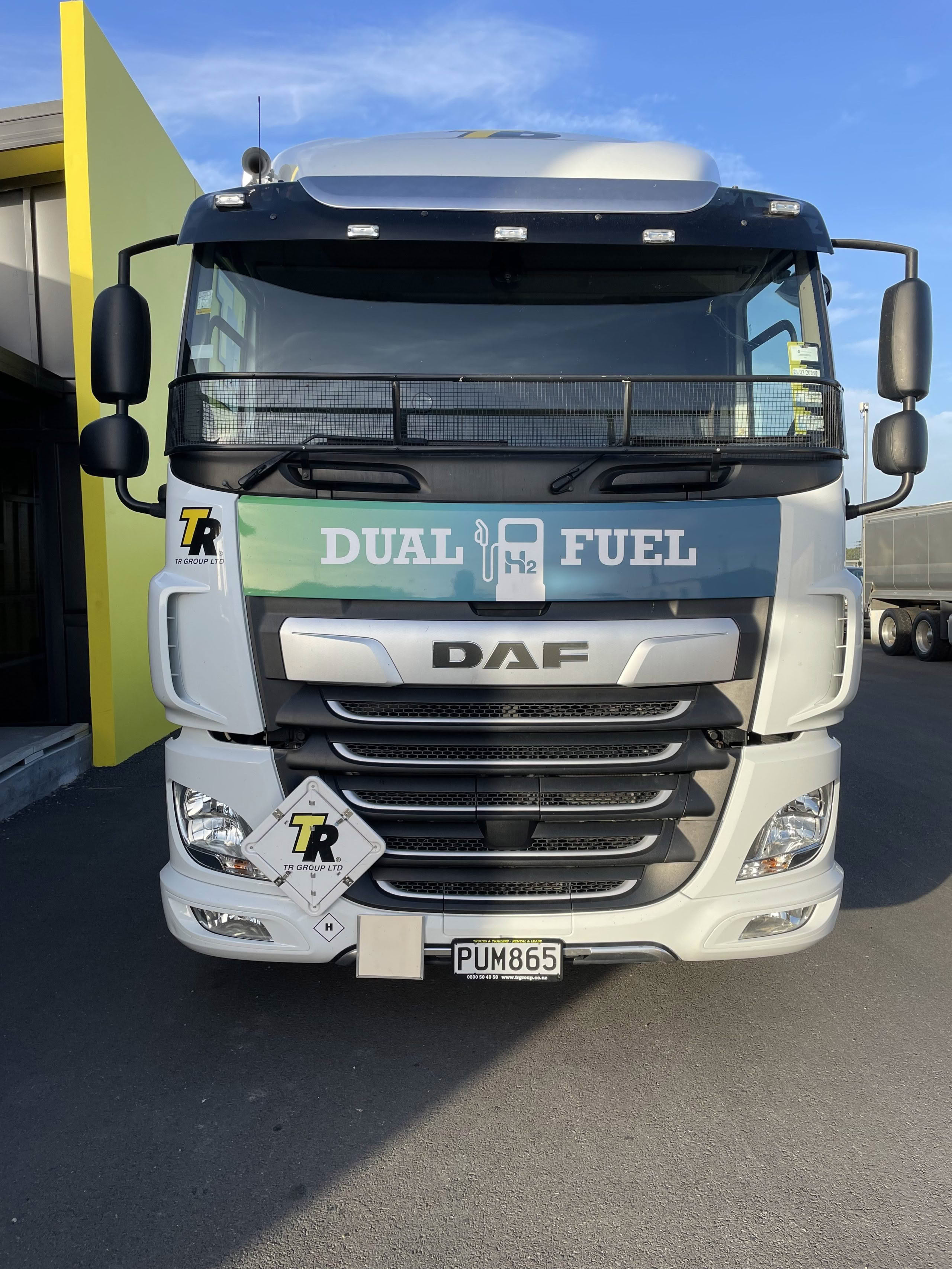
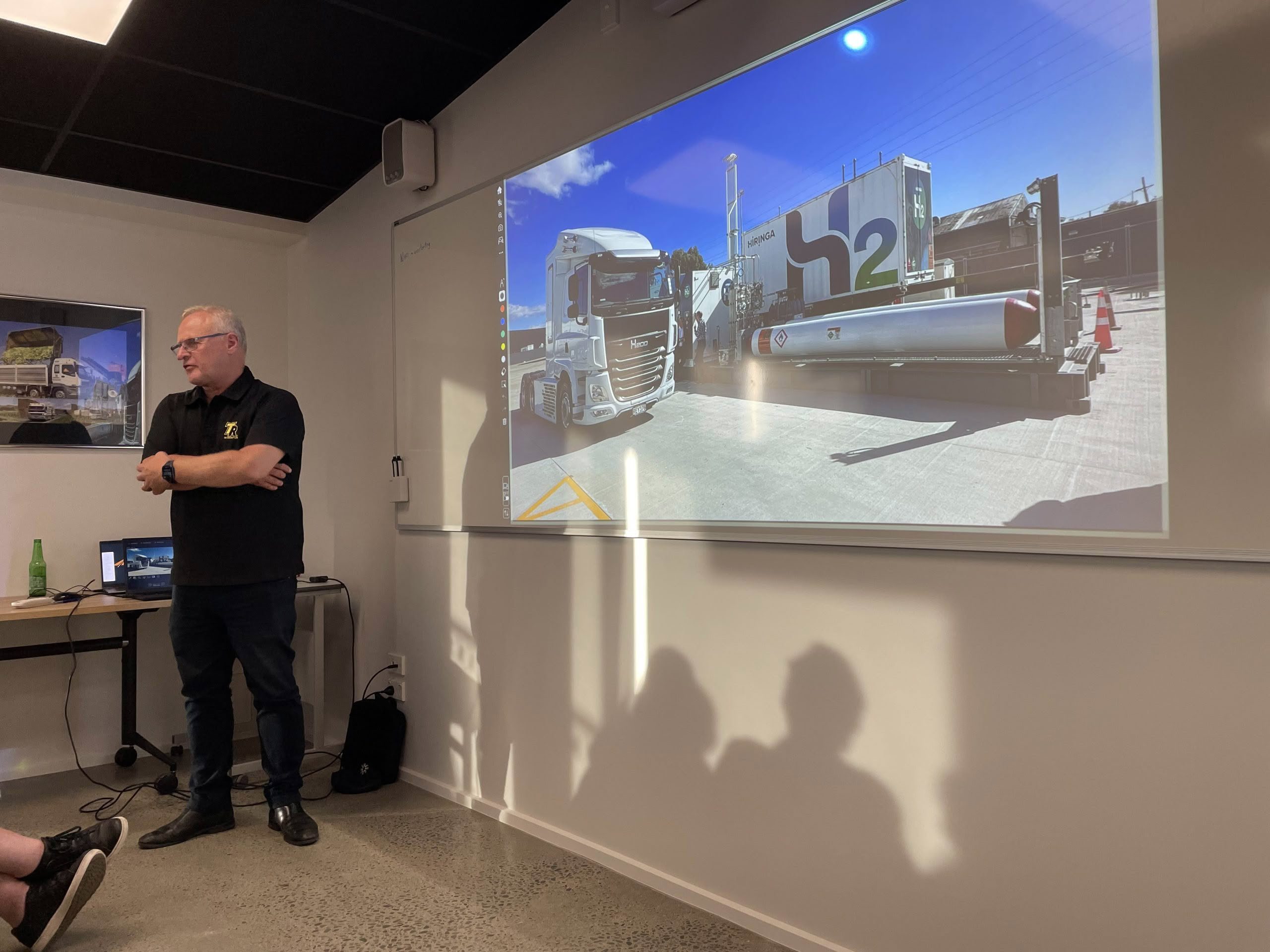
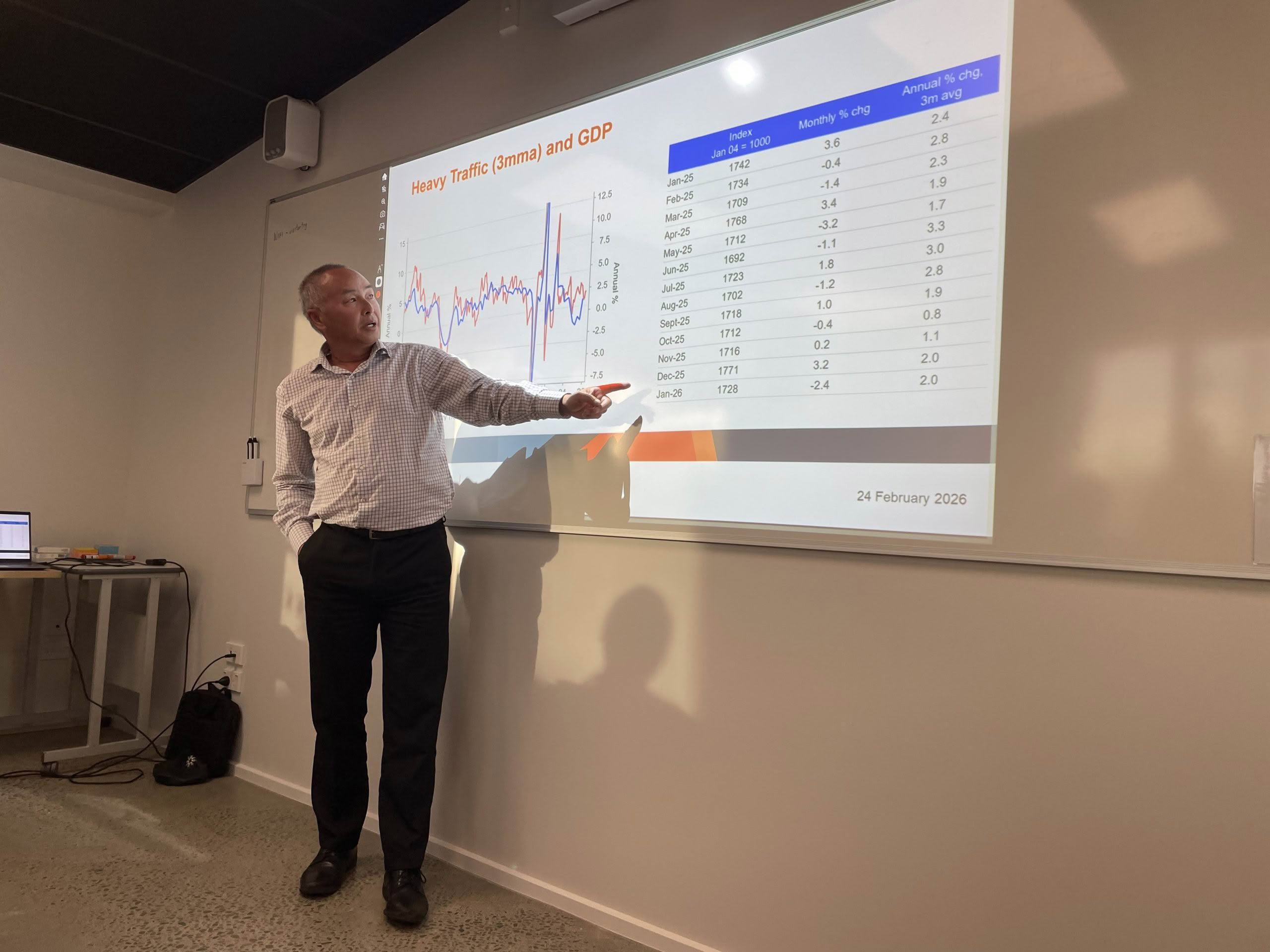
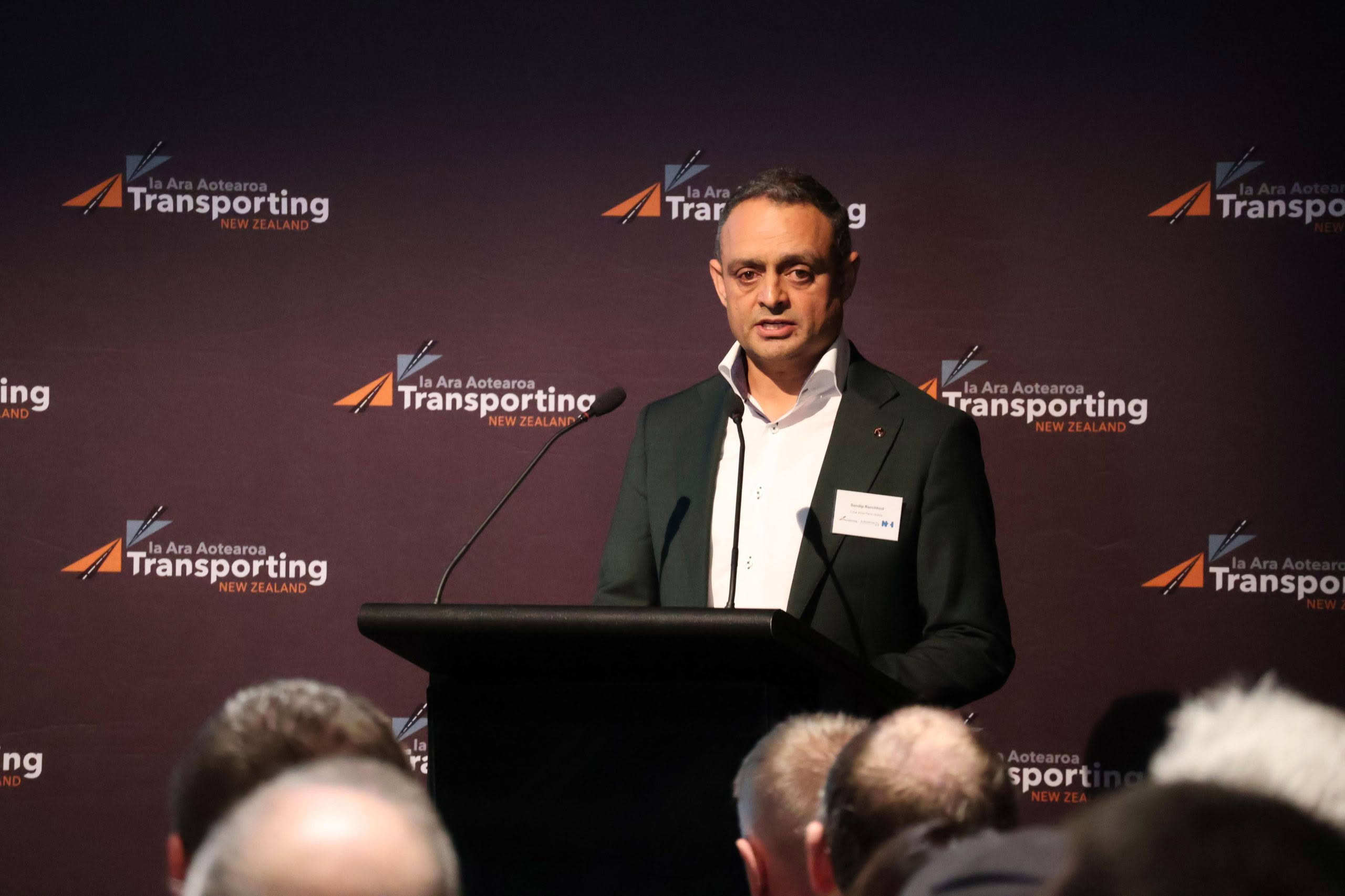
With great support from TR Group and NZI we hosted an industry update presenting news from the Police, TR and Port of Napier. It was excellent to see TR’s work with dual fuel hydrogen/diesel continuing. There is no doubt in my mind that diesel ICE will be with us for decades to come, and that seems to be supported by the fact that some international jurisdictions are pulling back from their earlier targets of banning conventional ICE power trains. Therefore, the dual fuel option seems to be an increasingly powerful way of making a big dent in carbon emissions.
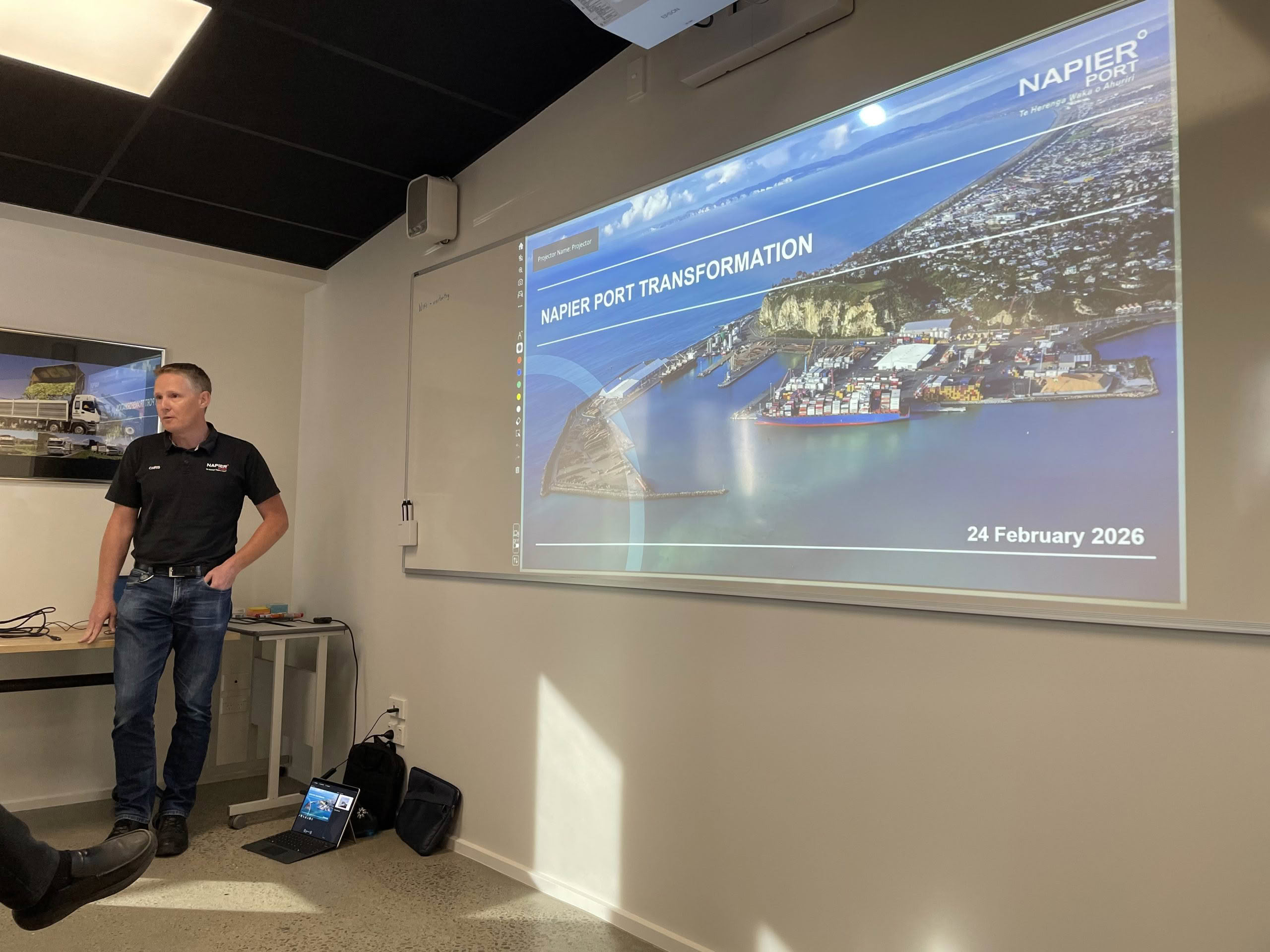
With respect to other presenters at our industry update, the one I found most fascinating was from Chris Wylie, General Manager of Port Optimisation at Port of Napier. Wylie spoke of the Port’s progress in improving productivity by moving ISO containers around the Port and to storage depots in a much smarter way – using fully autonomous electric vehicles. This wasn’t just conceptual stuff. The Port has clearly invested a lot of money and is now a long way down the track in making this happen.
We will be watching this with huge interest. It’s very exciting, innovative and shows great leadership. We’ve been pretty vocal about port charges and how those additional funds are being invested to improve productivity, so it was remarkable to see what could and is already being done. Well done, Port of Napier.
Ferry replacement programme update
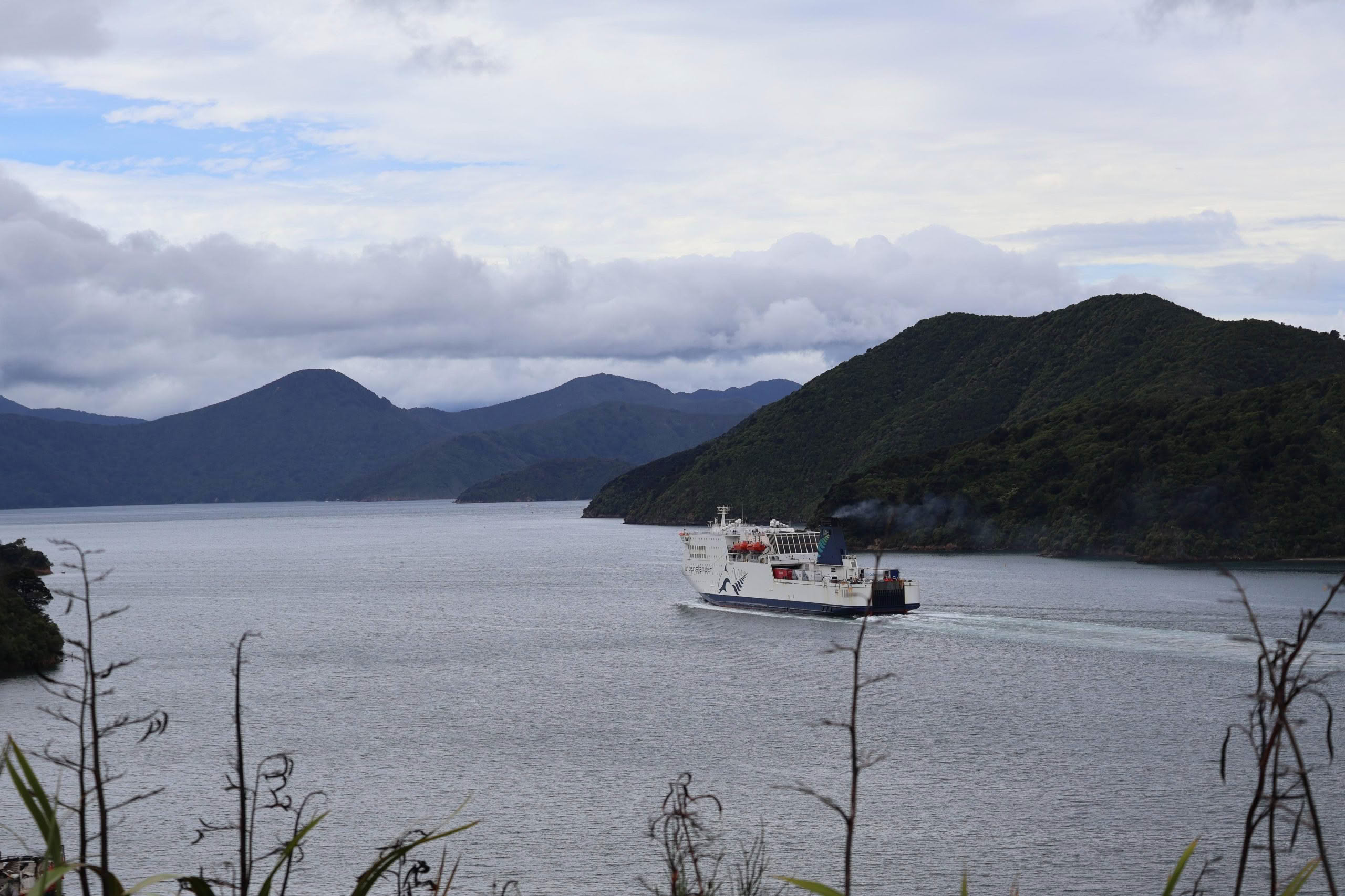
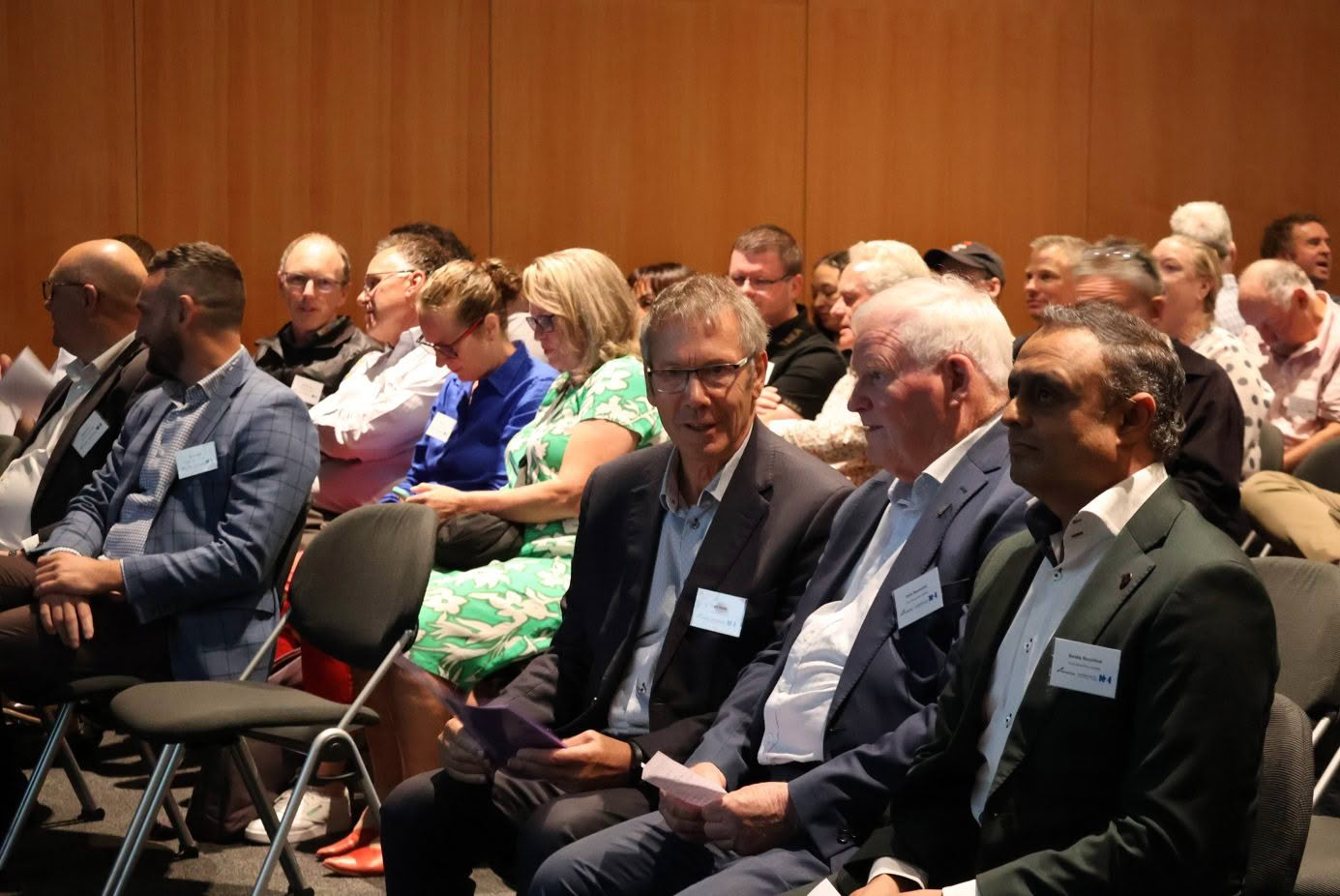
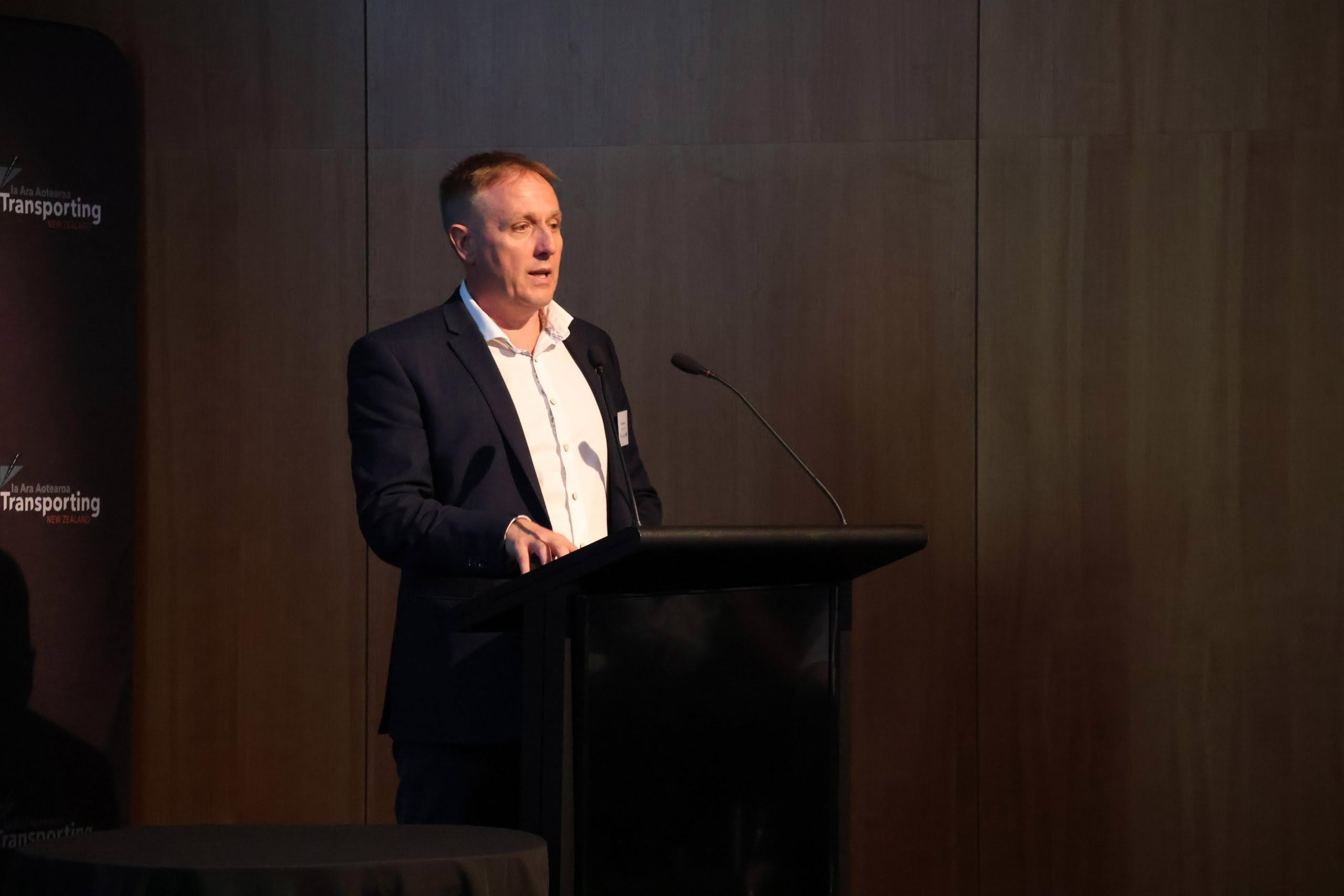
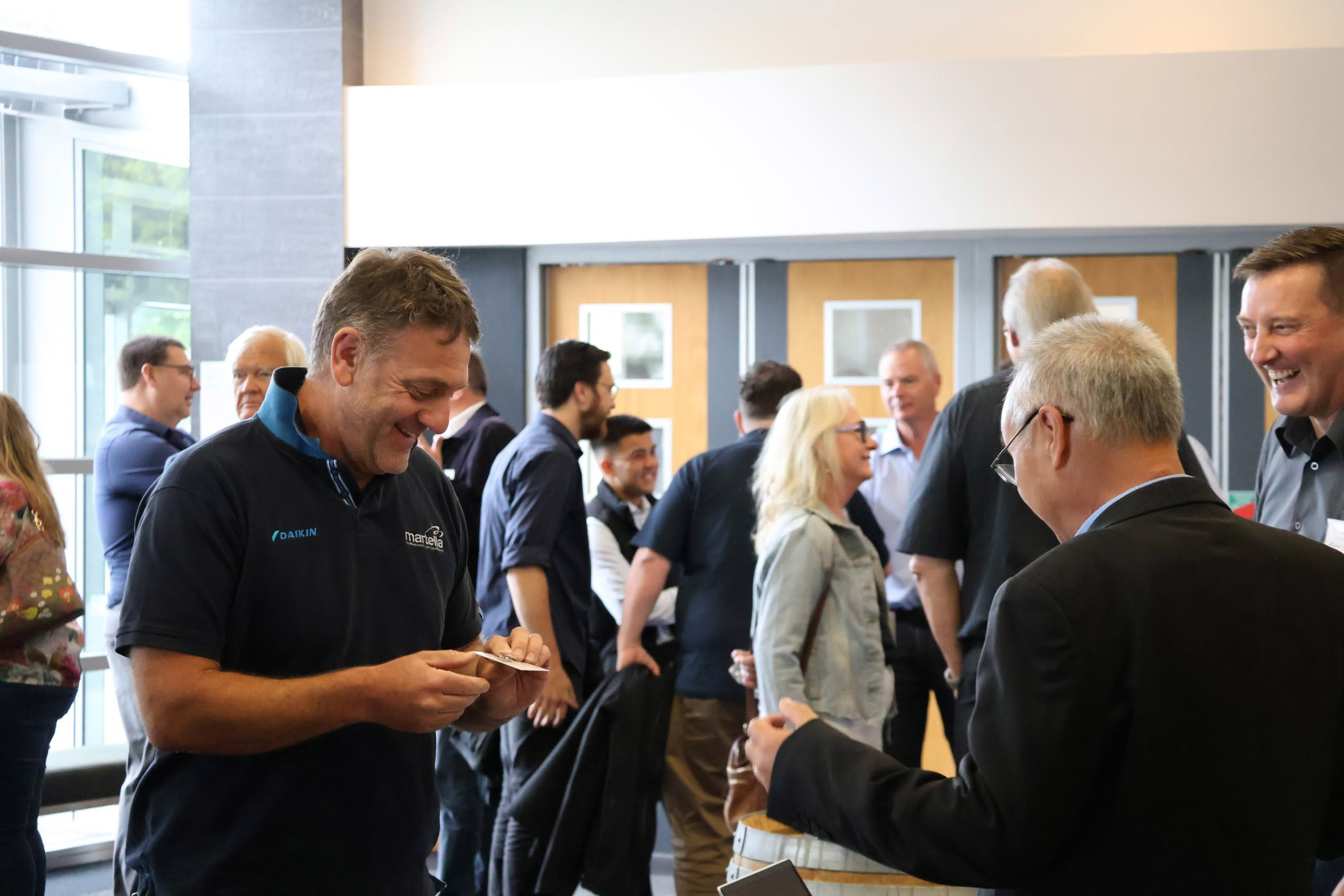
Last Thursday, along with Marlborough Chamber of Commerce and AutoSense we held an update on the Cook Strait connection in Blenheim. This involved presentations from Ferry Holdings Ltd, Port Marlborough, StraitNZ, and KiwiRail (Interislander). Nearly a hundred people turned up and close to 50 joined online, showing the amount of keen interest in what’s happening. Afterwards, we were treated to a guided tour around Port Marlborough.
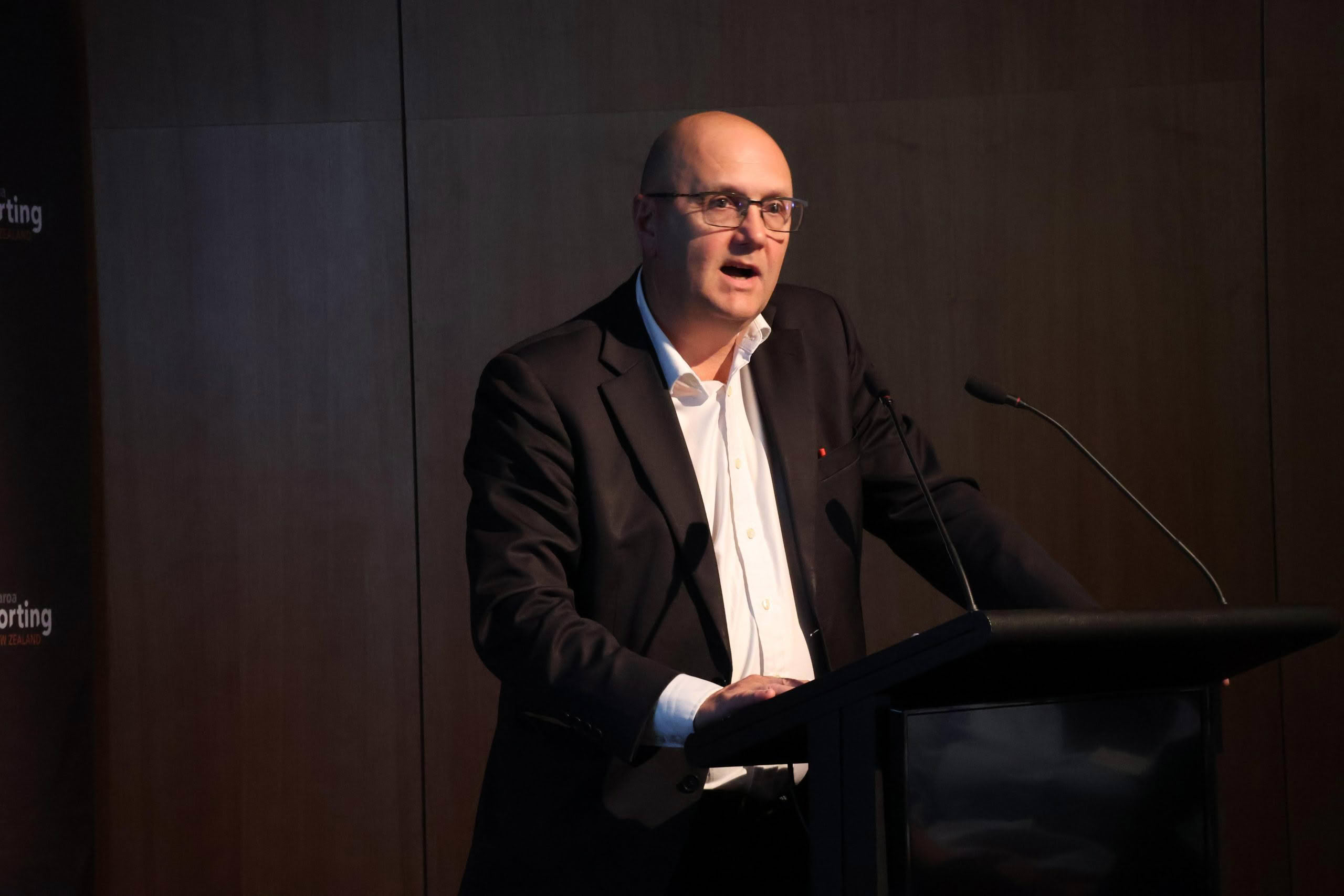
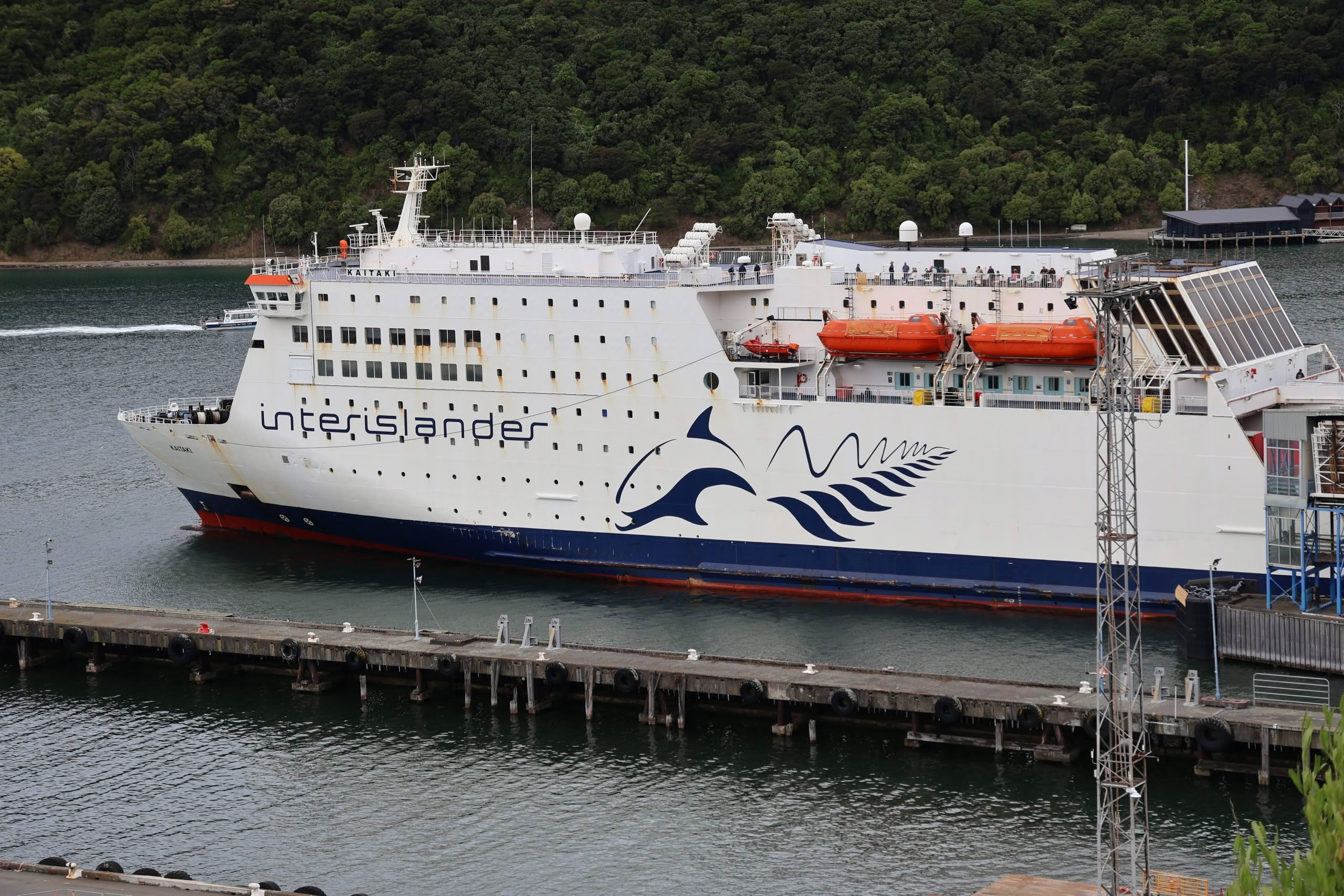
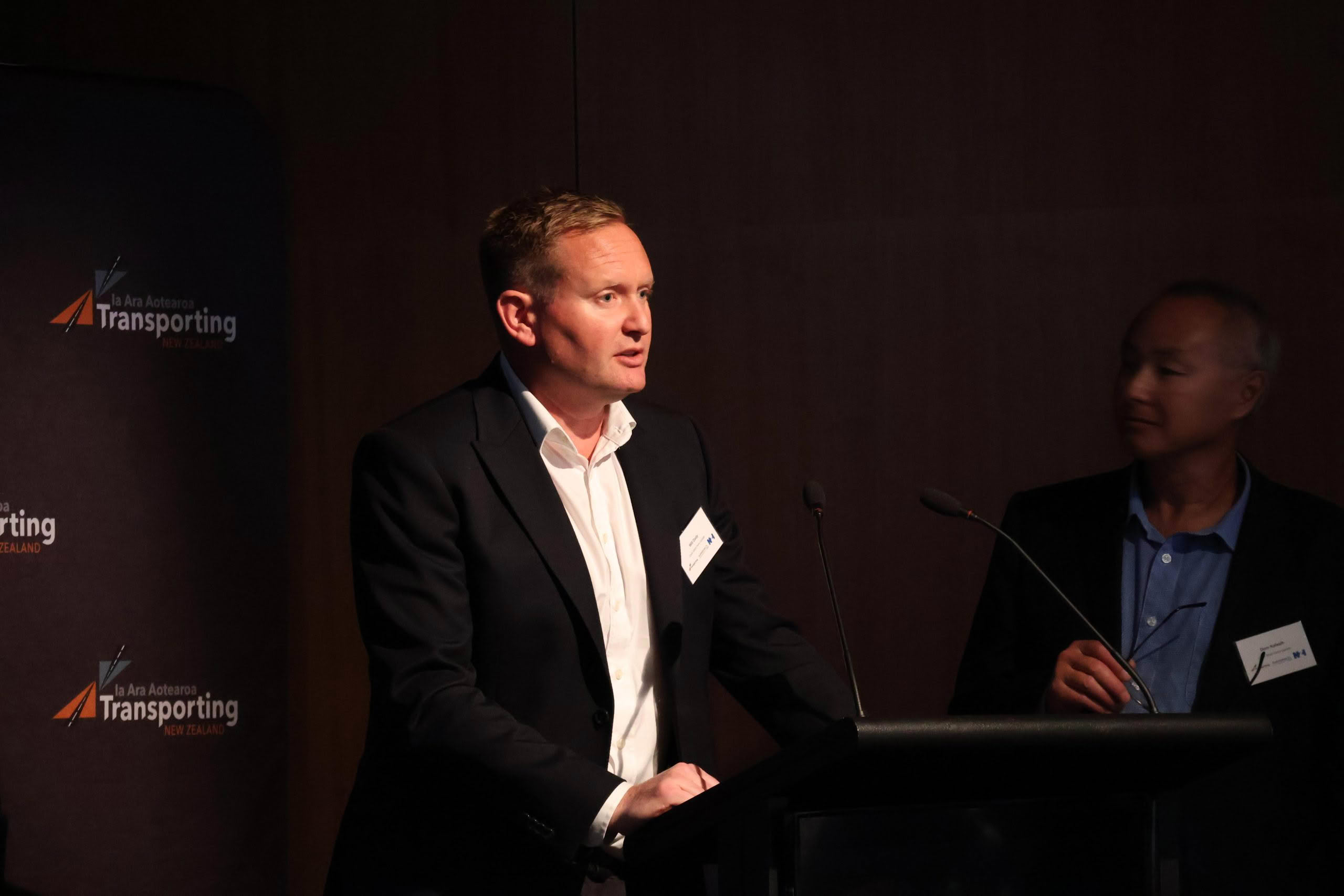
As has been recently demonstrated with the Spirit of Tasmania, wherein a new ship was too big to fit at its designated Australian berth, things can go embarrassingly wrong. That case illustrated the complexity and importance of getting the right infrastructure in place on time. I was very impressed at how much work has already been done at Port Marlborough. For example, a significant amount of de-construction of old loading infrastructure has already been done with minimal disruption.
There’s no question that capacity and resilience remain significant areas of concern for us, particularly when vessels are out of service for planned maintenance. We are still grappling with how disruptive that might become and what can be done about it.
Driver licensing
A highlight in the policy and advocacy space was our role in leading a request to the Ministers for Education, Transport, Vocational Education, and Social Development that they support three steps to improve licence uptake and workforce participation.
The recent steps taken by the Minister of Transport to remove the second practical test and reduce the cost of obtaining a full licence are good changes. However, given the benefits of mobility and employability that come with being a fully licensed driver, we need to do more because some people simply cannot afford or access driver training.
We’ve asked for an increase in targeted financial support for low-income applicants; driver training in all New Zealand secondary schools by 2030; and an increase in funding for mobile and community-based licensing services, particularly in rural and high-deprivation areas.
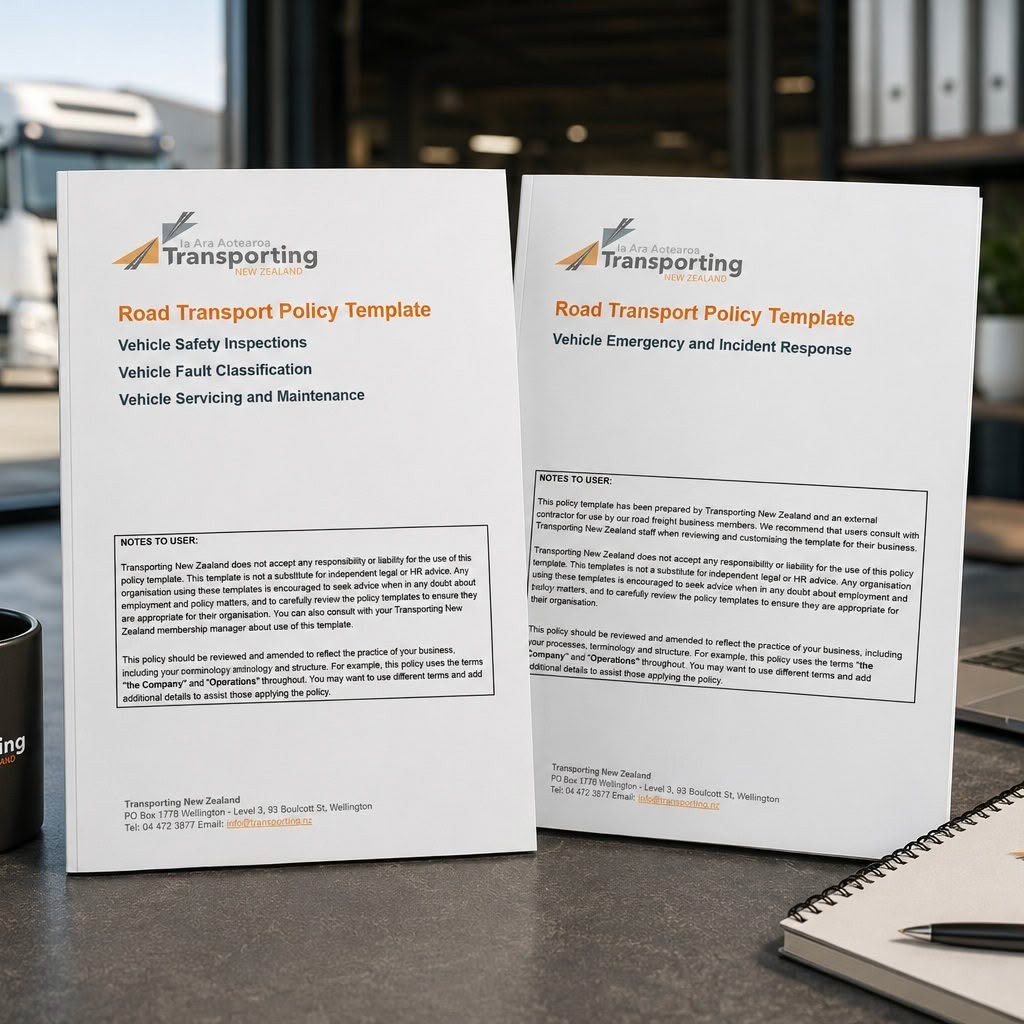
Our letter to Ministers and our Policy Position paper on increasing driver licence uptake can be found here.
In making this request to Ministers we’ve been joined by the Bus and Coach Association, Driving Change Network, Groundspread NZ, Heavy Haulage Association, MITO and National Road Carriers. We look forward to hearing the Ministers’ responses.
More good: MITO v3.0
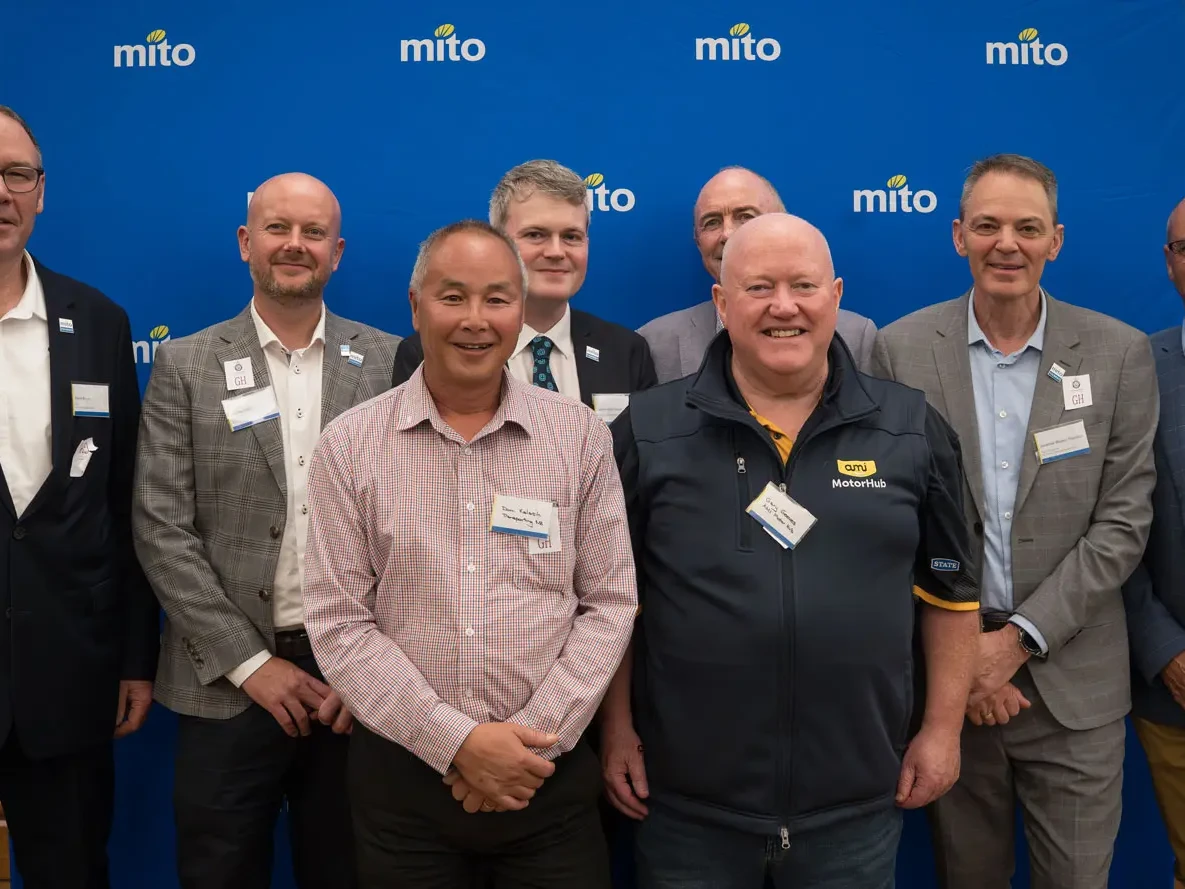
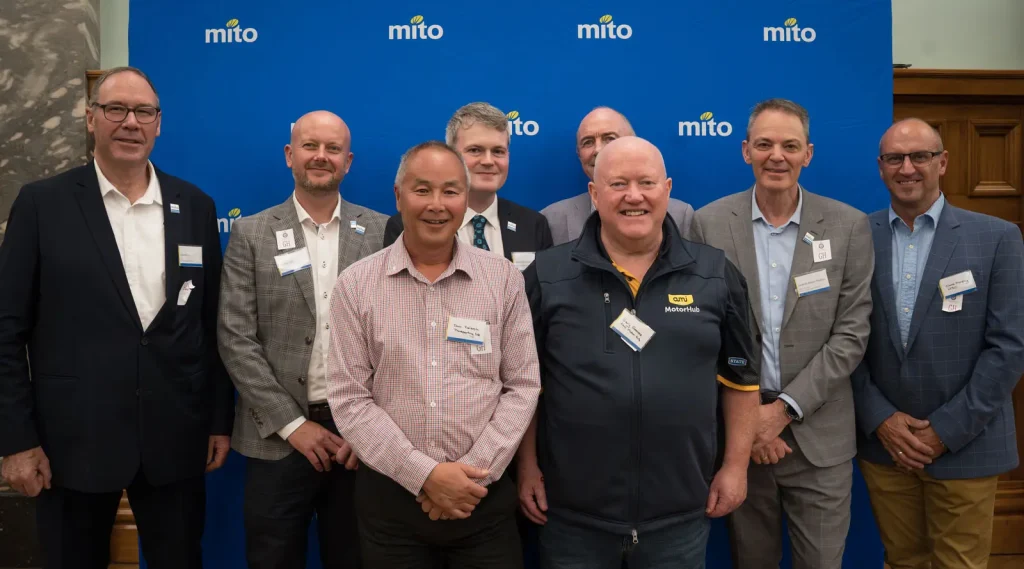
On Wednesday this week alongside some of my colleagues, I had the pleasure of joining a function in the Grand Hall at Parliament to celebrate MITO’s transition from a Business Division of Te Pūkenga Work Based Learning to MITO Limited, an industry-owned private training establishment. This change came into effect on 1 January 2026 and we are shareholders in the new company.
This transition marks a major step forward in implementing recent Government reforms to New Zealand’s vocational education and training system. It also creates a valuable opportunity for the commercial road transport sector to rethink how we invest in and recognise the skills and capability of our people. Watch this space.
The ugly
There’s been considerable media interest in the warfare in Iran and Israel and its possible impacts on fuel supply.
Given how quickly things are developing, in my view it is simply impossible to make accurate or helpful predictions on how this might impact freight in New Zealand. However, having spent over a decade at Shell and Z Energy, what I am very sure about is that all our fuel importers will be doing their utmost to ensure we have fuel where and when we need it. And if it does turn out that it’s in the country but it’s in the wrong places, I’m extremely confident that our road transport fuel hauliers will be doing a great job to rectify that. That happens much more often than most people realise.