With the price of fuel and FAFs being top of mind for transport operators, it’s timely to review whether you are pricing for jobs as accurately as you can. As a member of Transporting New Zealand, we can help you by using our Cost Model, which has recently been updated to include a new optional section covering occasional third party charges likes tolls and port or depot charges.
Transporting New Zealand’s Cost Model, which is sponsored by Lock Finance, is a desktop spreadsheet which will calculate a trip job with both an hourly and per kilometre rate for your vehicle(s), including combinations.
It uses your own data from your most recent profit & loss statement, plus your latest business expenses. It takes into account the fixed costs you incur irrespective of mileage travelled, like wages, rent and admin costs, plus the vehicle’s variable costs like RUC, R&M, tyres and of course fuel. The cost model also has a section to input all of your fleet costs and fixed overheads to help you see the impact of changes like a doubling of fuel costs on your operation. It also helps you see the areas of your business which aren’t performing well, and where cost reductions could be made. You can even use it to compare which vehicles are more productive than others.
There is also a section which calculates your carbon footprint, something that is becoming more important to clients.
The Cost Model includes a step-by-step guide describing the various cost inputs needed, how to fill in the different sections of the spreadsheet, and how to calculate a trip job with an hourly or per kilometre rate.
So how does it work?
Having input your fixed and variable costs to determine your operating costs as both an hourly and a kilometre rate, you can now estimate the cost of a job.
For example: you have a job that has an on-road component of 434km and that will take 9.5 hours including loading and unloading. The cost for this job can be calculated as in the example below:
Hourly rate: $92.83 x 9.5 hours = $881.88
PLUS cost per km: $2.55 x 434km = $1106.70
TOTAL RATE: = $1988.58 + GST
This can be expressed as a combined kilometre rate: $1988.58 ÷ 434km = $4.58/km
OR as a combined hourly rate: $1988.58 ÷ 9.5 hours = $209.32/hr
What do operators think of the Cost Model?
But don’t take our word for it. What do operators think of our cost model?
Lower South Island Membership Manager Jim Crouchley says members have found it useful to help price one-off jobs, or to review their kilometre rate after making changes to their business like buying more plant or taking over another business.
“Operators might have been using the same rates for some time and not factored in increased costs like tyres or wage rises. It’s timely to review your rates periodically and I think the fuel price spike has spurred a lot of operators to take a closer look at their costs versus charge-out rates and to bring them up-to-date”.
Jim adds that the update to the Cost Model to include third party charges was driven in part by Port of Auckland’s publication of increases to vehicle booking system fees, which rose $50 to $180 per visit in January 2026, and are scheduled to double to $350 by 2027.
“Charges like these, along with more toll roads, and planned congestion charges, can all have an impact on the cost of a job, but previously weren’t factored into to the Cost Model. The latest update now has a dedicated tab that allows users to add these charges in where appropriate,” Jim says.
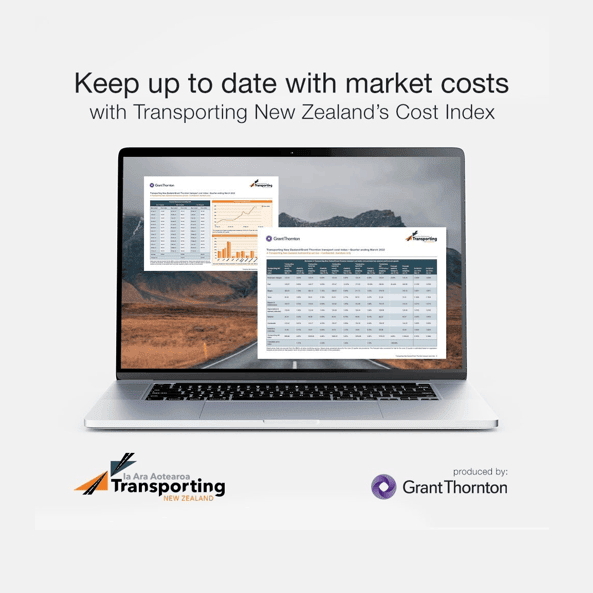
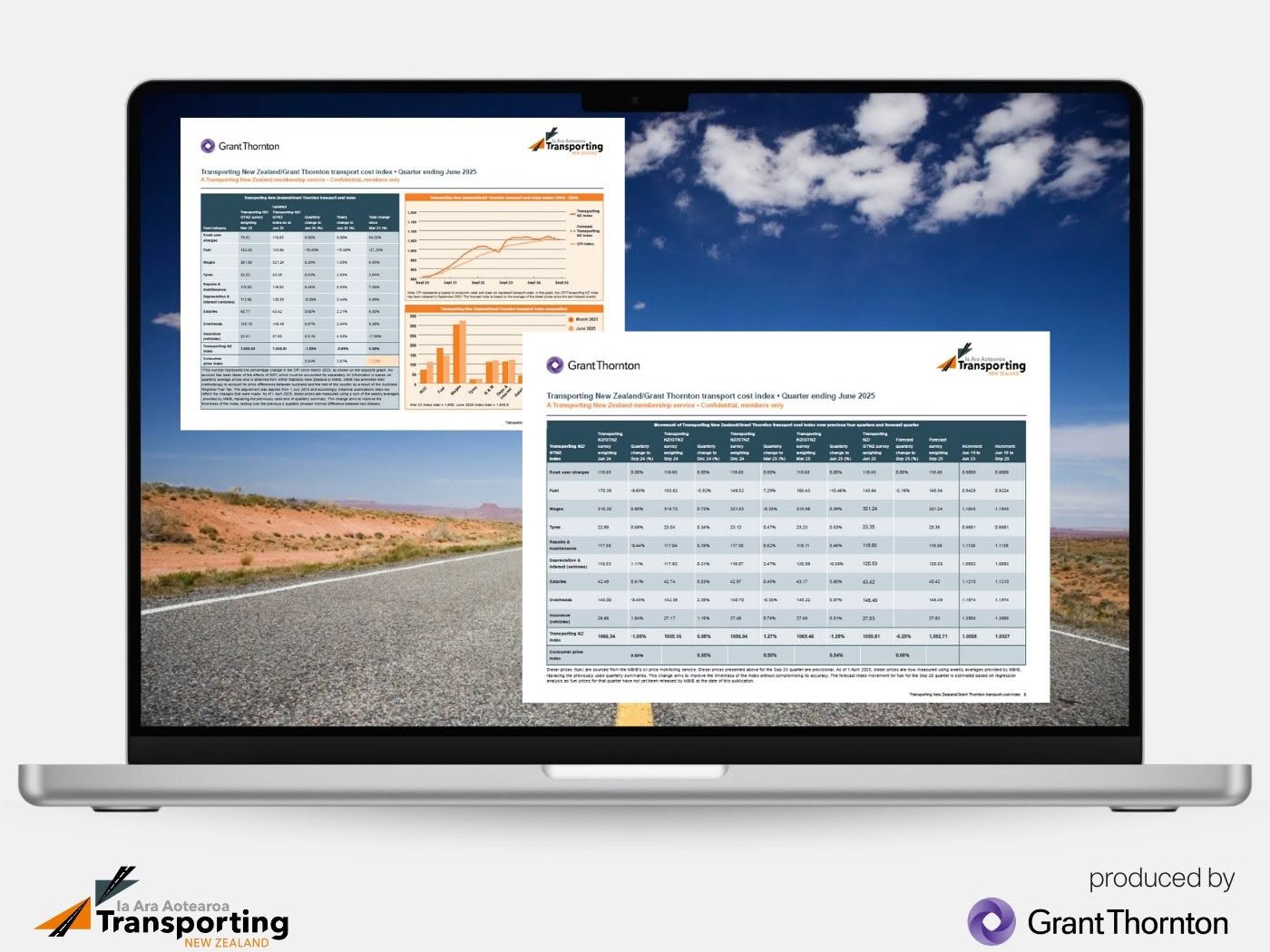
“New members joining the association have also found the Cost Model tool and other Transporting New Zealand resources like the Grant Thornton index useful to help review their pricing practices,” Jim concludes.
- The updated Lock Finance Cost Model can be downloaded from the Transporting New Zealand member portal.