A Police Serious Crash Unit (SCU) report into the death of a cyclist has been partly blamed on inoperative main side indicators on a truck, and the failure of the truck driver to perform a walk-around inspection to identify the fault.
At 8am on 27 June 2022, a 2018 Freightliner Argosy 8×4 was travelling north on Tristram Street in Hamilton and stopped in the left lane of the two available lanes at the intersection of Tristram Street and Norton Road for a red traffic light, and was indicating to turn left. Travelling in the same direction was a 28-year-old cyclist who approached the traffic lights between the Freightliner and left kerb intending to continue straight ahead. On the green light a collision occurred between the turning truck and bicycle heading straight, resulting in the cyclist dying at the scene. The incident was captured on CCTV.
The SCU noted that the weather was fine and although there was slight fog in the area, visibility was clear and not a contributing factor. The cyclist was wearing hi-vis clothing and a helmet, and the truck driver was tested for breath alcohol at the scene and gave a negative result. A full vehicle inspection of the truck found the brakes, steering and suspension all in good order, with only the faulty side indicators and fraying on the driver’s seatbelt noted; factors which would however fail a CoF.
The SCU investigator concluded that the causative factor of the crash was the failure of the truck driver to detect the cyclist approaching on his left. The experienced 37-year-old driver was charged and sentenced for careless driving causing death, but not disqualified from driving.
Contributory factors to the crash included the inoperative side cab indicators, and the driver being distracted by using Google maps on his phone for directions. Other contributory factors were the failure of the cyclist to observe the left rear indicators on the truck as she travelled on the inside of the stopped traffic behind the truck at the front of the queue, and the design of the road layout directing cyclists travelling straight ahead to the inside left lane.
As a result of the crash, the SCU recommended regular heavy vehicle driver training incorporating blind spot dangers, as well as funding for the research and development of budget friendly, and easily installed blind spot cameras/sensors for the heavy vehicle industry. In addition, the SCU also recommended the redesign of intersections in Hamilton by either providing dedicated cycle lanes or advanced stop boxes marked on the road for cyclists to stop in front of stationary traffic.
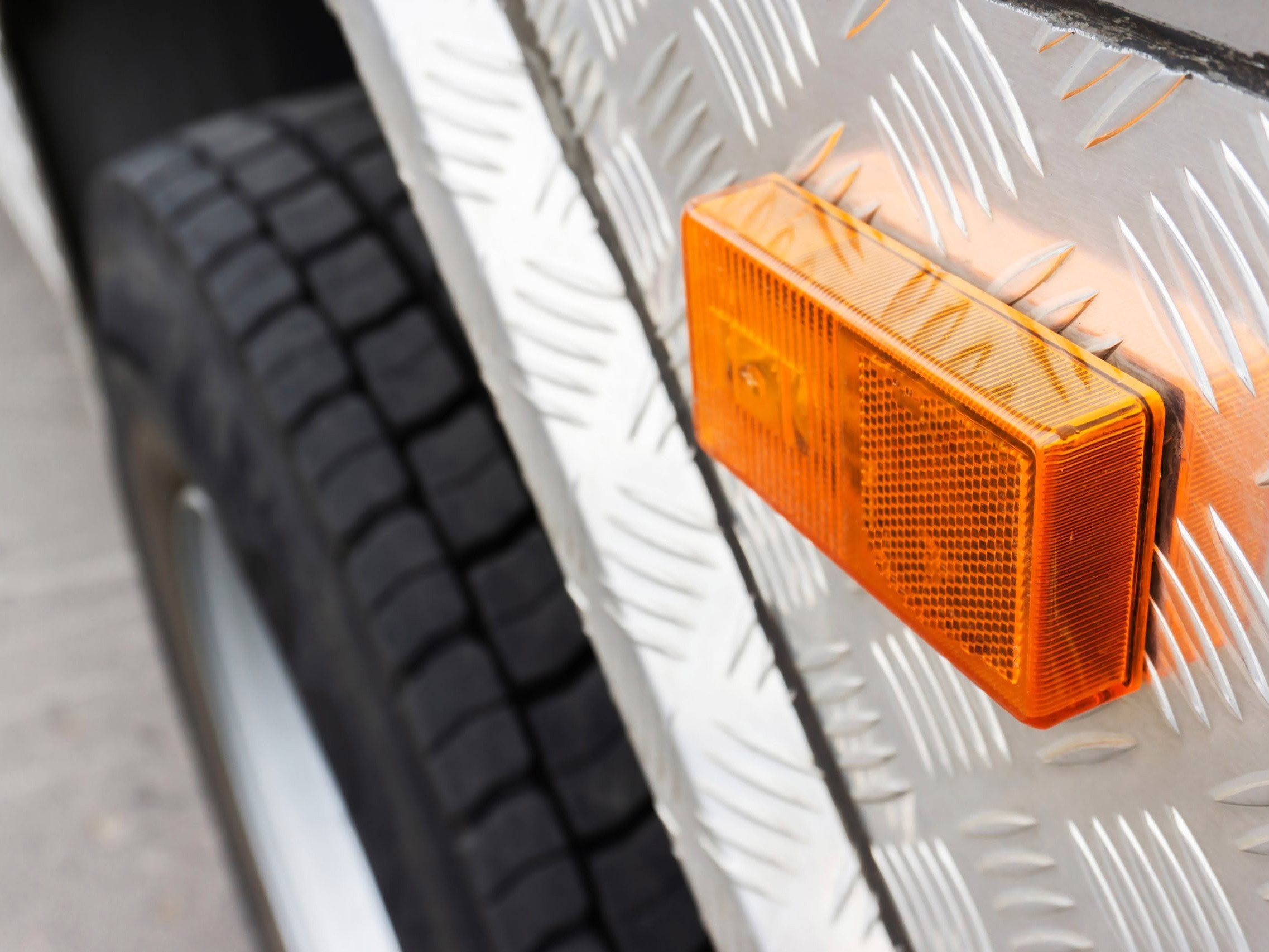
The investigation found that the main side indicators, mounted lower aft of the cab doors, had earlier been disconnected for some minor paint touch-up work, and failed to be reconnected. While the rear indicators were working, the investigator concluded that the lower rear indicators may have been partially hidden from view by traffic pulled up behind the truck, whilst the cyclist focusing on the direction of travel may not have seen the upper rear indicators. The truck was also fitted with an additional side indicator repeater mounted slightly inboard on the third axle mudguard, which was functioning, however this was not visible when approaching from the rear, putting even more reliance on the main indicators.
Interestingly, the SCU investigator noted that the Freightliner was fitted with orange sidelights adjacent to the headlights which road users might have confused for indicators (these sidelights could also be configured as indicators, but instead the inner set of headlights performed this function, which aren’t visible from the side). It was surmised that the cyclist may have assumed that as these sidelights weren’t flashing, that the truck intended to travel straight ahead.
In addition to combination door mirrors, the Freightliner had a horizontally mounted convex mirror to provide a wider field of view. The inspection established that the cyclist would have been clearly visible in these mirrors and so the driver had failed to see them, which was reflected in his statement to Police. The investigator concluded the driver may have been distracted by using Google maps on his phone as he was unfamiliar with the area, with the phone placed in a cup holder in the central lower dash.
So, what can be concluded from this unfortunate accident?
The first is to ensure that all lights and indicators are working, an essential part of any walk-around check. The truck was well-equipped with mirrors but in this case the driver was distracted using Google maps.
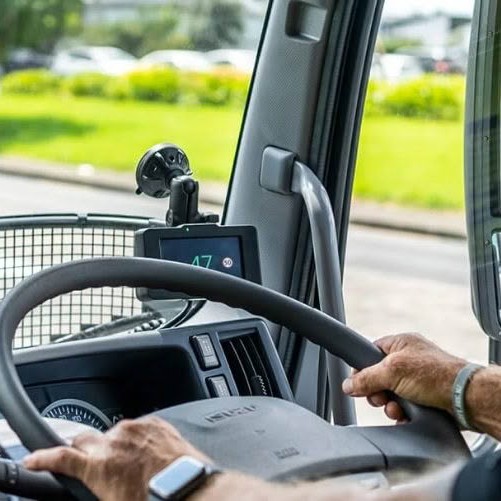
Transporting New Zealand recommends having a clear mobile phone use policy that is covered in staff inductions. This should reflect both the law and your specific business needs, including those of dispatchers and drivers. This could include guidance around connecting mobile phone navigation systems to infotainment systems via Bluetooth for hands-free use and using the map audio function for directions rather than relying on tiny maps on a phone screen.
Transporting New Zealand associate members such as Safe Business Solutions (SBS) offer a free one-hour consult, and Employers Assistance (EA) offers 20 percent off their services. Both can help with templates and tailored advice.
Finally, operators whose trucks spend a lot of time in built-up areas with pedestrian and cyclist traffic may want to consider specifying trucks with blind spot monitoring devices as an additional level of warning for drivers. This technology can also be retrofitted.