
The Rise of Higher Productivity Motor Vehicles
The Rise of Higher Productivity Motor Vehicles
Use of higher productivity heavy vehicles is increasing, with more road freight firms operating larger, higher capacity truck combinations safely and efficiently. Transporting New Zealand has taken a look at the data to see how the road freight task is changing, and how regulators should be responding.
Heavy vehicles that exceed standard weight or dimension limits must operate under permit conditions on approved routes. Permits for state highways and network-wide approvals are largely issued by NZTA, with varying degrees of input from local councils on their roads.
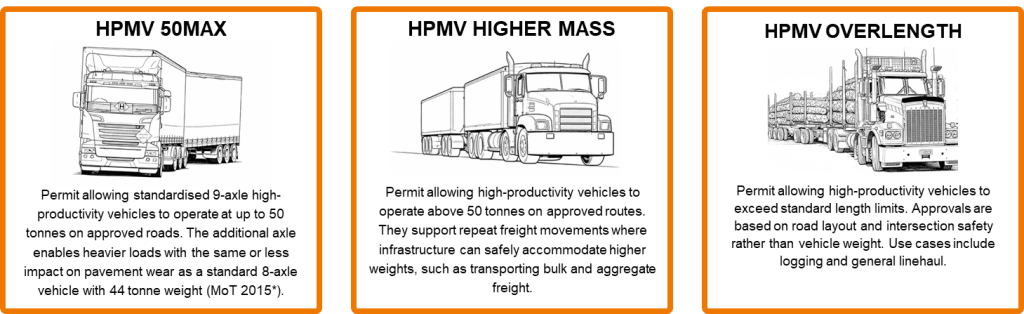
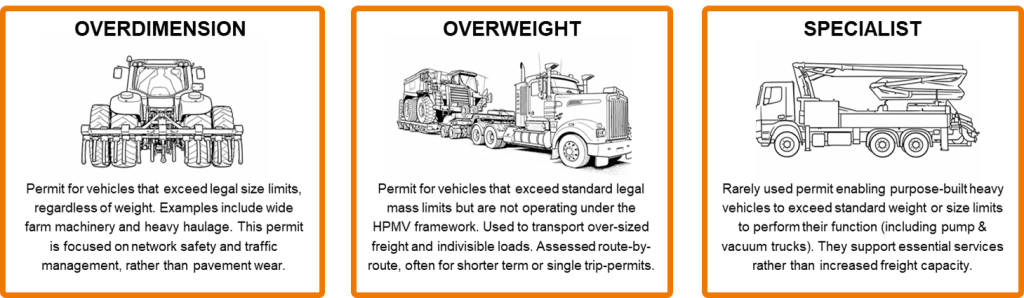
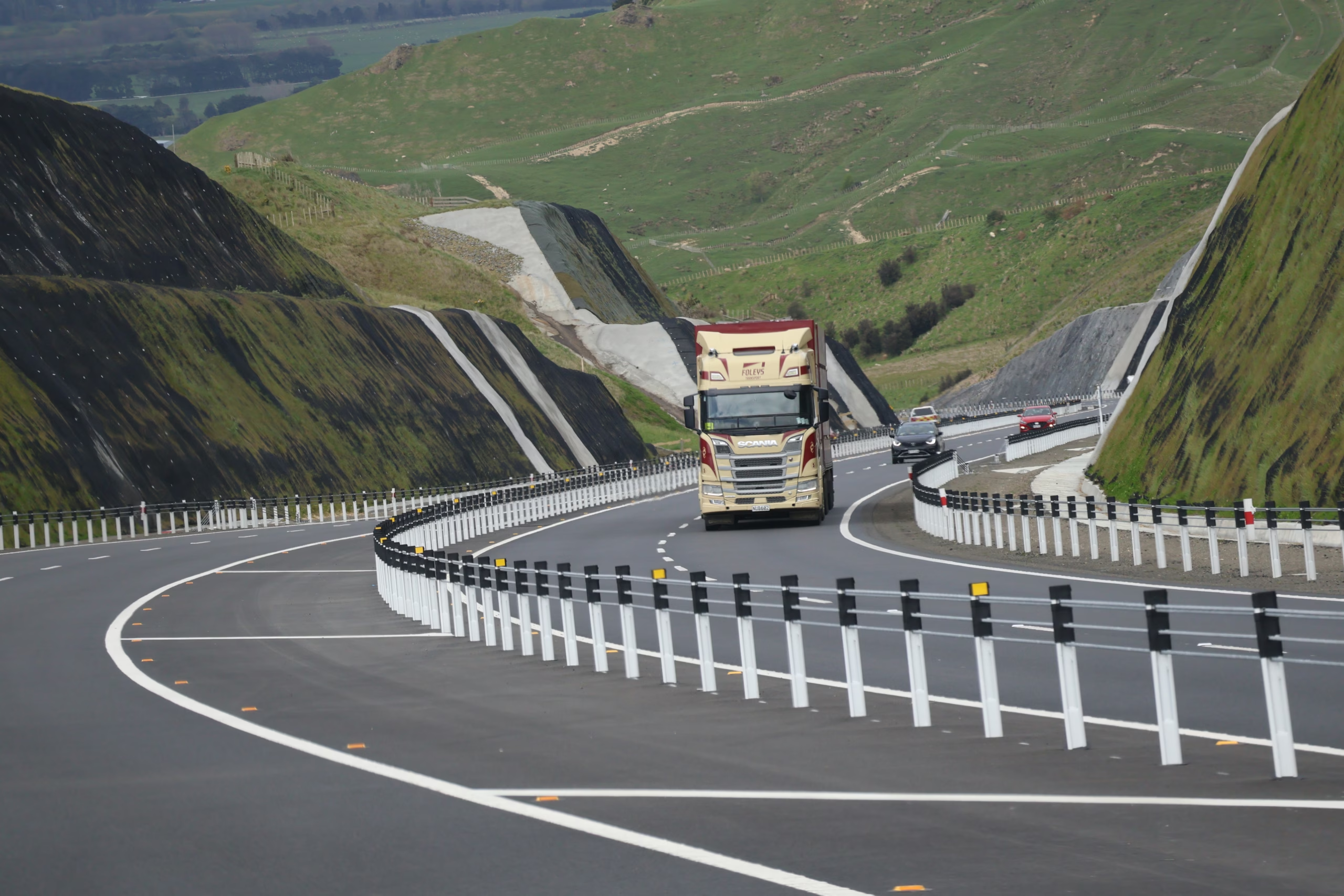
NZTA issues six permit types to cater to different needs and use cases. A transport business transporting a house or a large electrical transformer would respectively require Overdimension and Overweight vehicle permit. Freight companies are increasingly using High Productivity Motor Vehicle (HPMV) combinations including 50MAX trucks to carry more freight (such as logs, bulk commodities or general cargo) in fewer trips, with no additional road pavement impact.
Growth in heavy vehicle permits
Over the past five years, the number of heavy vehicle permits issued by NZTA has increased by just over 40 percent. Over the same period, the number of freight operators holding those permits increased by only 16 percent.
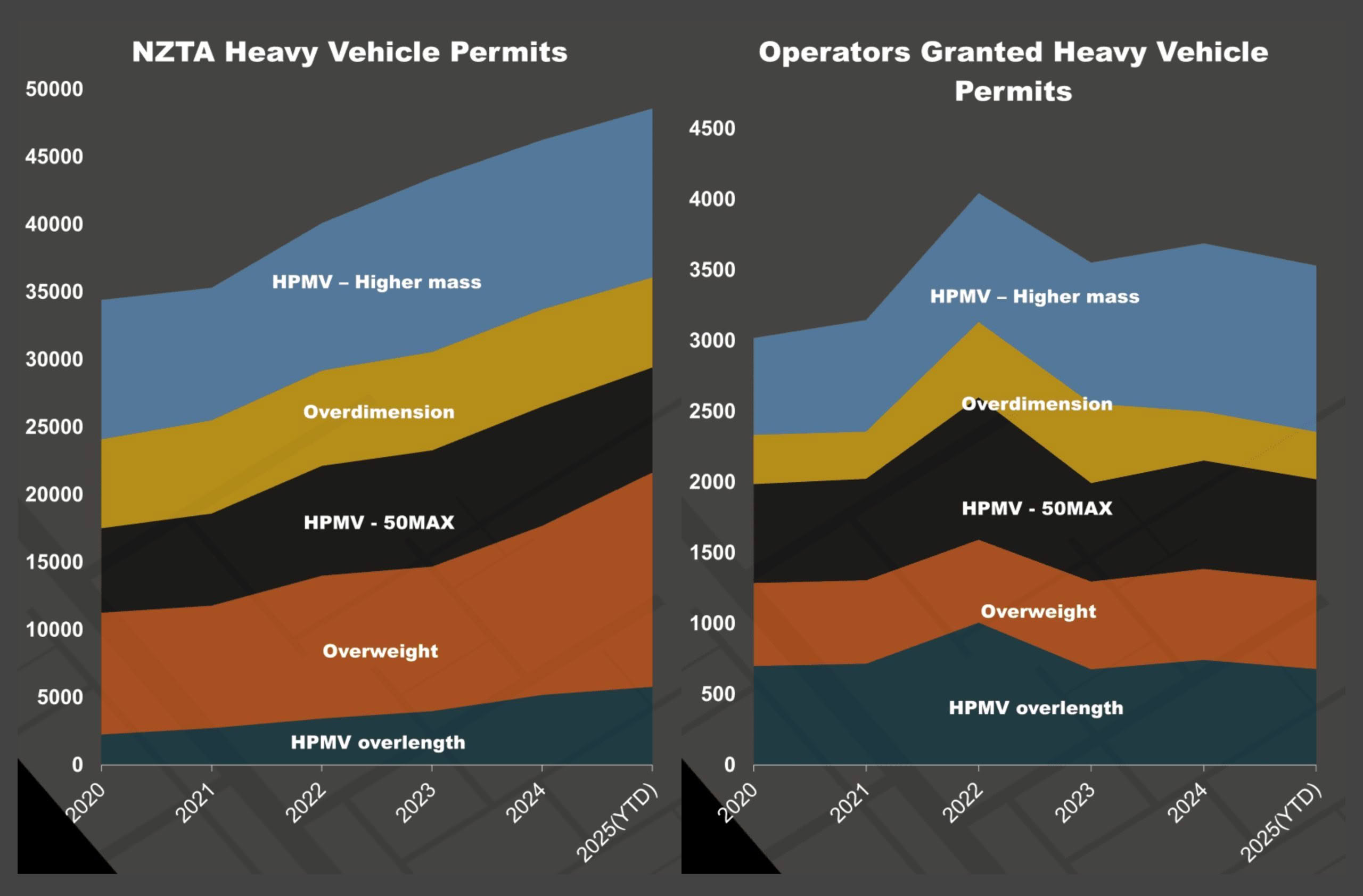
Growth in permitted vehicles appears to be driven primarily by existing operators making greater use of higher productivity configurations, rather than by a surge of new firms entering the permitting system.
The strongest growth has occurred in overlength HPMV permits, which increased by 157 percent. Overweight permits also rose sharply, increasing by 75 percent. By comparison, growth in HPMV – Higher Mass (21 percent) and HPMV – 50MAX (24 percent) permits has been more restrained
Operators are investing in vehicle configurations that reduce trips, improve productivity, and make better use of drivers, fuel, and infrastructure. With the exception of HPMV – Higher Mass permits, this growth is concentrated among a steady number of freight firms.
Transporting New Zealand’s view
Higher productivity vehicles are now a core part of how freight is moved around the country.
Unfortunately, there remains limited public understanding of the efficiency and infrastructure benefits of larger and heavier vehicles. In particular, 50MAX and HPMV Higher Mass combinations are able to carry heavier loads with the same, or lower, impact on pavement wear than a standard eight-axle 44-tonne vehicle, due to their additional 9th axle. These vehicles also pay higher rates of Road User Charges.
The regulatory framework has not kept pace with this shift. NZTA’s permitting rules were last substantively amended in 2017. Since then, operators have adopted a wider range of higher productivity vehicles, manufacturers have introduced new designs, and the industry has demonstrated it can operate these vehicles safely and effectively. The permitting system needs to be more accessible to new operators.
As the Government progresses its Land Transport Rules Reform Programme, it is important that reform addresses the full range of higher productivity vehicle types. A narrow focus on 50MAX vehicles alone would fail to reflect how freight operators are already delivering productivity gains across the network.
Transporting New Zealand (and a coalition of other transport associations) made this point in our recent submission on 50MAX and H-Plate reforms.
Understanding the permitting system
Different permit types allow for different vehicle lengths, weights, and axle configurations. These distinctions are important for understanding how freight productivity is improving in practice.
Some vehicles will require multiple permits when they exceed standard limits for weight and size. For example: Overdimension & Overweight, or HPMV 50MAX & Overlength.
For more information, you can contact our Policy & Advocacy Team.


Didn’t get this by email?
Stay in the loop on the latest road transport news with our weekly Dispatch newsletter, delivered to your inbox every Friday morning.