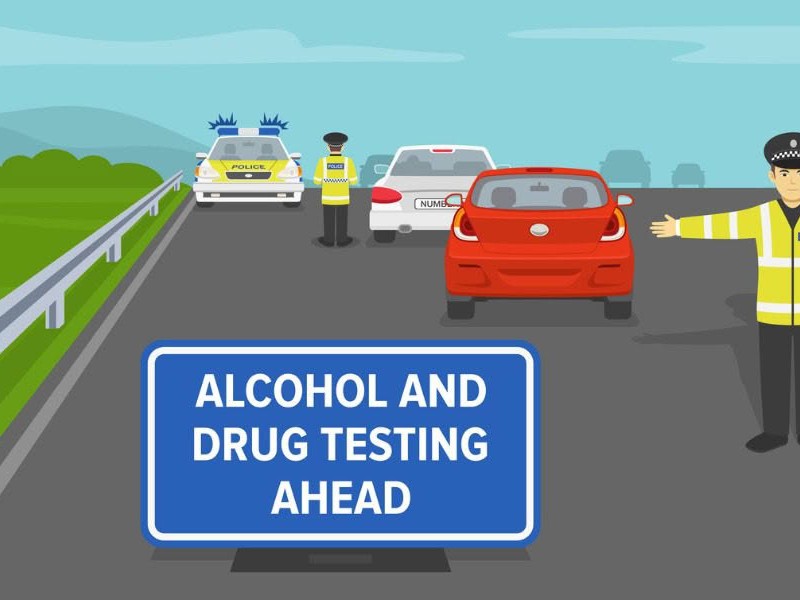
Everyone is used to roadside alcohol breath testing, right? Well, you should be because, according to the Police, they conduct about 4 million roadside alcohol breath tests a year. That’s pretty much enough to cover every driver in NZ.
You might be surprised to learn that in NZ drugged driving is on a par with drink driving. According to data from the NZ Transport Agency’s Crash Analysis System database, which records details of all serious and fatal crashes, about 30% of all road deaths involve the consumption of an impairing drug. This is almost equal to deaths caused by drink driving.
This is not a new problem, but until now, the main tool Police have had to combat drugged driving is what’s called a compulsory impairment test. This is a behaviour assessment and many moons ago was also used for drink driving, until the breathalysers were introduced. It’s old-fashioned, subjective, and not as easy to conduct at the roadside as a simple ‘count to 10’ breathalyser.
But the technology exists to perform a roadside drug test akin to breathalysers. In fact several other countries have already introduced these tests, including Australia, and are reaping the benefits. In Victoria, a state with a similar sized population to NZ, the Transport Accident Commission estimates their roadside drug testing is saving 30 lives and 80 serious injuries a year.
New Zealand is long overdue for a similar regime, and since December, we do. Starting in Wellington and then rolling out to the lower North Island before going nationwide by April 2026, the Police have the right to require any driver to undergo an ‘oral fluid test’. Think of it a bit like a breathalyser test, but instead of testing breath it is testing saliva. Drivers are asked to place a single-use plastic paddle – which looks a bit like the COVID RAT test reader – under their tongue. Unlike a breathalyser, it is testing for the presence of four illicit substances – THC (cannabis), Methamphetamine, MDMA (ecstasy) and cocaine. There are thresholds for each drug that are set to indicate the recent use of one or more drugs, rather than historical use, passive exposure or accidental ingestion, and which would be unlikely to cause impairment. The screening test takes about 5 minutes to produce a result.
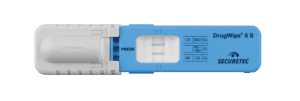
If the device shows a negative (pass), you’re on your way. If it shows a positive (fail) the Police then collect a saliva sample for lab testing, which takes another 2-10 minutes. Then the driver does another saliva screen test, to cater for the possibility of what’s called a ‘false positive’ result the first time. If that too is a fail, they are forbidden to drive for 12 hours on the spot. But if the second test is a pass, they can go on their way, and await the results of the lab test for any infringements. Police expect about 12% of the screening tests to return a positive result, which is slightly lower than in Australia who test for the presence of any amount of drugs, and not an impairment level like here.
So what are the penalties?
Unlike the saliva test, the lab can actually test for 25 listed illicit drugs. If the lab test shows the presence of one illicit drug measured at the pre-determined impairment level, then the driver will get a $200 fine and 50 demerit points. But if there are two or more impairing drugs then its $400 and 75 demerits. The latter penalties also apply if a driver refuses to undertake a test or accompany an officer (plus a 12-hour driving ban). Repeat offences incur the same penalties. But there are different penalties for offences that include both alcohol and drugs; and the Police say drivers will usually be tested for alcohol first.
Drivers can’t use a prescription or medical note at the roadside to stop them from undergoing a test or to dispute a positive saliva screening test result. If an infringement is issued after lab testing, drivers will have the ability to apply for a medical defence if it is for a drug that has been prescribed to them.
The number of roadside drug screening tests planned is much lower than for alcohol – initially just 50,000 a year which is a third of Victoria – so it won’t necessarily follow that a driver failing a breath test will also undergo a saliva test. And for heavy vehicle drivers, the Police say it’s more likely that drug screening will be undertaken at any one of the twelve Commercial Vehicle Safety Centres planned across the country, whilst they are also inspecting vehicles, RUC and logbook compliance.
Advice for transport operators
Many transport operators already undertake random workplace drug and alcohol testing and pre-employment screening. The Drug Detection Agency (TDDA) is one of the companies that provides this service, undertaking some 250,000 drug tests in NZ a year. Around 3.75% of the tests are positive for drugs, much lower than expected by Police but likely explained by the fact that workers anticipate these tests. TDDAs testing shows that just under 70% of positive (fail) tests show the presence of cannabis, with 28.5% indicating meth, and 16% opioids.
TDDA also help employers develop drug and alcohol policies and provide training and education. Transporting New Zealand highly recommends operators institute such policies if they don’t already have them, and consider introducing random testing. Such a regime meets employers’ obligations under the Health and Safety at Work Act to provide a safe workplace,
Coupled with that is putting clauses in employment contracts advising of the right to undertake random workplace tests, as well as after a significant work accident or near miss, or whenever reasonable cause exists to suspect alcohol or drug use. The employment contracts could also require employees to disclose if they have received a drink or drug-driving infringement, even when driving in a private capacity. It’s far better for employers to be aware that a drivers’ licence is at risk from high demerits and that they may have a substance abuse problem, than getting a call at the roadside that they’re suspended from driving. That would be especially problematic if carrying livestock or perishable goods, meaning operators would need to find spare drivers – perhaps from other operators – who won’t go over their driving hours.
It’s infinitely preferable to be front-footed and have an honest conversation with at-risk staff beforehand to manage this risk, such as offering substance counselling and performing regular drug or alcohol screening at the depot.
- View Transporting New Zealand’s webinar on roadside drug testing here: https://www.transporting.nz/news/roadside-drug-testing-webinar