
What shape is New Zealand’s road transport industry in and what will it look like in the future? Driving Change – Road Transport Workforce Report 2025, produced by Transporting New Zealand in association with Teletrac Navman, provides some valuable insights.
This in-depth report was produced as part of the Driving Change Diversity Programme. Drawing on data from three nationwide censuses, it explores how the demographic makeup of the road freight industry has evolved over more than a decade.
Transporting New Zealand represents a 33,000-strong workforce: Truck drivers make up 1.2% of New Zealand’s total workforce, making it the 11th most common occupation in the country.
With nearly 93% of New Zealand’s total freight tonnage moved by road, the demand for road freight services will only increase as our population continues to grow. Ensuring that the sector is staffed with skilled, capable drivers is more important than ever, says Transporting New Zealand chief executive, Dom Kalasih.
“Understanding who makes up the current workforce is critical to building a sustainable, resilient industry. The sector is facing several key challenges: a large portion of our experienced drivers are nearing retirement, and we are not seeing enough young people entering the profession to replace them. Women also remain significantly under-represented in the industry.
“Addressing these challenges isn’t just about filling gaps in the workforce. We know that greater diversity in any workplace drives improved outcomes – boosting productivity, creativity, and problem-solving.”
Here are some key insights:
The truck driving workforce is rapidly aging
While the average age of a New Zealand worker is 41.8, for truck drivers it’s 46.5.
And while there is a sustained presence of drivers aged 55 and older, the numbers of younger entrants to the industry have stagnated.
Drivers who are over the retirement age of 65 now make up over 10 per cent of the trucking workforce.
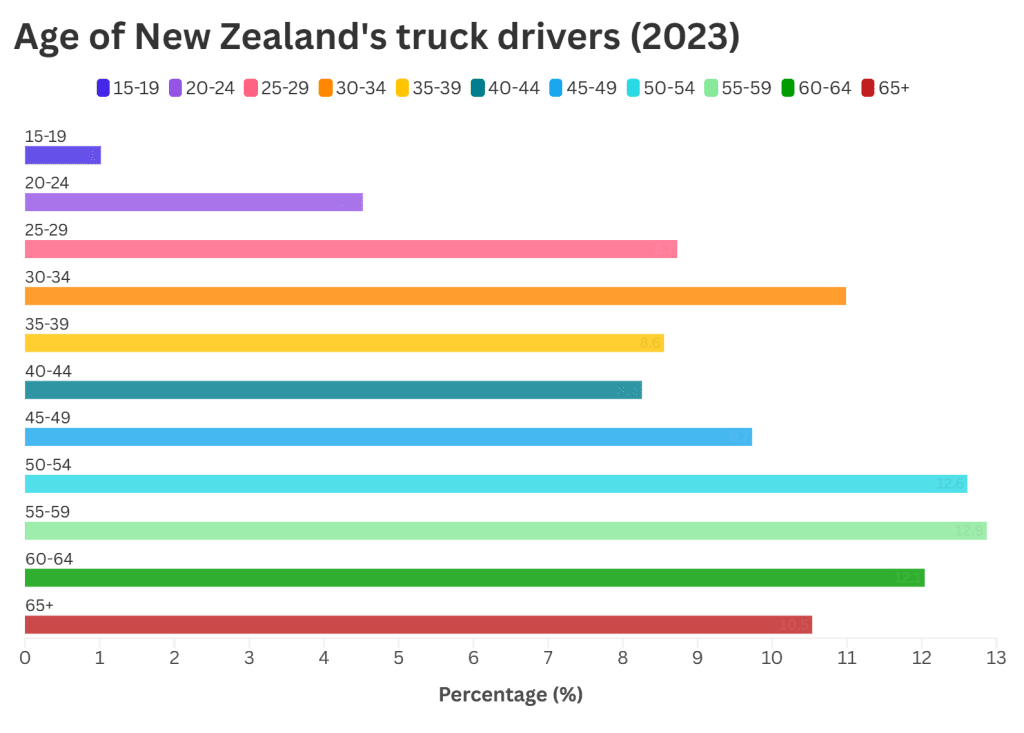 Additionally, while 15-39 year olds represent 46 per cent of New Zealand’s overall workforce, only 34 per cent of truck drivers belong in the same age range.
There are some notable variations by region, too. In 2023 the West Coast had the oldest population overall, but for truck drivers Northland took the top spot with an average age of 51.5.
Auckland is home to the youngest workers, with an average age of 44 for truckies and 41.5 for everyone else.
New Zealand’s ageing trucking workforce matches broader global trends. The International Road Transport Union (IRU) recently reported that 3.4 million drivers over 36 countries will retire by 2029.
Findings from Transporting New Zealand’s National Road Freight Survey indicate that 31% of participants expect up to a quarter of their drivers to retire within the next five years.
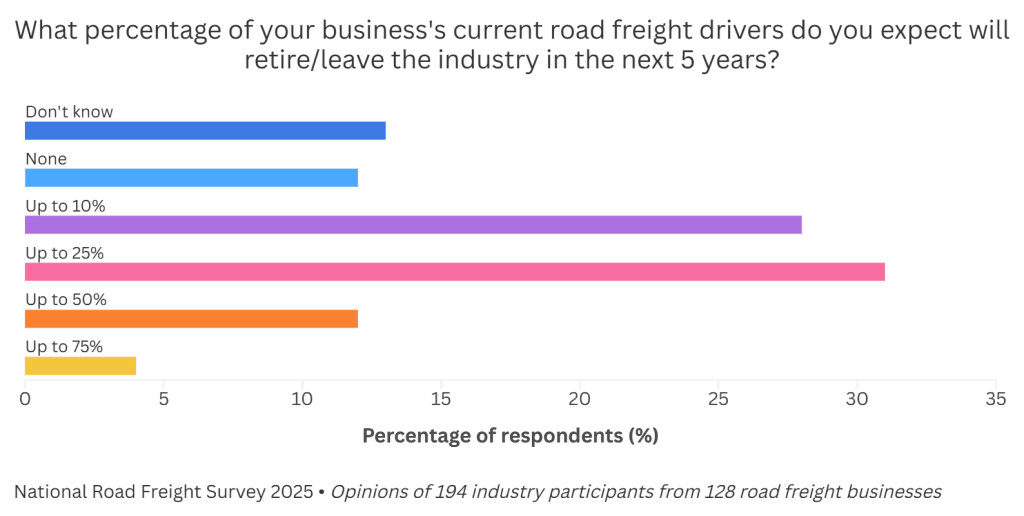 These figures raise concerns around long-term workforce. Attracting young people to the sector will be a key priority.
We believe the supply of skilled young drivers in New Zealand’s trucking workforce can be improved by introducing a more focused driver training regime and a simplified licensing process; an industry commitment to diversity and inclusion; and boosting awareness that truck driving is a skilled and valued occupation, which is recognised in industry rates.
 Young drivers face significant barriers to home ownership
Buying a home is becoming increasingly challenging for New Zealanders, and census data confirms that truck drivers are not immune.
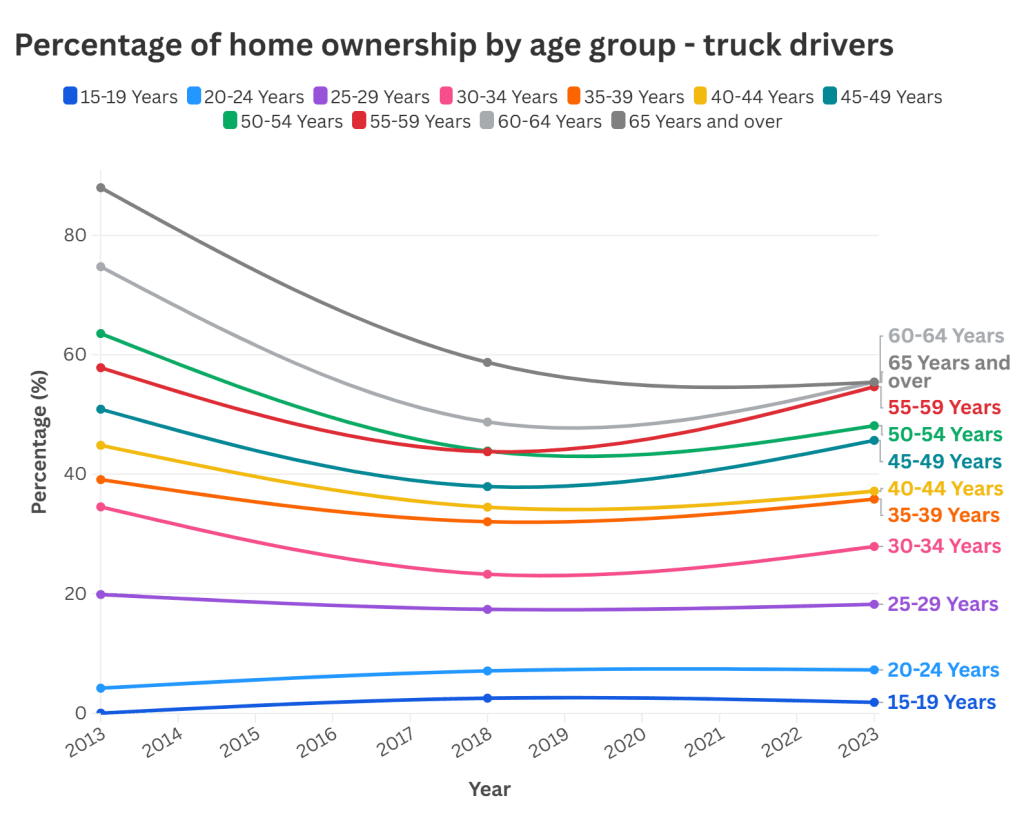
Home ownership rates among truck drivers have increased since 2018. Home ownership among drivers aged 15-39 sits at the national average (26 per cent). However, truck drivers have lower comparative rates of ownership at middle and late age.
Only a small proportion of drivers under 30 own a home (18 per cent), with rates lifting substantially from 40 onwards (37 per cent).
Home ownership rates may be affected by many owner-drivers prioritising the purchase of a truck over getting a mortgage. This could delay home ownership compared to typical salary earners.
Without improvements to affordability, Transporting New Zealand would expect housing to continue to push drivers to emigrate to better paid jurisdictions like Australia.
It will also increasingly push drivers who love the freedom and variety truck driving offers to consider alternative employment.
 There is a low, but increasing, number of female truck drivers
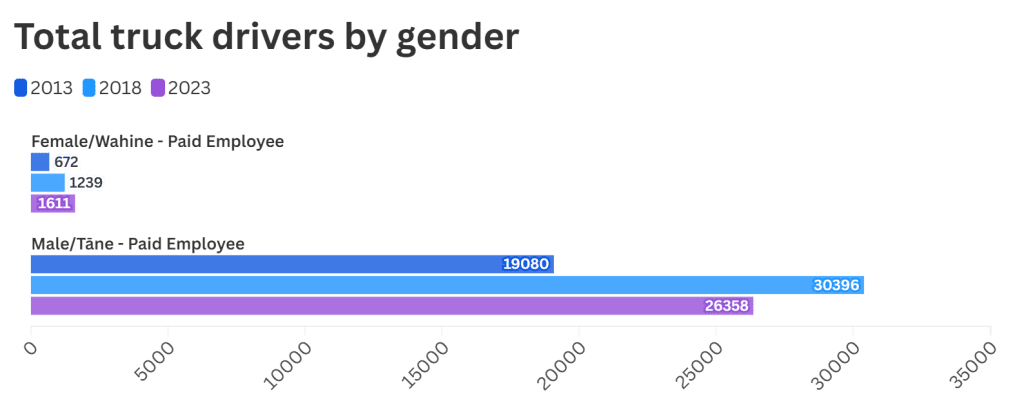
There is little gender diversity in the truck driver workforce, but women’s participation is climbing.
The truck driving workforce is 94 per cent male. The number of female truck drivers grew 30 per cent from 2018 to 2023, while the number of male drivers decreased over the same period.
Female drivers’ average income is lower than their male counterparts, but their wages are increasing at a faster rate.
Notably, there is a smaller gender pay gap in the truck driving workforce than there is between men and women in other sectors.
On average female truck drivers work six fewer hours per week than their male counterparts. This is the same gap as between female and male workers of other occupations.
Truck drivers generally work longer hours than people in other work types, regardless of gender.
This reflects the demands of the freight industry its customers.
Attracting more women into truck driving and retaining them for the long term would go a long way towards addressing the industry’s long term skill shortages.
A 2019 study from the National Centre for Tertiary Teaching Excellence (Ako) identified five main barriers to women entering the trades, that are applicable to road freight: lack of knowledge about the opportunities within the industry; lack of work experience; finding employers willing to employ women; male-dominated culture of the trades; and lack of support for women in the trades.
Encouraging more women into truck driving will require fresh thinking from road freight businesses, and support from procurers of freight services.
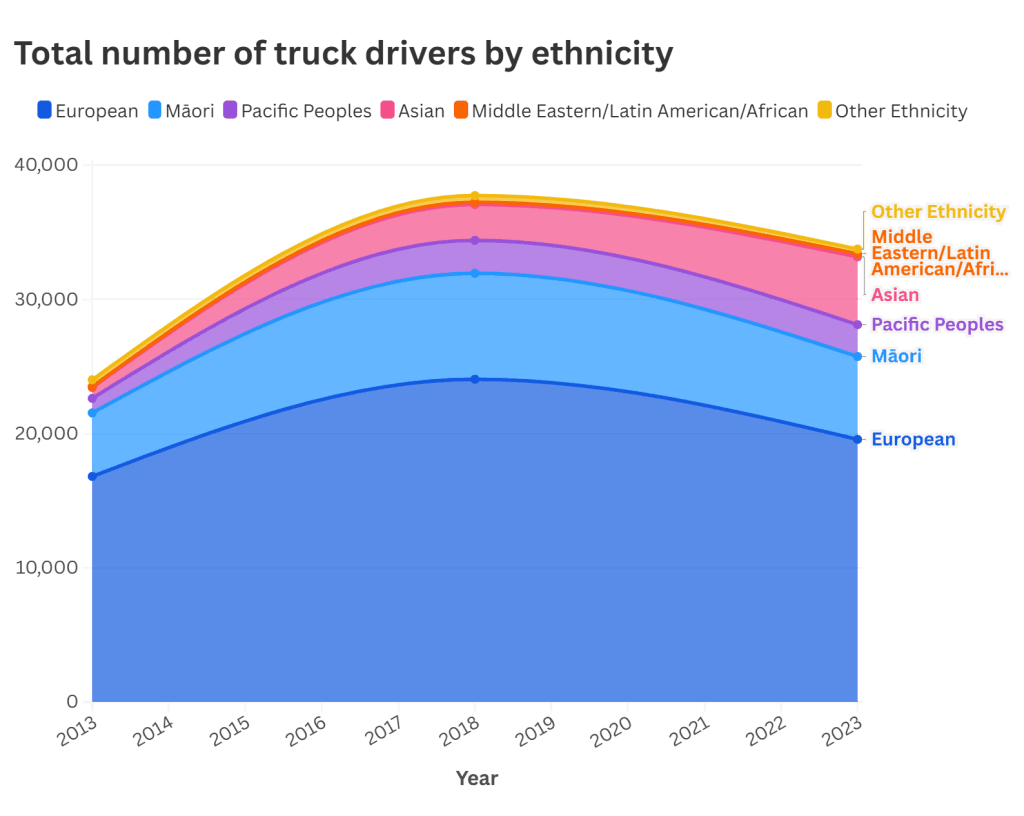 The workforce is becoming more ethnically diverse
The truck driver workforce is becoming more ethnically diverse over time, but remains heavily European and Māori dominated, echoing the ethnic makeup of the general New Zealand population.
Between 2013 and 2018, the trucking workforce grew significantly across all ethnic groups.
The number of Asian drivers increased by 230%, while drivers of Middle Eastern, Latin American, and African backgrounds grew by 150%. Pacific peoples saw a 126% increase, and Māori drivers grew by 67%.
Although European drivers continued to make up the majority of the workforce, their growth rate during this period was comparatively lower.
From 2018 to 2023, the total numbers of truck drivers dropped considerably. However, the number of drivers with an Asian background increased from 2,673 to 5,052, and the Middle Eastern/Latin American/African contingent also grew by 63 drivers.
When compared to the ethnic makeup of the entire workforce, truck driving has a relatively higher proportion of Māori and Pacific participants.
These demographic changes highlight the importance of road freight businesses ensuring differences in customs, religious practices and communication styles are catered to.
Supporting resources can be found at the Driving Change Diversity – Diversity Toolbox page.
Migrant drivers are becoming increasingly important to the workforce
We can attribute much of the trucking workforce’s ethnic diversity to migrant drivers, who are increasingly important in maintaining workforce numbers.
While the vast majority of our truck drivers were born in New Zealand, that proportion is decreasing as migrant employment grows.
The percentage of drivers from Asia has grown by nearly 10% since 2013, mostly comprised of Indian and Filipino migrants. Pacific Islanders are also increasingly entering the New Zealand trucking workforce, comprising 6.3% of drivers as of 2023.
Additional data from the Ministry of Business, Innovation and Employment (MBIE) showed that most accredited-employer work visas (AEWVs) granted to migrant truck drivers were for people aged between 20-40. There is great value in continuing to supplement the local workforce with younger drivers from overseas.
New Zealand-born drivers still make up the majority of the workforce, but their share has declined from 89 per cent in 2013 to 75 per cent in 2023. Drivers born in Asia have seen the most significant increase, now comprising over 10 per cent of the workforce.
Hiring workers from outside New Zealand is one way to address critical staff shortages.
If you own a business and you’re interested in hiring drivers from overseas, there are some key things to be aware of.
Migrant workers are inherently vulnerable to exploitation as they are less familiar with New Zealand’s employment laws. Transporting New Zealand has partnered with Working In to host webinars and release member communications about best practice when employing migrant drivers.
- For more information on hiring migrant drivers and/or becoming an Accredited Employer, visit immigration.govt.nz.
Advocating for positive changes
The findings of the report highlight that urgent action is required from road freight businesses, government, and industry associations. Transporting New Zealand will continue our advocacy for positive workforce development changes.
Road freight companies need to consider new ways of attracting people into truck driving, including casting a wider net during recruitment, ensuring women and people of different ethnicities and nationalities feel supported in their workplaces, and supporting retention through professional development and training opportunities.
Young people need more support from Government to get their license and progress through the graduated heavy vehicle licensing system. This includes reviewing driver licensing rules, supporting driving training in schools, and increasing test capacity.
While government and industry work to improve the driver development pipeline, migration settings must ensure New Zealand businesses can attract qualified, experienced drivers to act as an important supplement to the local workforce.
The road freight industry must do more to promote truck driving as a rewarding career path, including supporting scholarships, driver training opportunities, and telling positive stories about the people who love working in the industry. Transporting New Zealand’s Te ara ki tua Road to success pathway enables trainee drivers to be matched with host companies to enter the industry by gaining practical experience and qualifications. MITO also offers a free commercial road transport micro-credential.
The public version of the 2025 Road Transport Workforce Report can be found here. Members can access the extended version by logging in to the Member Portal.
This story was originally published in Transporting News – July 2025 edition.