
Driver licensing changes
On Tuesday, Transport Minister Chris Bishop announced changes to the driver licensing scheme. Not unexpectedly, the removal of the second practical driving test has been a polarising issue, particularly for driver licence testers and road safety advocates. It is complex, but we are supportive of the changes, and I firmly believe they will help get more New Zealanders travelling safely on the road.
There is no substantive research establishing that the second test improved safety outcomes, and the changes will be accompanied by additional safety measures, including a longer learner licence period for under‑25s, an extended restricted licence period for drivers who receive demerits, an expansion of the zero‑alcohol rule, and stronger oversight of training providers.
Our workforce is hugely dependent on having licensed drivers, and engagement with the driver licensing system has been declining. There are over one million eligible New Zealanders currently without a full driver licence, a situation that has worsened since the early 2000s.
Not having a full licence can be a serious obstacle to employment and accessing essential services like groceries and healthcare. Given our sector’s ageing workforce, anything that can be done to promote more licensed drivers will help ensure we have another generation of potential commercial drivers able to help keep New Zealand moving.
Raising revenue for investment in roads
On Monday, we presented our submission on the Land Transport (Revenue) Amendment Bill at Select Committee. The Bill aims to create a more flexible and responsive tolling framework to support investment in roading infrastructure, modernising the road user charges (RUC) system, and removing barriers to the future transition of all light vehicles from fuel excise duty to RUC.
What I particularly appreciated when forming our position on this change was that we had a strong sense of our industry’s view. Sixty‑three percent of industry respondents agreed with increased use of tolling to fund the Roads of National Significance in our 2025 National Road Freight Industry Survey. Twelve percent of respondents disagreed, and 23% were neutral. On that basis, we were well placed to be generally supportive of increased use of tolling on new roads.
There were only two key issues that we were philosophically opposed to: corridor tolling, which essentially involves tolling the existing alternative roads that connect the same points as the new toll road, and mandating heavy vehicles to use the new toll roads while prohibiting them from the existing road.
It was pleasing to see that the AA held a similar view to ours.
Clearing the slips no small task
A shout‑out to the contractors and NZTA for the good progress they are making in clearing the slips in the Tairāwhiti area. According to the Transport Minister, slips on the East Coast along SH35 have included some 750,000 cubic metres of material coming down in slips and landslides across that route.
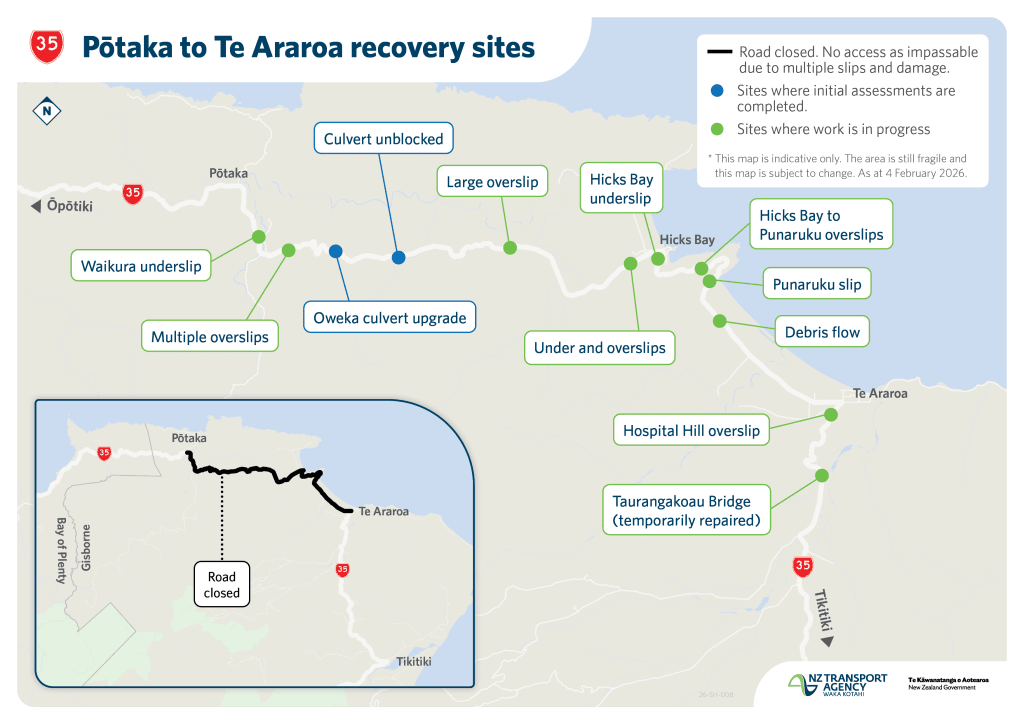
I am not in any way invalidating the inconvenience and hardship many in local communities are suffering from road closures, but bear in mind that clearing that amount of material will require roughly 30,000 truck and trailer journeys, which gives some indication of the size of the task and the challenging operational issues.
As larger vehicles gain access, the benefits of high‑productivity trucks really come to the fore. HPMVs carrying a 20% higher payload would, in effect, mean a reduction of around 6,000 journeys, and that is a win‑win for everyone. That is also why, when Phase 2 of the VDAM rule changes is released later this month, we will be advocating strongly for the Ministry and NZTA to ensure those changes unlock meaningful productivity gains.