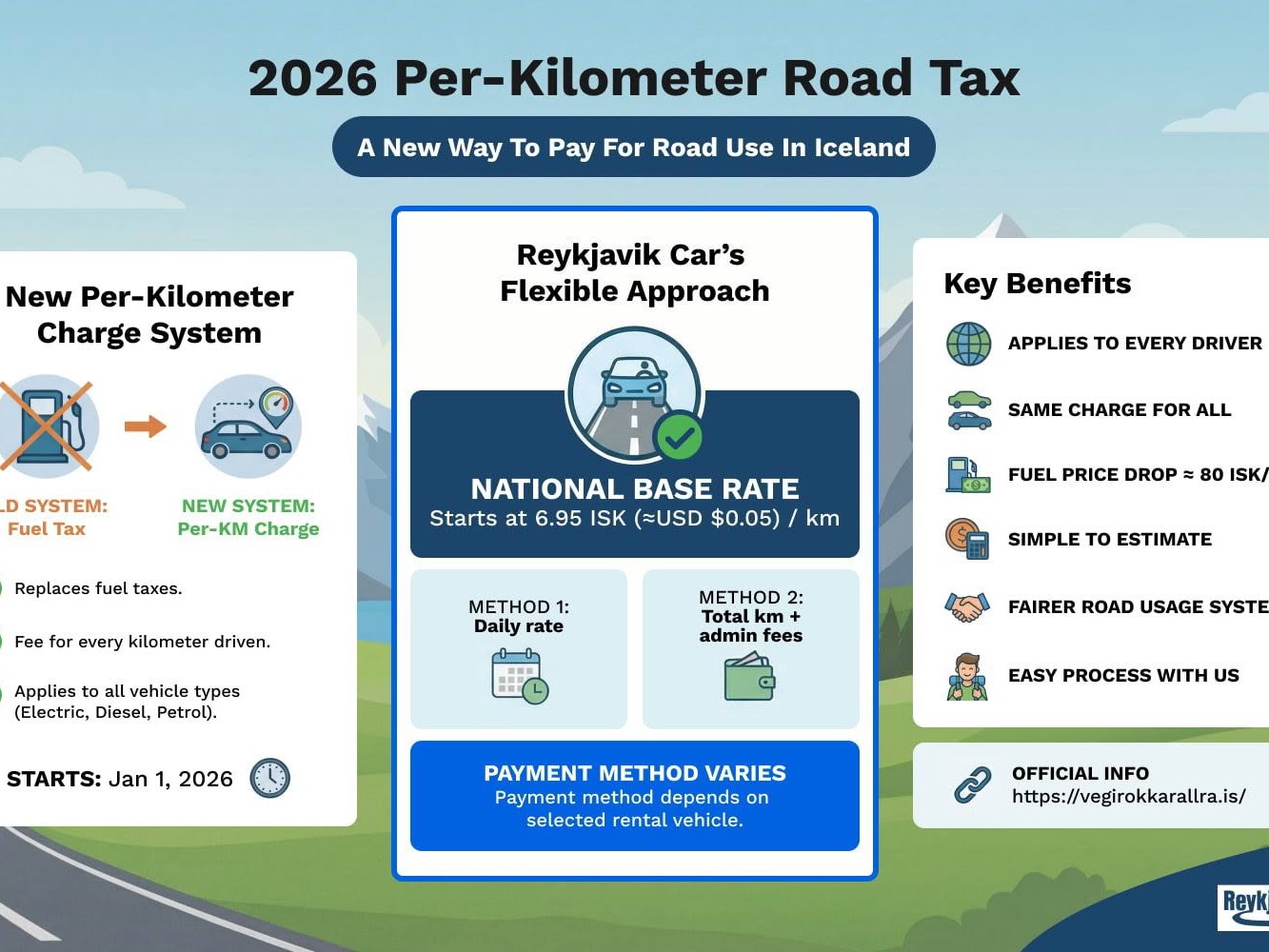
While plans are afoot in NZ to introduce universal RUC for all vehicles, Iceland has become the first country to do so, implementing universal RUC on 1 January 2026. The country announced its intention to move to universal RUC just 5 years ago.
What’s more, it’s a manual-based RUC system with no telematics. Instead vehicle owners are billed monthly based on odometer readings lodged via an app or website, or estimates based on previous readings or the average mileage by vehicle types (which for cars is 40km/day). To kick the scheme off, vehicle owners are required to submit an initial odometer reading by mid-February (or face a penalty of $270). Verification of odometer readings is through the mandatory annual safety inspection.
Key factors in favour of Iceland introducing such a simple system is its extremely small population – just 400,000, two-thirds of whom live in the capital city Reykjavik’s metropolitan area – and little cross border travel to manage.
Iceland already had a RUC system for heavy vehicles, plus light plug-in electric vehicles, which like NZ had been introduced in 2024.
The RUC fee starts at the equivalent of NZ 9.4 cents per kilometre for light vehicles, or $94 per 1,000 (compared to $76/1,000km in NZ), with graduated fees in 1-tonne increments up to a maximum of 61 cents per km, or $610/1,000km, for trucks weighing over 31 tonnes (heavy electric and hydrogen vehicles getting an 80% discount for the first 5 years).
The RUC fee replaces a fuel tax of around $1.08-1.22/litre on average (it’s $0.70/litre in NZ), which was abolished on 1 January, reducing pump prices by about 30%.