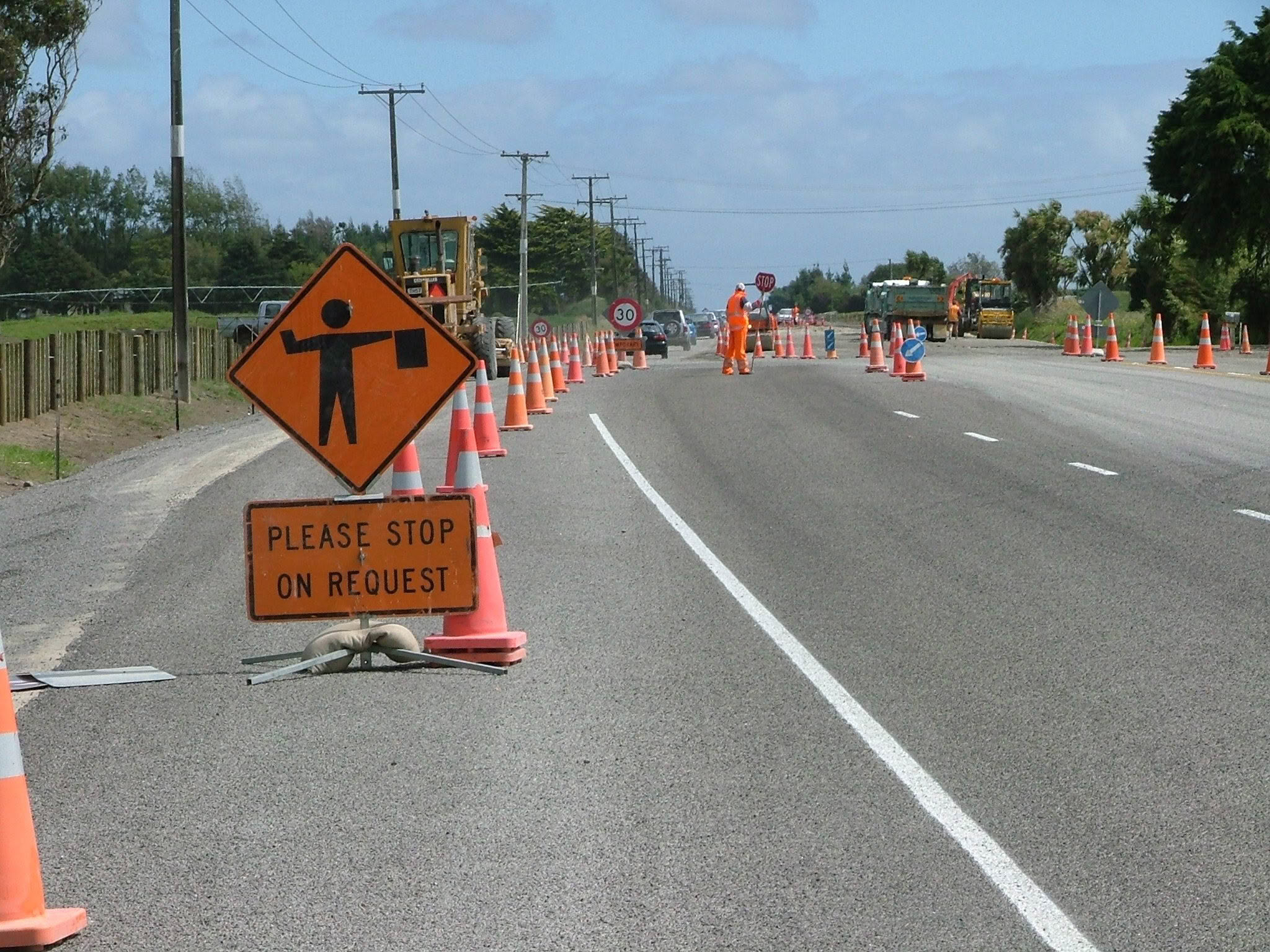
We’ve all experienced frustrations at roadworks sites and often questioned why a lower speed limit is in place at certain times such as when there is no activity on site, and it’s fair to say many of us exceed the temporary speed limits because of that.
But, there usually is a reason for those lower limits even when no work is apparent, such as a loose chip seal surface which reduces traction and poses the risk of windscreen damage at higher speeds, or the absence of edge line markers which are especially hazardous at night.
It’s perhaps no surprise then, that 83% of all fatal crashes at roadworks sites on just the State Highway network were due to “inappropriate speed” (i.e. exceeding the temporary limit), and 58% of fatalities were due to loss of control – loose surfaces likely being the culprit. Perhaps most surprisingly, 70% of fatal crashes occurred when the roadworks sites were unattended – perhaps when drivers think there is no hazard simply because roadworkers aren’t present. The majority of crashes occurred on rural roadworks sites.
Research by the AA Research Foundation shows that drivers think speed limits at roadworks are often not credible, and so are ignored, with 60% thinking the signs are advisory only, and not compulsory. The crash stats above show the results of that thinking.
Recently, Transporting New Zealand was invited to join a cross-sector working group on roadworks safety, which has been convened by the newly-formed Temporary Traffic Management Industry Steering Group (TTM-ISG).
The TTM-ISG, which is made up of road controlling authorities (RCAs), roading contractors and engineers, has been established with a mandate to “transform safety at roadwork sites”. Why? Well, because between 2019 and 2023, there were 42 fatal and 314 serious injury crashes at temporary traffic management, or roadworks, sites. Most of these were road users, not road workers. On average, there are 71 death and serious injury crashes at roadworks sites each year, which represents 2.5% of NZ’s road crashes, compared to 1.5% in Australia. TTM-ISG was formed to support the industry through changes to the way temporary traffic management is planned and delivered.
The roadworks safety sub-group which Transporting New Zealand has joined includes some RCAs, plus NZTA, Police, ACC and AA, and is tasked with developing evidence-based initiatives to improve safety at roadworks sites and road user compliance.
A fair amount of research has been carried out in NZ and overseas on roadworks safety and driver behaviour, and common conclusions and recommendations from the various research is that road user behaviour at roadworks sites and compliance with temporary speed limits can be improved through:
- enforcement;
- use of technology; and
- communication to road users
The working group will explore how these initiatives can be deployed, such as introducing point-to-point speed cameras at roadworks sites, the use of electronic message boards to inform road users why the speed restrictions are in place, and national publicity campaigns.