
Uncertainty on funding our roads, and future leaders
Chris Hipkins and Nicola Willis have made announcements in the last week on changes to planned fuel excise increases. There’s been considerable media interest in these announcements, and our phone has been ringing off the hook.
I’m mindful we remain apolitical, but Transporting New Zealand does play an important role in keeping members well-informed when they consider exercising their right to vote in the General Election.
Our road funding model is predominantly based on user-pays; the duties collected from fuel are ring-fenced and invested in roading in accordance with the National Land Transport Plan (NLTP). The amount of funding collected that way is important because we have certainty that it will be invested into the land transport system.
Initially, the plan had been to increase fuel excise duty (FED) in three stages across 2027-29, and RUC would also increase by the equivalent amount. That would mean that by 2030, FED and RUC collected would be 31% more than 2026.
If Labour govern next, they’ve committed to not increasing FED through their entire three-year term. Whereas our current Coalition government is deferring increases until 2028 and it will phase in further increases differently than earlier planned – implementing biannual increases of five cents until January 2030. The Coalition will top up the loss to the National Land Transport Fund – $1.476 billion – through the $450 million fuel response contingency fund established in Budget 2026, and the rest, in all likelihood, through further borrowing.
The National Infrastructure Plan released earlier this year by the Infrastructure Commission makes the point that our future prosperity depends upon our infrastructure, and that we’re up against formidable challenges. Much of what we’ve built in past decades is wearing out, including our roading. The report includes this sobering graph from the NLTP 2024-2027 which demonstrates the large gap between expected roading revenue and expenditure.
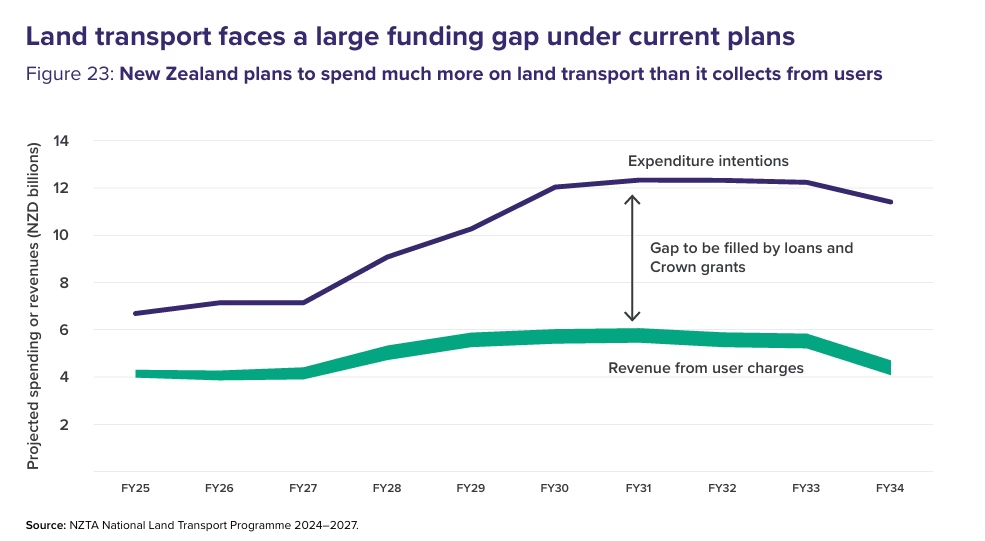
Arguably, the intended expenditure is overly ambitious. We don’t need gold-plated roads. However, what cannot be argued is that even if that investment was reviewed, prioritised and amended, given the quantum of the gap between the revenue currently collected and the intended spend, we’re still facing a significant shortfall.
That leaves us with two main concerns. The planned revenue collected from FED and RUC will not keep pace with rising costs. From 2021 to 2025, repair and maintenance costs on a $/km basis increased by about 36 per cent. Even with improved management of that spend we anticipate those prices will continue to rise. Consequently, our future purchasing power is likely to reduce, and less actual work will get done on our roads.
We remain heavily reliant on government loans and Crown grants to fund the expenditure gap. There is a risk that the government will be unable to provide that.
This latter risk is clearly demonstrated with the current NLTP where several roading projects will not be delivered. In the absence of strong funding commitments, NLTPs risk being little more than a wish list.
Nothing any party has said gives us confidence that in the short-to-medium term there will be the level of land transport funding available to deliver what’s been promised.
Our Election Platform which we launch next week calls for a stable pipeline of transport investment to support economic growth, among a range of other important appeals. The best way of securing stable funding is to collect money via user-pays mechanisms like FED and RUC to reduce the risk of relying on loans and grants which, as we’ve seen with the current NLTP, may not eventuate.
Hats off to MITO
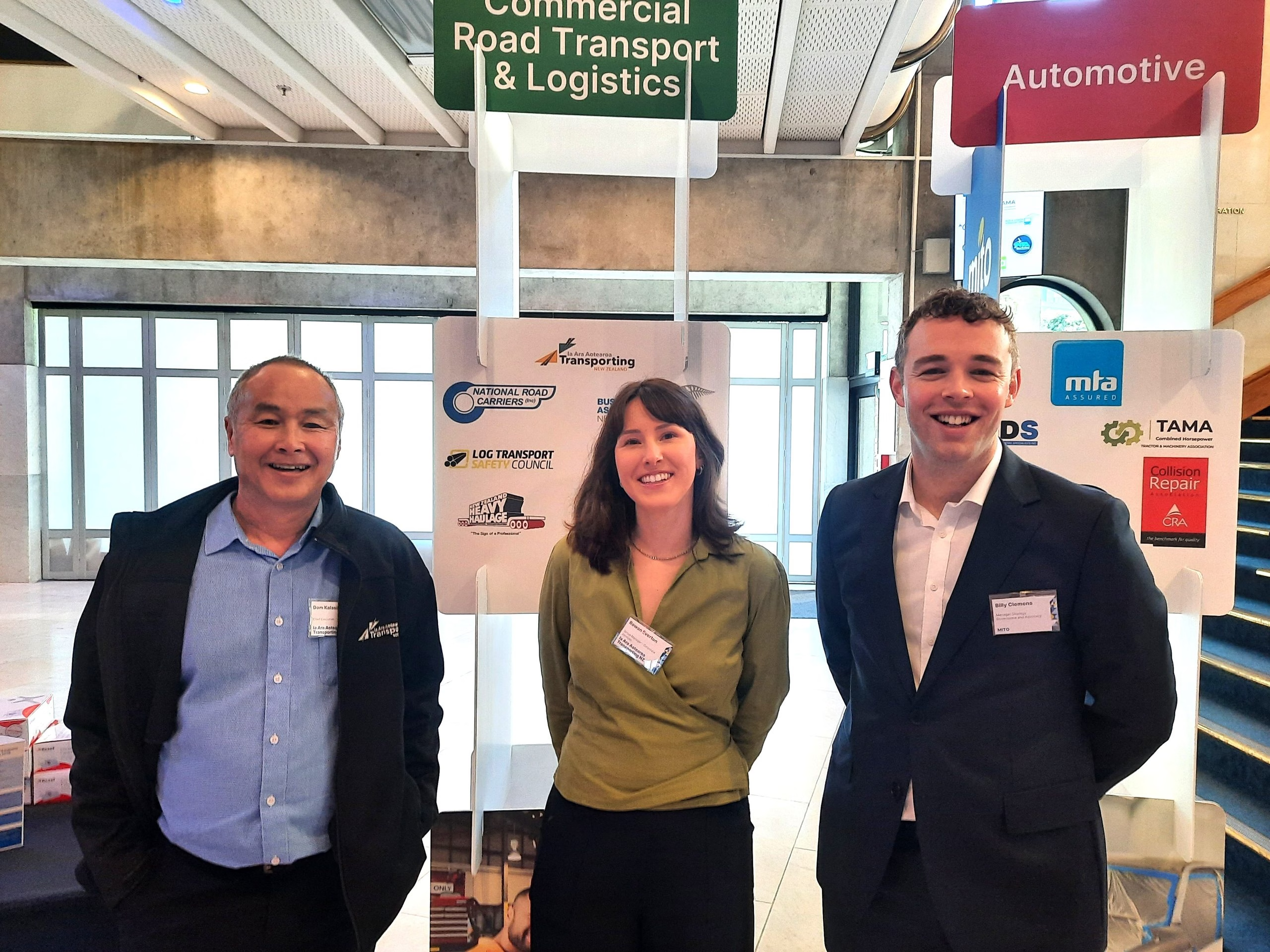
My colleague Rowan and I had the pleasure of attending the inaugural MITO Industry Summit in Wellington this week.
The conference was the first of its kind because MITO is now industry-owned, and its catch cry of “By Industry, For Industry” will bring a stronger focus on training and delivering the workforce we need.
There were a range of excellent presenters and thought-provoking sessions. It was great to see some exemplar cases of industry investing in vocational training and qualifications for our future workforce. But for me the greatest value of the day was the reminder that these employers are doing much more than just developing our workers, they’re also developing our country’s future leaders.


Didn’t get this by email?
Stay in the loop on the latest road transport news with our weekly Dispatch newsletter, delivered to your inbox every Friday morning.