
Transporting New Zealand’s Policy Priorities
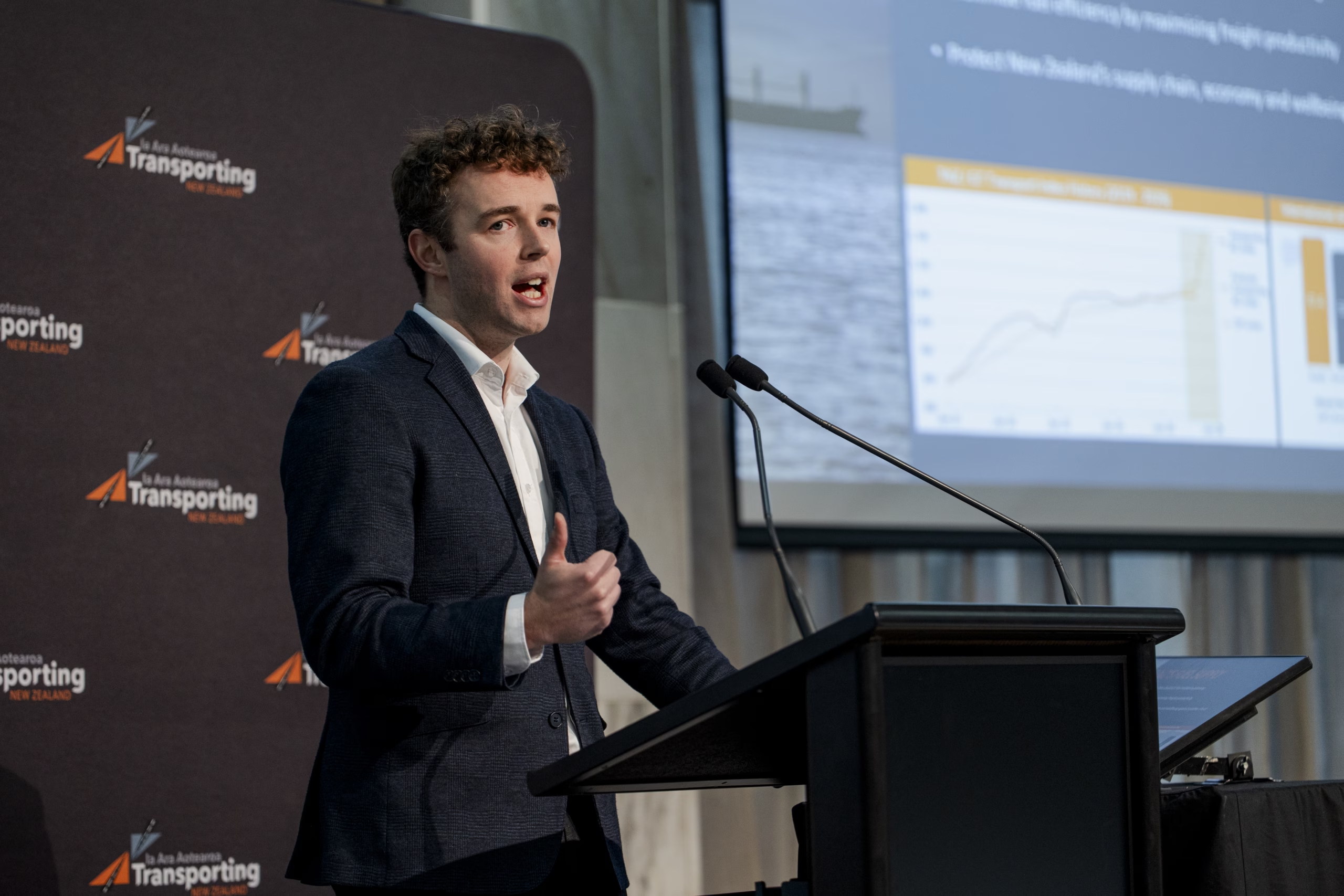
At our annual conference, I had the pleasure of setting out Transporting New Zealand’s policy priorities as we approach Election 2026. These priorities come from our members, have good cut through with the public, and acknowledge how important our sector is to the success of the whole country.
Securing New Zealand’s fuel supply
This year, New Zealanders got a hard lesson about the importance of a resilient diesel supply.
New Zealand’s isolation, that previously protected us against foreign crises, instead came at big cost. The Asia Pacific Region runs a significant oil deficit – supply of 7.7 million barrels a day is outstripped by demand of 39 million barrels.
Diesel prices more than doubling spiked freight costs, and drove fuel costs above total wage costs for many companies.
Our message to Ministers, and Ministry of Transport and NZTA leaders has been clear throughout the response. Operators can reduce fuel use through more efficient vehicle operation, but need changes to permitting and VDAM rules. Our mandated onshore diesel holdings also have to be increased.
We may have seen the worst of this crisis, but we’ll be reminding politicians, voters and industry that New Zealand should be better prepared for whatever comes next.
Maintaining New Zealand’s Roads
Transporting New Zealand is determined to keep safely maintained roads on the radar as we approach the election. Roading issues are dangerous, highly disruptive, and incredibly costly. The recent closure of Waioweka Gorge between Gisborne and Tauranga cost transporters and their customers half a million dollars a week. In 2024, NZTA estimated that the region lost $8 million in GDP every single day the road was closed.
Road maintenance has been increasing since 2019, with particularly big hikes in 2022 and 2023. Local and central government deserve credit for making rehabilitation and renewals a priority.
We know from ministers, councillors and officials that feedback from freight operators played a big part in increasing awareness and the establishing the political need for improvements.
The job is far from done though. We know our members are concerned about examples of poor-quality work, repairs requiring complete do-overs, and temporary traffic management overspend.
Road maintenance costs have also increased by approximately 36 per cent per kilometre between 2021 and 2025, and that eats away at the real investment.
Infrastructure and Growth
New Zealand has a problem with infrastructure delivery. We’re at the top of the OECD for spend, but forth to last in their asset management rankings.
This means that there is going to be increasing scrutiny on getting bang-for-buck, and TNZ’s advocacy and support for roading improvements that help with growth and jobs is going to be more important than ever.
This includes fighting attempted de-scoping, like when we successfully worked with local councils and MPs to stop downgrades to the Otaki to North of Levin highway project.
We’re already starting to see political parties start making promises about delaying fuel tax and RUC rises, and directing revenue from motorists towards already highly subsidised rail and public transport. If we want safe, modern infrastructure, our sector is going to have to fight for it.
Safer Roads
Transporting New Zealand will be acknowledging good progress on keeping our roads safe, while continuing to advocate for practical improvements.
All of our members want to see their team get home safely. We’re regularly hearing concerns from operators and Police around distraction, lack of seatbelt wearing, and impaired driving are putting people at risk.
Transporting New Zealand will be advocating for roadside drug testing to be levelled up, along with more effective deterrence around seatbelt wearing and mobile phone use, where NZ is falling behind the rest of the world.
One safety improvement we need to own as a sector is the cowboys out there giving the industry a bad name. Operators who aren’t compliant, hop between easily obtained transport service licenses, and undercut reputable businesses.
It’s going to be a tough conversation – but are going to force regulators to finally prioritise TSL reform, and lifting industry standards.
Supporting the Future Workforce
Another long-term challenge our sector is constantly dealing with is preparing for a generational wave of truck drivers starting to wind their hours back, or retire completely.
We know from TNZ commissioned research that 1 in 10 drivers are over 65, and 1 in 3 are over 55. Half of road freight businesses think a quarter or more of their drivers might retire or leave the industry within the next five years.
That’s why TNZ has lead an ongoing cross-industry campaign to get driver licensing support into our schools, and give more support to community groups helping with licensing support.
This August we will also be launching our detailed proposal to fast-track experienced, highly skilled under 25-year-old drivers into their Class 4 and Class 5 licenses.
Freight Productivity and Emissions Reduction
On freight productivity and emissions reduction, Transporting New Zealand will be continuing our efforts remove the land transport rule barriers to more efficient, higher payload and low emission vehicles.
We’ll also be calling out powerful supply chain partners who utilise their market power over transporters and freight customers, and pushing for Commerce Act changes.
Road freight can do more with less, and we’re focused on the practical reforms that will make that possible.
We’re looking forward to sharing our comprehensive Election Platform in the coming weeks.

Didn’t get this by email?
Stay in the loop on the latest road transport news with our weekly Dispatch newsletter, delivered to your inbox every Friday morning.