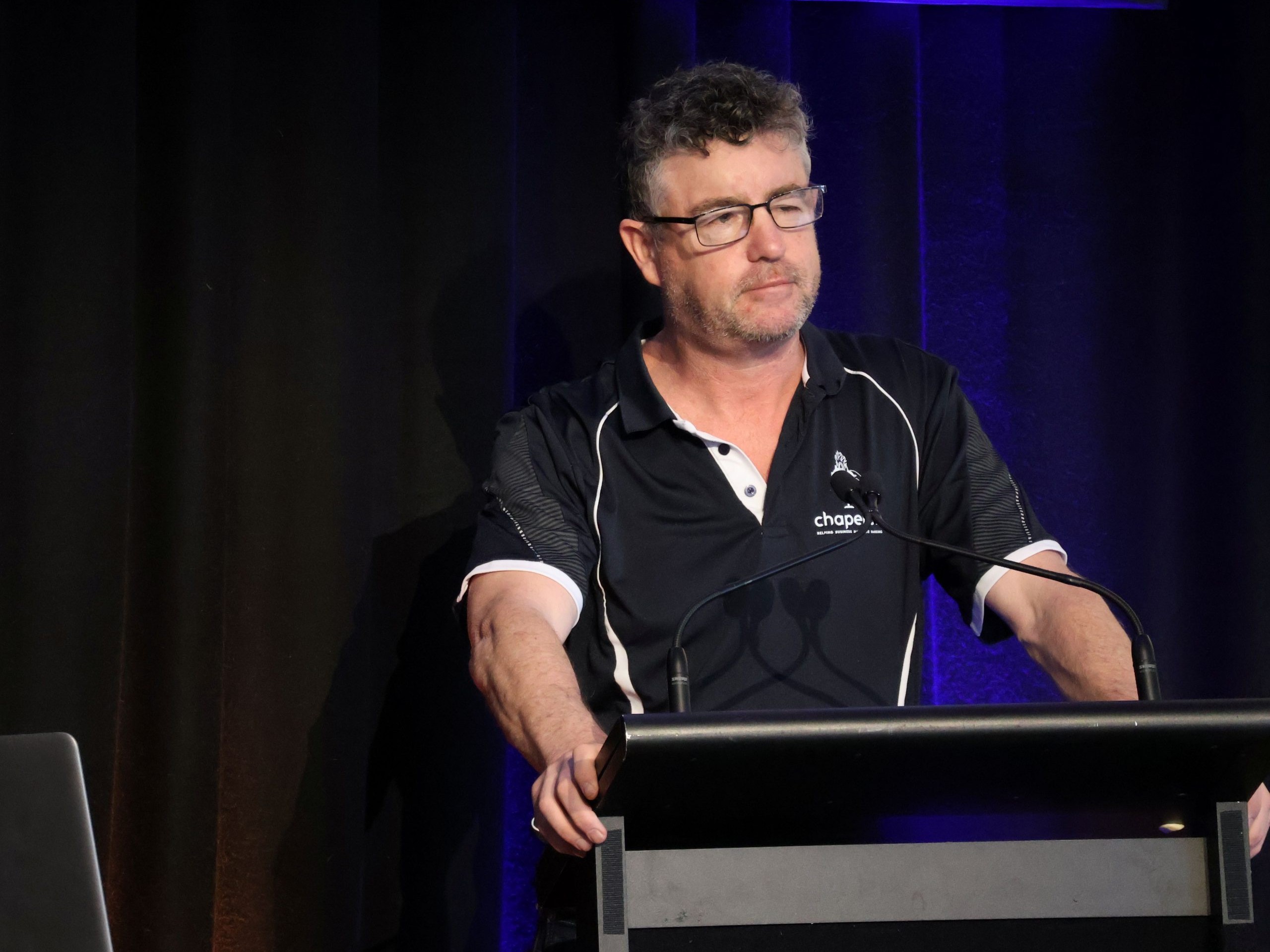
Who will be in Government after this year’s election? And what is the probability of bipartisanship on key issues? When will the economy improve? These questions were on the minds of many at the two Transporting New Zealand Road Freight seminars last year, and straight-talking economist Cameron Bagrie looked to answer them.
With more than 20 years of experience, including as the chief economist at ANZ, Bagrie is one of New Zealand’s leading experts when it comes to financial markets and government policy analysis. He’s known for offering sharp, no-nonsense insights into the economy and has become a familiar face in news media for his commentary on pressing issues.
Speaking at October’s North Island seminar, Bagrie offered some sage advice for the crowd: “When the tide goes out you find out who’s been swimming naked.” The old adage from Warren Buffett has proven true time and time again when companies that’ve been improperly managing risk are beached when the economy downturns. Bagrie said a whole lot of listed companies in New Zealand have been found to not be wearing any togs.
In general, New Zealand’s record in this area is simply “not good,” Bagrie said.
“We can talk about regulation, we can talk about compliance, we can talk about ‘roadconeitis’, but at the epicentre of any economy is this basic thing about taking and managing risk.
“One of my real concerns about New Zealand at the moment is that we’ve beaten up, pretty severely, that desire to take and manage risk. And how do we get that back?”
NZ’s persistent productivity problems
Of the OECD countries, New Zealand ranks third-to-last in terms of productivity growth rate – just behind Australia. That means we’re lagging behind when it comes to doing things faster, better, and cheaper.
Bagrie pointed out one contributing factor to our poor global ranking here – declining educational attainment in schools. “We’ve got a big productivity hit that’s coming because a whole lot of kids have gone through school with insufficient achievement or attendance.” However, Bagrie doesn’t think the issue or its solution lies with the educational system itself, but with addressing structural and compounding social issues, such as child poverty.
Another reason we are where we are is that New Zealand’s economic model has long promoted laziness and complacency at the corporate and governmental levels.
What was that model? “Sell more expensive houses to each other. We had cheap energy. We hooked our wagon to China, we let in a whole lot of tourists, and we opened the door to new migrants. And we had happy days for most of the 1990s and the 2000s, but it was a model that was basically flawed.”
The fatal flaw is that infrastructure investment hasn’t kept up with demand and population growth. And the housing crisis has worsened division, with a big affordability gap between younger and older generations. All of this has contributed to New Zealand’s output per hour worked remaining basically unchanged for years.
“The model we’re hoping to transition to involves productivity growth. This is investment. The groups that I’m looking for to lead the charge on that is SMEs in New Zealand.”
Shifting political landscape
Bipartisanship on long-term transport and infrastructure projects is something that Transporting New Zealand, alongside other industry groups and economists, has been seeking for some time. Certainty about future developments attracts investment and grows local and national economies – though this is threatened by the revolving door of politicians in power.
But should we really be calling for multipartisanship? Last election was unique in that National and Labour together got just 65 per cent of the vote with smaller parties making up the rest – what Bagrie terms “growth in the political periphery”. This could be an indicator that New Zealand is more divided, or that voters are thinking strategically.
The result of the election is anyone’s guess, though recent IPSOS polls show a high likelihood of power transferring to the left bloc. One thing that Bagrie is sure of is that New Zealanders are “sick of the taglines,” looking for leaders with facts and substance and the ability to tell a story without a script. And they’re definitely worried about the cost of living.
New Zealand may be out of a recession, but still in a pothole. “We’ve got this economy that’s two steps forward, one step back,” said Bagrie. Consumer confidence has been low, with essentials like groceries and electricity eating into disposable incomes.
However, looking more broadly at a range of economic indicators – Bagrie’s example was building consents per 1,000 residents – things are trending in relative alignment with historical averages. He urged that patience is needed as it takes considerable time for monetary policies to diffuse into the economy. “The check is still in the mail.”
So, where are we going?
“The next couple of years are going to define New Zealand for the next 10,” Bagrie said, cautioning against the short-term thinking that has seen infrastructure projects planned and partially paid for, before being cancelled by the next party in power.
“We need to have a preparedness to make hard, bold decisions.”
Transporting New Zealand will be holding our 60th Anniversary national conference at Parliament in Wellington, Friday 26 – Saturday 27 June, 2026. We’ll be joined by Cameron Bagrie alongside current political decisionmakers and, perhaps, their successors – so register now if you want to hear for yourself how the next Government plans to help or hinder the road freight sector.
 Interested in hearing more political and economic analysis from Cameron Bagrie? Transporting New Zealand members get FREE access to Bagrie’s Straight Shooting economic updates, three Sundays a month (valued at $75 for an annual subscription). To redeem this offer contact our Commercial Partnerships Manager, Odette: odette@transporting.nz