There has been a lot of chatter lately about possible shortages of fuel supply due to the military action in Iran and the closure of the Strait of Hormuz, through which 20% of the world’s oil supply is shipped.
First up, NZ’s fuel importers are not reporting any supply issues from the refineries in Asia from which they source refined fuel. Currently, the Ministry for Business, Innovation and Employment estimates we have 47 days’ supply of diesel, 51 days’ supply of petrol, and 49 days’ cover of jet fuel, over half of which is in the country, the remainder on ships heading our way – and all from countries well away from the Middle East.
But that hasn’t stopped some pundits saying we are at risk of fuel shortages, and that if we still had an operating refinery, we’d be able to refine our own fuel and protect us somewhat from any shortages.
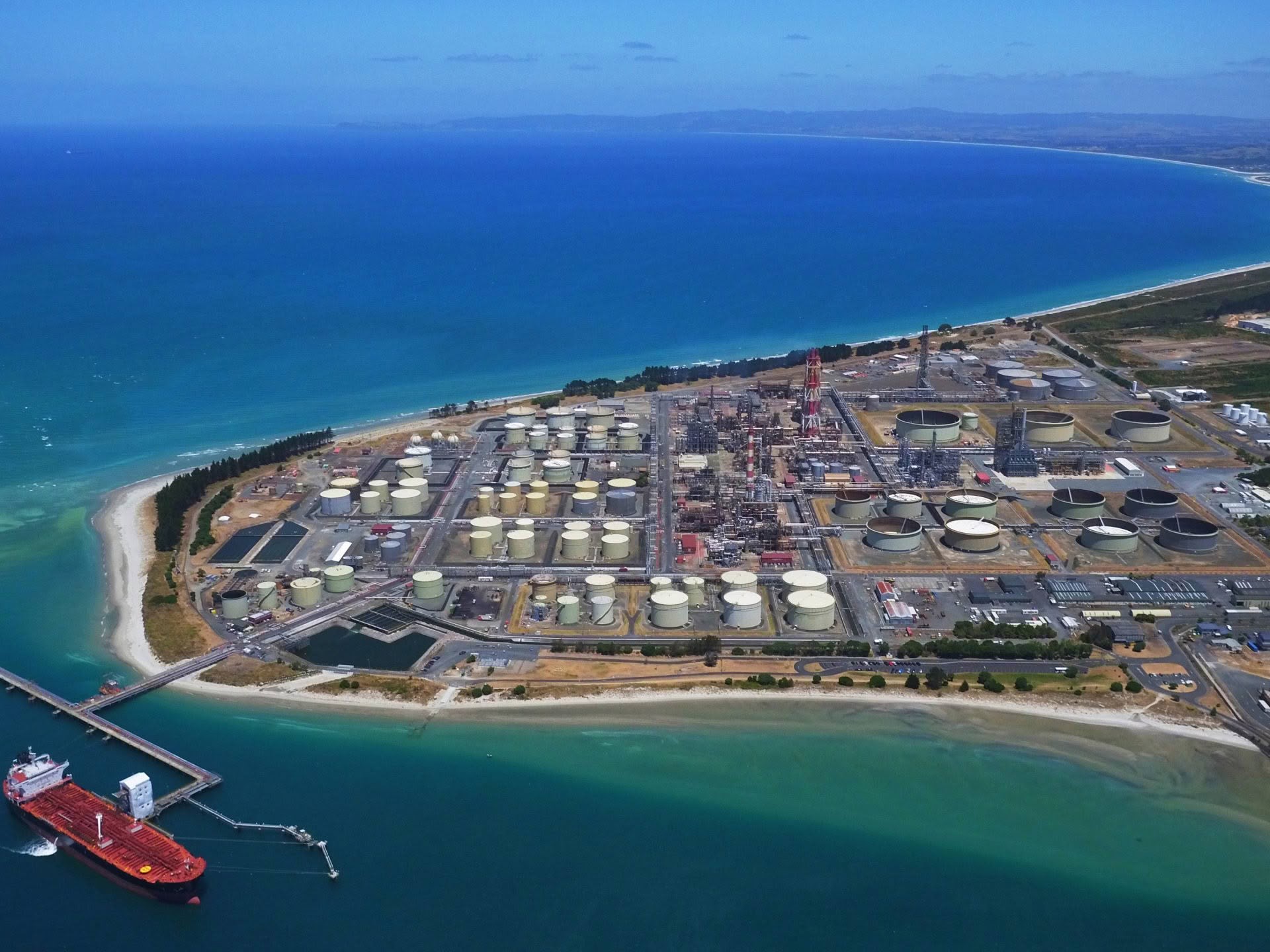
Prior to the refinery shutting down operations in 2022, it produced roughly half our petrol needs, two-thirds of our diesel needs, and most of the country’s jet fuel. Now, all of our refined fuel is imported from refineries in Asia, including Singapore and South Korea.
Marsden Point was last upgraded in 2012 to enable it to produce low-sulphur diesel, and petrol with lower benzene content, all necessary to meet newer engine emissions requirements. That project cost a massive $365m, and further upgrades would have been needed to meet yet stricter emissions technology. But instead the shareholding fuel companies decided to shut the refinery down and convert it to an import terminal.
By international standards, our refinery was inefficient with lower economies of scale compared to the massive Asian refineries, and sourcing fuel from Marsden Point cost more than importing it from Asia, a cost ultimately reflected in the price paid at the pump via higher fuel company margins.
Fuel importers are required to hold a certain amount of stock in NZ – 21 days in the case of diesel, 28 days’ for petrol, and 24 days’ cover for jet fuel. Those totals included fuel being produced and stored at Marsden Point. What we didn’t produce domestically, we imported. With the refinery now out of action, the fuel importers still have to meet those targets. But given we now import all our refined fuel needs, it can be argued that closing the refinery has actually improved our security of supply, as there is now more than twice as much fuel on the water to replenish domestic stocks than when we produced it locally.
The irony should not be lost that Marsden Point refined imported oil. NZ does actually produce some oil – not enough – but the refinery was not configured to refine it, so it was exported (if the refinery could process it, then maybe an argument could have been made to retain it for fuel security). It is oil supply that is more volatile, not refined fuel as we are now seeing.
Producing refined fuel from oil that may have been sourced from parts of the world subject to flashpoints did not offer NZ more security of supply compared to importing refined fuel from stable markets. Sure, those refineries have to get their oil from somewhere too, but if anything we’re better off due to larger shipments committed to NZ, and lower product costs to boot.
If the refinery had been upgraded, it would only have delayed the inevitable and you can bet it’s consumers who would have paid the bill. Even Australia has been closing its elderly state refineries because, like NZ, they were no longer competitive against state-of-the-art Asian refineries.
But all is not lost. Marsden Point is now used as a storage depot (NZ’s largest, supplying 40% of the country’s fuel needs), and the pipeline to Wiri means all jet fuel to Auckland airport, and most of Auckland’s petrol and diesel, is shipped via the pipeline which is much cheaper than shipping by road, and avoids hordes of tanker trucks plying the sub-standard route between Whangarei and Auckland.
So what could we do to boost NZ fuel security? One answer would be to grow our onshore storage capacity. We have more days’ cover than Australia, but less than several other countries. But building that storage would come at a huge cost, and again, that would ultimately be funded by consumers via a higher fuel company margin. Is that a cost consumers are willing to pay, and is it really necessary? Thus far, global oil and refined fuel commodity prices are lower than when Russia invaded Ukraine in md-2022, producing fears of an oil shortage. That never materialised and prices ultimately recovered. The current high prices are driven by similar fears which may soon dissipate. Is it really worth making huge infrastructure investments to protect against such fears, but which won’t protect us against global commodity price spikes in any case?