
Positive business signals
The latest NZIER Quarterly Survey of Business Opinion (QSBO) showed a strong lift in business confidence in the final quarter of 2025. A net 39 percent of firms expect better general economic conditions over the coming months on a seasonally adjusted basis. This was a substantial increase from the net 17 percent expecting an improved general economic outlook in the September quarter, and business confidence is at its highest level since March 2014.
NZIER reported the lift in sentiment was broad-based across sectors and said, “Although the gap between business confidence and firms’ own domestic trading activity remains, the latest results suggest that New Zealand’s economic recovery is starting to take shape as the effects of lower interest rates flow through to the broader economy.”
Increased confidence in the future supply of roading materials
It was pleasing to see our colleagues at the Aggregate & Quarry Association report that many positive policy changes benefiting quarries will bed in this year. Two quarries were among the first nine projects approved under the new fast-track legislation, and AQA expects to see several more quarry approvals under fast-track this year.
We can’t build and maintain roads without the right materials, so we’re very grateful for the strong advocacy undertaken by AQA.
Wayne Scott, CE at AQA, commented that the changes to the new rules—which include the National Policy Statements (NPS) for Indigenous Biodiversity, Freshwater Management, Highly Productive Land, and the National Environment Standards for Freshwater, as well as the NPS for Infrastructure—are the result of five years of patient advocacy with Ministers and officials. It’s little consolation, but it demonstrates that it’s not only transport where we face challenges in terms of getting regulation and government policy addressed.
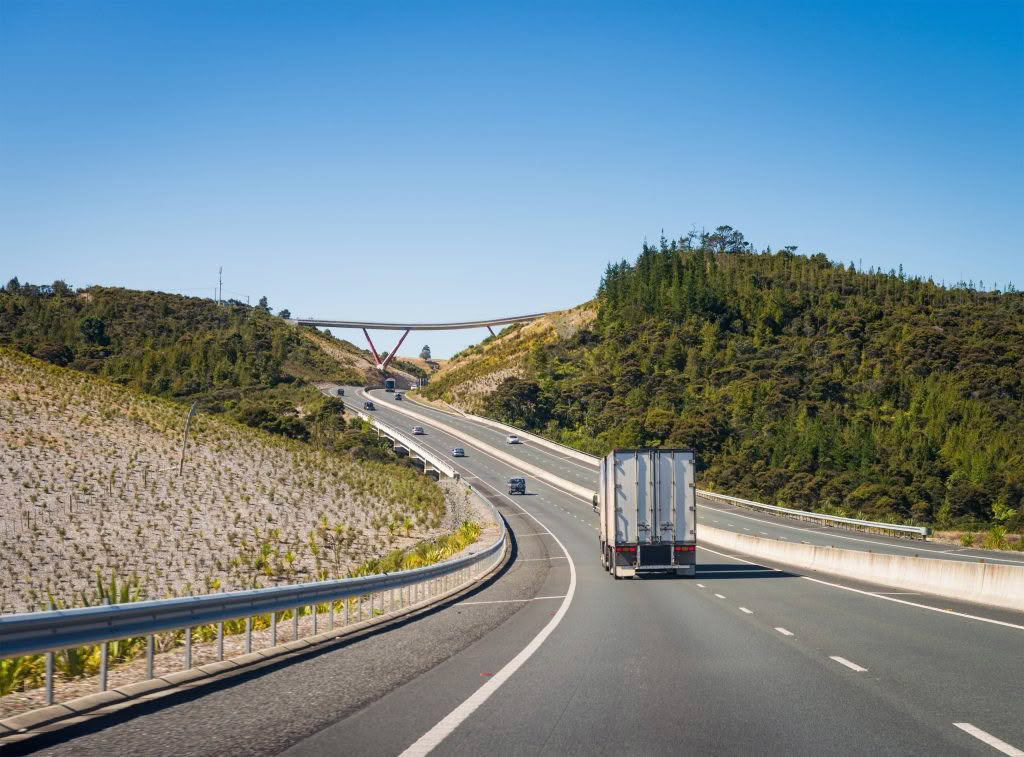
Tolling plans need to be kept in check
Last week we completed our submission on the Land Transport (Revenue) Amendment Bill.
The Bill proposes to allow existing roads to be tolled and to force heavy vehicles onto toll roads, and we are urging the Government to remove those provisions.
Whilst we generally support tolling as it will help deliver new infrastructure sooner, existing roads have already been paid for through fuel taxes, road user charges, registration fees, and general taxation. Therefore, tolling existing roads will be seen as double dipping.
It has surprised me that we’ve been the main transport organisation speaking about this, particularly given that heavy vehicles typically make up about 10 percent of the traffic. Therefore, even though they will pay a higher toll fee than a light vehicle, most of the tolling revenue will actually come from car drivers. Furthermore, transport operators will ultimately pass that fee on to their clients.
Therefore, the bigger impact will be on the public, and that increases the risk of undermining public support for tolling.
Everyone’s focused on return on investment, and tolling is no different. Tolling should be reserved for new roads, where users get a clear benefit from paying a toll, such as improved travel times, safety, and resilience.
The submission also opposes proposals that would allow the Minister to prohibit heavy vehicles from using alternative routes in favour of tolled roads. Transport operators are already highly motivated to use faster, safer routes because time is money, and this is already being well demonstrated by heavy vehicles largely using toll roads without any need for a mandate.
We’ve advised the Select Committee that transport operators and drivers are in the best position to decide what route to take. There are legitimate reasons why an alternative route may be the better fit for a particular job, including fuel use, gradient, rest and refreshment facilities, and route efficiency, and they need to have the freedom to make good business choices like that.
The Bill allows for freight deliveries and trucks travelling to premises located on alternative tolled routes to occur; however, in practice, it will be difficult for Police to identify trucks not travelling on those routes for bona fide reasons, and it will create another unnecessary compliance burden.
Watch this space.