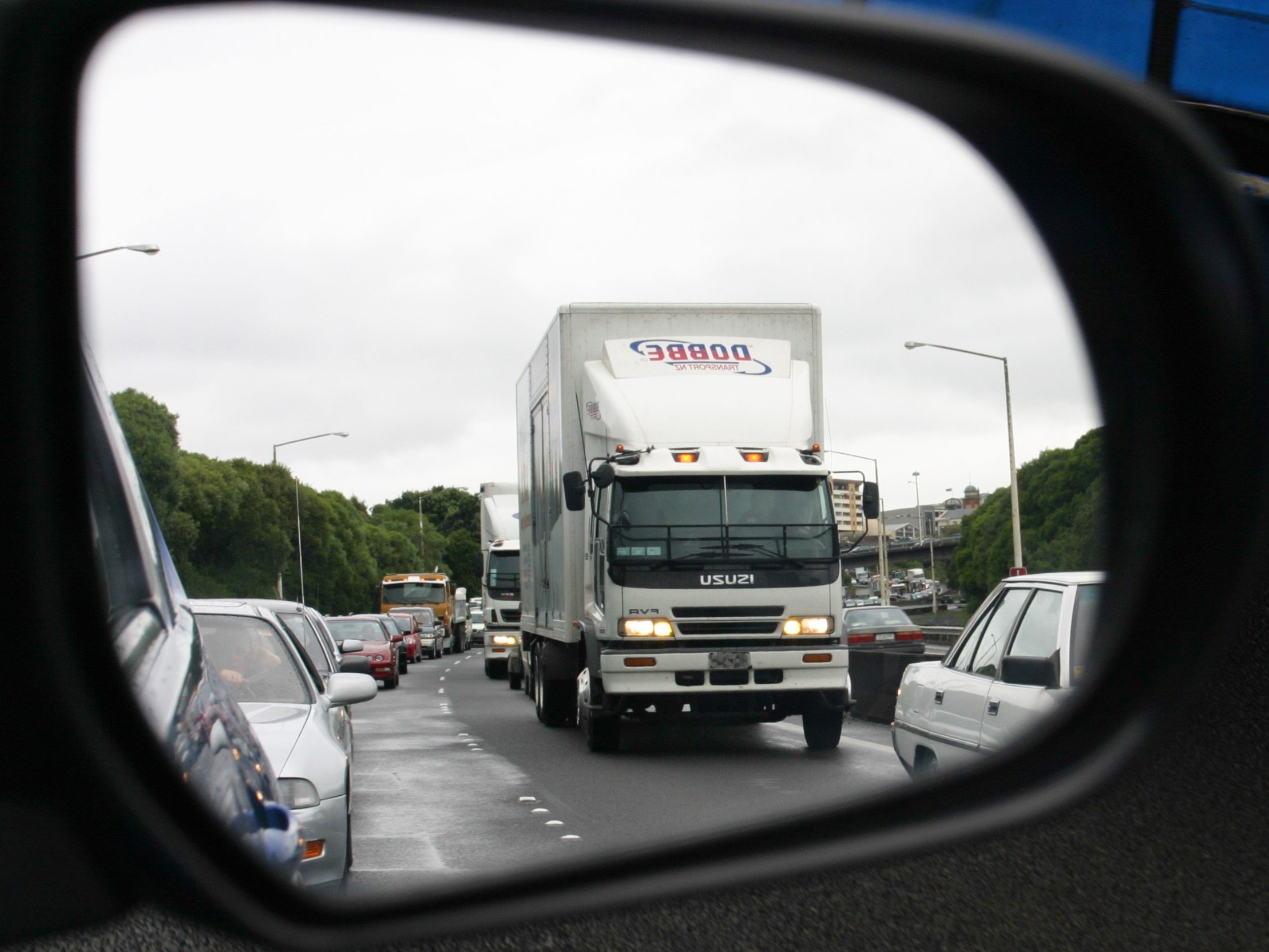
Transporting New Zealand says that a Ministry of Transport proposal to set congestion charges for trucks at four times the rate of cars will increase costs for businesses and consumers, while being out of step with comparable overseas schemes.
Under the proposal, if a base time-of-use charge for a car was set at $4.50 for entering a charging area, a motorcycle would be charged $2.25 and a truck $18.00. Subject to any maximum charge, the fee could apply each time a vehicle entered, exited, or travelled within the area during charging hours.
Transporting New Zealand Head of Policy & Advocacy Billy Clemens says the proposed ratio is unlikely to meaningfully reduce congestion, while placing cost pressure on freight users and consumers.
“This proposal applies a higher relative charge to freight than most time-of-use schemes internationally. In cities such as Stockholm, London, and Gothenburg, vehicles are charged at a flat rate. Even schemes that do set different charges in Singapore and New York City set their ratios considerably lower than this Ministry of Transport proposal.”
“We would expect any price settings to reflect whether travel demand can realistically move off-peak, rather than relying on a simple multiplier based on vehicle type.”
Clemens says available evidence suggests freight operators already avoid peak travel where possible due to the high hourly cost of running truck fleets.
“Auckland traffic data shows that heavy vehicles largely avoid peak periods (6-9am and 4-7pm). Where trucks are operating in congestion, this is driven by customer constraints.”
“For example, freight movements are tied to fixed shipping windows, freighting perishable or time sensitive cargo, or the times at which businesses are staffed to safely load and unload goods. These constraints limit the ability to shift demand in response to pricing signals.”
“Setting a quadruple charging ratio for large freight vehicles seems very high and appears like less of a demand-shift measure and more of a cash-grab that will ultimately be met by freight customers and consumers.”
“At this level, any travel time savings achieved through reduced congestion are likely to be offset by the additional charges faced by freight operators. Those costs are then passed through the supply chain.”
“We have seen similar outcomes where variable access charges have been introduced at ports, including in Auckland and Tauranga, where increased costs have ultimately flowed through to customers.”
“At a time where increased transport costs are driving inflation up, we would expect Ministry of Transport to be carefully considering freight cost implications of their proposals. Particularly as the road freight industry has raised these concerns previously.”
Transporting New Zealand will be urging Ministry of Transport to cap heavy vehicle charges at no more than 2 times the rate for other vehicles, in line with its submission on the time of use charging enabling legislation. Details on how to make a submission can be found here.
For more information please contact:
Billy Clemens, Head of Policy & Advocacy Transporting New Zealand, 027 3041 877 or email billy@transporting.nz