
Never waste a good crisis

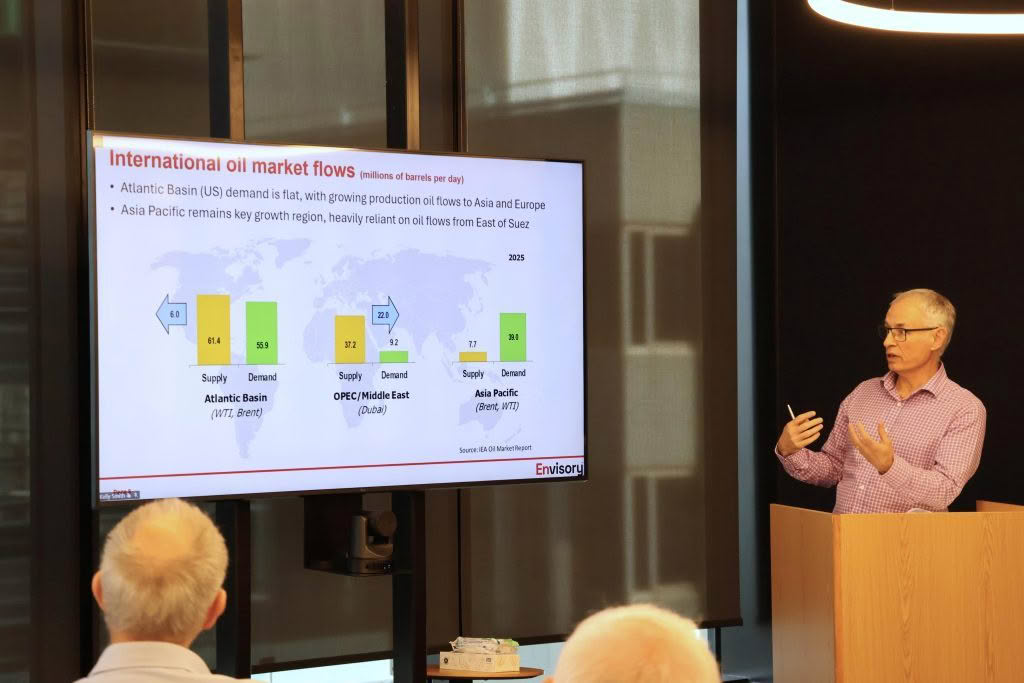
One of the key takeouts for me from last week’s Fuel Pricing & Supply Seminar was fuel market expert Steve West’s observation that “we have a fuel price crisis, not a fuel supply crisis”. He noted there had been no shortage of supply of engine fuels to NZ, but that we had been victims of commodity market speculation which had seen refined fuel prices shoot up, with diesel in particular being double that for petrol, and three times that of crude oil.
His analysis illustrated that the Asia Pacific region had been particularly hard hit, with commodity prices rising far high than in other regions like Europe and America, whose commodity prices differ and are a function of their local supply and demand.
He also dismissed talk that NZ was worse off following the closure of our only refinery, noting that it was reliant on Middle Eastern crude oil.
All of which makes it sound like the current fuel prices are outside of the control of fuel importers, and New Zealanders at large.
We hope that the current crisis will only be temporary, but it’s not the first time we’ve experienced fuel price spikes – albeit diesel has never been this high before.
But I can’t help but conclude that there is a possible – long-term – solution to these types of price spikes that happen due to geopolitical issues well away from our shores and influence.
The solution is not necessarily to have our own refinery, but rather our own oil supply. And there are two possible ways to achieve this.
One is, of course, exploring for our own oil. We do actually produce some oil from the Maui gas field in Taranaki, not that it is anywhere near enough to meet our transport fuel needs (and ironically, the Marsden Point refinery was not configured to refine it). But the last government placed a ban on any new exploration, although that has since been reversed by the current government. But given governments can change direction every three years, you can forgive oil companies for not rushing to speculate here.
With our large coastline, New Zealand has a huge exclusive economic zone, and there is absolutely the potential for more oil to be discovered somewhere in it. We could, in fact, become the Norway of the South Pacific (Norway being the wealthiest country in the world, thanks to its huge oil production).
But hang on a minute. That brings me to my second solution – we already have proven fossil fuel reserves.
Did you know that NZ is rich in lignite deposits? Lignite is a soft, crumbly coal, which can be refined into diesel amongst other things. And we have a lot of it – a shit-tonne, if you will! I’ll quote directly from a division of MBIE, New Zealand Petroleum & Minerals (my emphasis in bold):
Lignite deposits in Otago and Southland contain more than 9 billion tonnes in 10 major deposits. This is a very large, nationally significant resource which has the potential to be used as a feedstock for a petrochemical industry, using gasification technology to convert lignite to fertiliser, transport fuels or other high value energy products.
If extracted at a rate of 20 million tonnes per year, the lignite resource could provide energy and feedstock for most of New Zealand’s transport fuel and petrochemical requirements for over 300 years. Mining studies in the 1980s estimated total energy content of mineable lignite at about 75,000 PJ. This is equivalent to about 20 times the energy content of the Maui gas field.
There have been multiple reports published on what it would take to extract and refine the lignite. And probably just as many environmental reports saying why we shouldn’t, chiefly focused on the negative impact on our CO2 emissions reductions targets. The fact you haven’t heard about it tells you what’s happening with these deposits.
So there you have it. 300 years’ worth of diesel supply at our back door. At what point do we as a country say, let’s use this natural resource, increase regional employment, isolate ourselves from volatile global fossil fuel commodity prices, and improve our balance of payments to boot?
We’re a long way from being in a crisis, in fact we’re still in the watchful stage. So this is a great opportunity to reflect, review and reconsider our priorities. Let us know what you think at info@transporting.nz.


Didn’t get this by email?
Stay in the loop on the latest road transport news with our weekly Dispatch newsletter, delivered to your inbox every Friday morning.